
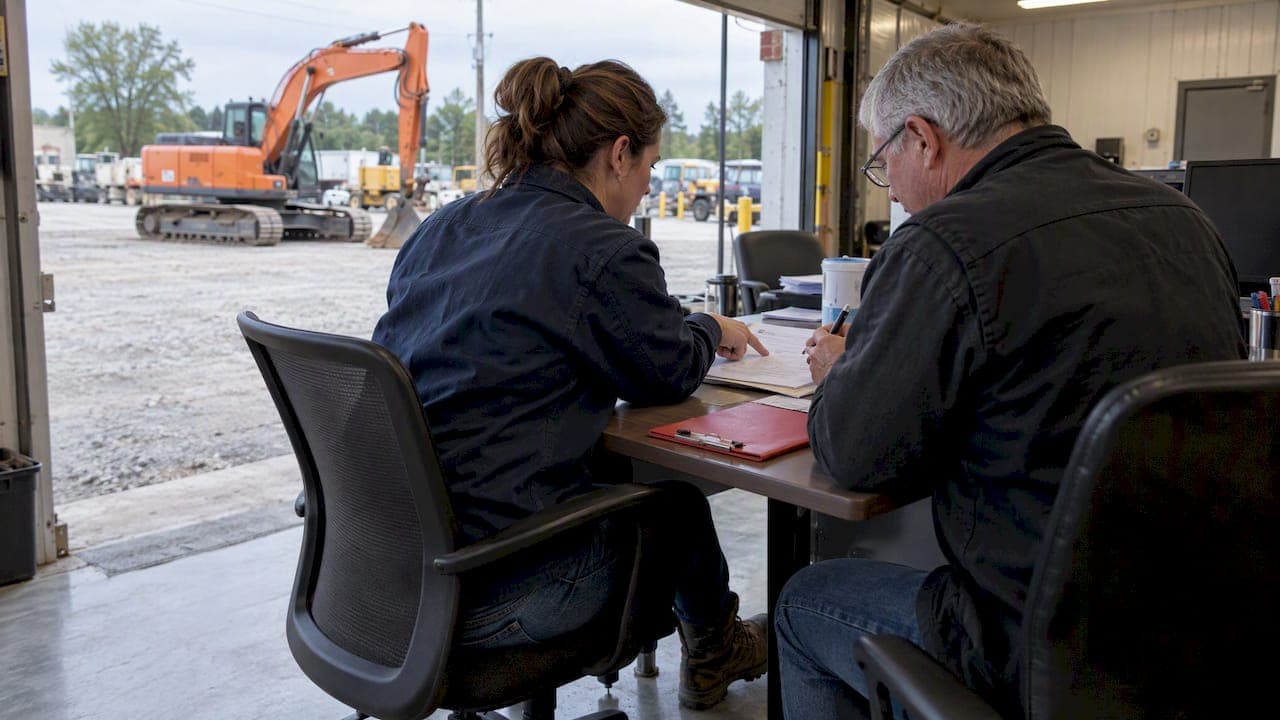
In the U.S., used commercial and manufacturing equipment is generally subject to state sales or use tax unless a specific state exemption applies. Who pays depends on whether the seller is a registered dealer or an occasional seller: dealers typically collect sales tax at the point of sale, while buyers purchasing from non-dealers often owe use tax directly to their state.
TL;DR:
- Most states require buyers to self-report use tax if a seller does not collect sales tax, especially for out-of-state or private transactions.
- When a dealer sells equipment, sales tax is typically collected at the point of sale, but private or occasional sellers rely on buyer self-reporting.
- Exemptions for manufacturing, farming, or occasional sales depend on specific use, documentation, and whether the seller holds a permit; proper paperwork is essential.
- Trade-ins can reduce the taxable amount if states allow subtraction of trade-in value, but condition and usage classification may affect taxability.
- Out-of-state and online marketplace sales are subject to economic nexus and facilitator rules, requiring tracking of sales volume, documentation, and registration in relevant states.
Table of Contents
- How sales tax and use tax apply to used equipment transactions
- Who must collect and remit: distinguishing dealers, frequent sellers, and occasional sellers
- Common exemptions: manufacturing, farm, and occasional/casual-sale exemptions
- How financing, leases, trade-ins, and condition affect taxability
- Economic nexus and marketplace facilitator rules affecting used equipment sales
- State variation and selected state examples plus how to verify rules for your state
- Marketplace operator perspective: common mistakes and easy compliance wins
- List or find equipment through Sostruckforsale
- FAQ
- Sources
How sales tax and use tax apply to used equipment transactions
Sales tax and use tax cover the same economic activity from two different angles. Sales tax applies when a registered seller completes a retail transaction and collects the tax from the buyer at checkout. Use tax applies when no sales tax was collected, usually because the seller is out of state, unregistered, or not required to collect, and the buyer must self-report and remit the tax to their home state.
This distinction matters for anyone buying a used excavator from a dealer in another state or picking up a backhoe from a private seller on a listing site. A retail sale from a registered dealer almost always triggers collection at the time of purchase. A sale between a buyer and a seller who isn't in the business of selling equipment often shifts the reporting burden to the buyer, who owes use tax calculated the same way sales tax would have been.
The taxable base is usually the full sale price, though most states let sellers subtract the value of a trade-in before calculating tax. Freight and delivery charges are sometimes taxable and sometimes not, depending on how the invoice separates them. A buyer who finances the purchase still owes tax on the full purchase price, not just the cash paid upfront, because financing changes the payment schedule, not the taxable transaction.
Several states spell out buyer liability in plain terms. Washington's guidance on use tax makes clear that when a seller doesn't collect sales tax, the buyer is legally responsible for reporting and paying it directly. That single rule explains why so many equipment buyers get an unpleasant surprise during an audit: they assumed the transaction was tax-free simply because no tax appeared on the invoice.
A few practical points help clarify when each tax applies:
- Sales tax is collected by the seller at the point of sale when the seller holds a valid permit and is required to collect.
- Use tax is self-reported by the buyer when the seller doesn't collect, whether because of location, registration status, or exemption claims.
- The taxable base is typically the sale price minus any trade-in allowance, with freight treatment varying by state.
- A sale that looks exempt on its face still requires documentation to survive an audit.
None of these changes based on how old the equipment is. A ten-year-old dozer and a brand-new one follow the same sales and use tax framework in most states. The "used" label affects resale value and depreciation schedules, not whether tax applies, a point that often confuses first-time equipment buyers who assume older machinery is automatically exempt.
Who must collect and remit: distinguishing dealers, frequent sellers, and occasional sellers
Not every seller of used equipment has to register with the state and collect tax. States generally draw a line between businesses that regularly sell equipment as part of their operations and individuals or companies making a one-off sale of an asset they used internally. Getting this classification right determines who owes what and when.
States apply a few recurring tests to figure out which category a seller falls into:
- Frequency test: a seller who completes multiple equipment sales a year, or advertises inventory for sale, usually looks like a business required to hold a seller's permit.
- Business purpose test: equipment sold as part of winding down operations, liquidating a fleet, or exiting a business line often qualifies differently than equipment sold as ordinary inventory turnover.
- Registration test: if the seller already holds a sales tax permit for other activities, many states expect that permit to cover equipment sales too, even infrequent ones.
- Ceased-operations test: a business that has shut down and is selling off remaining assets in a single transaction often fits the occasional-sale category, though the rules vary by state.
Most states offer an occasional sale or casual sale exemption for sellers who don't meet the threshold for regular business activity and aren't required to hold a seller's permit. A contractor selling a single surplus skid steer after a project wraps up is a textbook candidate. A dealer selling ten units a month is not, regardless of how the invoice is worded.
Here's a short checklist sellers can run through before a sale:
- Do you hold, or should you hold, a seller's permit in the state where the sale occurs?
- Have you sold equipment before, and if so, how often?
- Is this sale part of normal business activity or a one-time liquidation?
- Does your state's occasional-sale exemption apply to your situation, and can you document it?
When a seller fails to collect tax that should have been collected, the obligation doesn't disappear. It shifts to the buyer, who becomes responsible for self-reporting use tax on the purchase. This is exactly the trap described in Washington's use tax guidance: the state doesn't lose its claim to the revenue just because the seller skipped a step. Buyers who assume a clean invoice means a clean tax position often learn otherwise during a routine audit, which is why keeping your own records matters even when the seller handled everything correctly on their end.
Common exemptions: manufacturing, farm, and occasional/casual-sale exemptions
Three exemption categories come up constantly in used equipment transactions, and each has its own eligibility test and paperwork trail.
Manufacturing and processing exemptions cover equipment used directly in producing a product for sale. The eligibility hinge is usually a "direct use" or "preponderance of use" standard. Virginia's tax ruling on manufacturing exemptions lays this out clearly: when equipment serves both exempt manufacturing functions and nonexempt support functions, like general material handling, the state looks at whether more than half the equipment's use falls on the exempt side. If it doesn't, the equipment is taxed regardless of its role in the production line. This preponderance test trips up a lot of buyers who assume anything touching the factory floor automatically qualifies.

Farm equipment exemptions follow a similar logic but with different qualifying criteria tied to agricultural use rather than manufacturing. States typically require the equipment to be used predominantly in farming operations, and the exemption usually doesn't extend to equipment used for landscaping, construction, or general hauling even if it's based at a farm.
The occasional sale exemption is the one most relevant to private equipment transactions. Wisconsin's fact sheet on occasional sales of business assets explains that when a sale qualifies, the purchaser doesn't owe use tax on that purchase at all. The exemption typically requires that the seller isn't engaged in the business of selling that type of property and that the sale is infrequent rather than part of a pattern.
Documentation requirements show up across all three exemption types:
- Exemption certificates signed by the buyer, stating the basis for the exemption claim.
- Resale certificates when the buyer intends to resell the equipment rather than use it.
- Occasional-sale statements documenting that the seller isn't regularly in the business of selling such property.
- Usage records supporting a preponderance-of-use claim for manufacturing exemptions.
Pro Tip: Collect exemption paperwork at the time of sale, not after an audit notice arrives. Certificates signed months later rarely satisfy an auditor.
Buyers sometimes assume that because an item is used, it must be tax-free, but that's backward. As Avalara's research on used goods points out, most states treat each subsequent sale as a new taxable event unless a specific exemption, like a resale certificate or occasional-sale qualification, applies. Prior taxation doesn't carry forward. A related point worth understanding before you buy: depreciation schedules and tax exemptions are separate questions entirely, and a contractor's guide to equipment depreciation explains why "used" doesn't automatically mean tax-advantaged in any sense, sales tax or otherwise.
How financing, leases, trade-ins, and condition affect taxability
Financing changes the payment schedule, not the tax obligation. A buyer who finances a $150,000 crane still owes tax on the full purchase price at the time of sale in most states, calculated the same way as a cash deal, even though the lender is advancing the funds. Leases work differently in some states, where tax is assessed on each lease payment rather than upfront on the full value, so the structure of the deal (purchase versus lease) can shift when and how tax gets paid.
Trade-ins are one of the few places where the taxable base actually shrinks. Many states let sellers subtract the agreed trade-in value from the sale price before calculating tax, so a buyer trading a $40,000 loader against a $180,000 excavator pays tax on $140,000 rather than the full sticker price. The exact mechanics vary by state, and not every state allows the subtraction, so confirming the local rule before structuring a trade-in deal avoids a mismatch between the invoice and the tax return.
Condition and configuration of the equipment can also shift taxability. A unit sold for parts only, a piece sold as scrap, or equipment that's been substantially rebuilt can be treated differently depending on how the state classifies the transaction. Parts-only or scrap sales sometimes fall under different rate schedules or exemption categories than a complete, operable machine, so the invoice description matters more than buyers often realize.
A clean contract and invoice protect everyone involved, lender included:
- List the sale price, trade-in value, and resulting taxable base as separate line items.
- Specify whether freight and delivery charges are included in the taxable amount.
- Attach any exemption certificate or resale certificate referenced in the deal.
- Note the equipment's condition and intended use (operable, parts-only, scrap) explicitly.
Lenders financing equipment purchases have a direct stake in this paperwork trail, since an improperly documented tax position can complicate a later resale or repossession. Dealers handling financed sales up to higher price points should keep payment method documentation consistent with the tax treatment shown on the invoice, so the two records never contradict each other during a review.
Economic nexus and marketplace facilitator rules affecting used equipment sales
The 2018 South Dakota v. Wayfair decision changed how states can require tax collection from out-of-state sellers. Before that ruling, a state generally needed a seller to have physical presence, like an office or warehouse, before it could require tax collection. After Wayfair, states can impose collection duties based purely on economic activity, meaning a seller who ships enough equipment into a state can trigger a collection obligation even without ever setting foot there.
Marketplace facilitator laws extend this further. Under these rules, an online marketplace itself, rather than the individual seller, can be responsible for collecting and remitting tax on sales made through its platform. Guidance from the Streamlined Sales Tax Governing Board on remote sellers and marketplace sellers describes how states have adopted these economic-nexus and facilitator rules, and many states count only taxable sales, not exempt transactions, when calculating whether a seller has crossed the nexus threshold.
That last detail matters for equipment sellers specifically. A dealer who sells a mix of taxable equipment and exempt sales backed by valid certificates needs to track which transactions count toward the threshold in each state, since exempt sales backed by proper documentation generally don't push a seller over the line.
A few action steps keep sellers and platform operators on solid ground:
- Track where buyers are located and which states you're shipping or delivering equipment into.
- Register in any state where your taxable sales volume crosses that state's published threshold.
- Retain exemption certificates for every exempt transaction, since those sales are excluded from most nexus calculations only when documented.
- Confirm whether the marketplace you're selling through collects tax on your behalf or whether that responsibility stays with you.
Individual sellers posting equipment on classified or listing platforms should assume, unless told otherwise, that tax collection and reporting remain their own responsibility rather than the platform's.
State variation and selected state examples plus how to verify rules for your state
State rules on used equipment tax diverge enough that a transaction treated one way in Idaho could be treated differently in Virginia. A handful of states publish especially clear guidance worth knowing by name, both because they illustrate common patterns and because their language gets cited in other states' informal guidance.
Idaho's occasional sales exemption guidance spells out that most states offer some version of this exemption for infrequent sellers who aren't required to hold a permit, while businesses that regularly sell equipment must collect and remit tax regardless of how the sale is framed. Washington's use tax page puts the buyer's obligation in blunt terms when a seller doesn't collect. Wisconsin's fact sheet on occasional sales of business assets works through specific examples of what qualifies and what doesn't, which makes it one of the more practically useful state documents for sellers trying to self-assess. Virginia's ruling on manufacturing exemptions walks through the preponderance-of-use test in detail, giving dealers and manufacturers a concrete standard to apply when equipment serves mixed purposes.
A repeatable three-step process works for checking any state's rules before closing a deal:
- Identify the state revenue department's page covering sales and use tax on equipment or business asset sales, since most departments publish this information directly rather than burying it in general tax code.
- Find the specific exemption or ruling text that applies to your transaction type, whether that's an occasional-sale exemption, a manufacturing exemption, or a farm equipment exemption.
- Retain documentation on both sides of the transaction, seller and buyer, including any exemption certificate, invoice breakdown, and correspondence establishing the seller's classification.
The following comparison highlights how these four states handle the issues most relevant to used equipment transactions:
| State | Occasional-sale exemption available | Manufacturing exemption nuance | Buyer use-tax note |
|---|---|---|---|
| Idaho | Yes, for infrequent sellers without a permit requirement | Not the focus of this guidance | Buyer generally not liable if exemption applies |
| Washington | Addressed separately from use tax guidance | Not the focus of this guidance | Buyer must report and pay use tax if seller doesn't collect |
| Wisconsin | Yes, with documented examples of qualifying sales | Not the focus of this fact sheet | Purchaser not required to remit use tax if sale qualifies |
| Virginia | Not the focus of this ruling | Preponderance-of-use test applies to mixed-use equipment | Not addressed in this ruling |
Rate tables from the Federation of Tax Administrators and general guides can help confirm current percentages, but the authoritative answer for any specific transaction comes from the state's own revenue department page or a direct ruling request, not a secondhand summary. When a transaction involves a meaningful dollar amount, the time spent reading the primary source costs far less than an unexpected use tax assessment months later.
Marketplace operator perspective: common mistakes and easy compliance wins
The most common mistake we see is assuming "used" equals "tax-exempt." It doesn't, and that assumption causes more audit headaches than any other misunderstanding in this space. A close second is an incomplete invoice that doesn't separate trade-in value, freight, and sale price, which leaves both sides guessing at the taxable base later.
A few habits fix most of this before it becomes a problem: standardized invoice templates that itemize every component of the deal, a short seller questionnaire that establishes whether the seller is a dealer or an occasional seller, and retention of every exemption certificate for as long as your state's audit period runs. None of this is complicated, but all of it has to happen before the deal closes, not after a notice arrives.
— Dave
List or find equipment through Sostruckforsale
Getting the tax position right starts with getting the paperwork right, and that's where a clear listing and a documented transaction process save real time. Sostruckforsale is a marketplace for commercial and industrial equipment, covering construction equipment, trucks and trailers, material handling, agriculture, forestry, and grounds care listings from dealers and private sellers across the country.
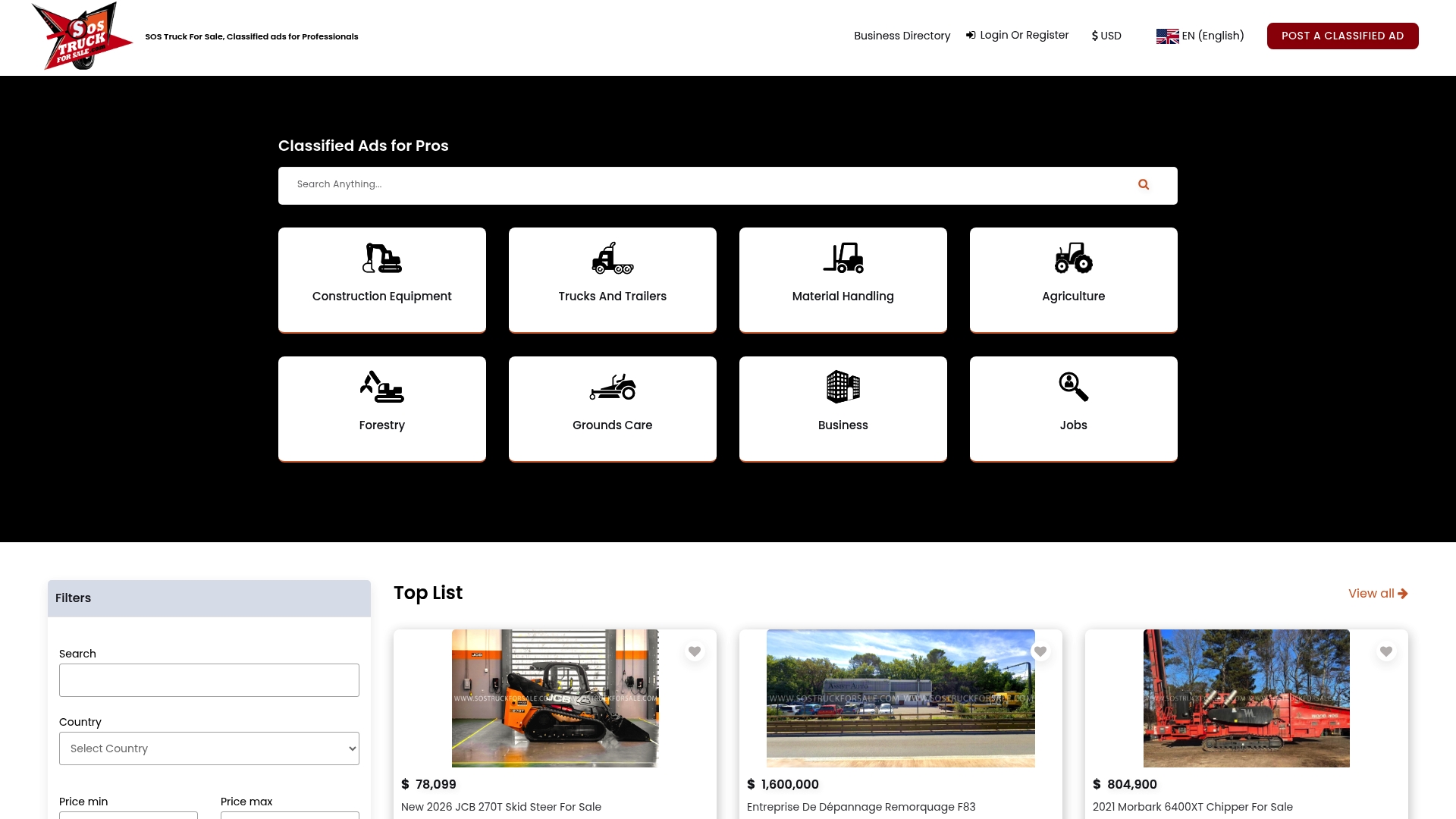
Whether you're closing a deal on a used excavator or moving a fleet of trailers, the paperwork trail matters as much as the price.
- Review our pricing guidance with auction comps before you set a number, so your invoice reflects a defensible sale price.
- Use our transfer paperwork checklist to keep buyer and seller documentation in order.
- If you're weighing consignment, our consignment timeline guide covers what to expect before you list.
If you're ready to post a listing or want guidance on how to document a sale correctly, visit Sostruckforsale to get started.
This article is general information, not a substitute for advice from a qualified financial advisor. Consult a qualified financial professional about your own circumstances before acting on anything here.
FAQ
Does the sale of a business count as income?
The sale of business assets, including equipment, can trigger federal income tax consequences separate from state sales or use tax. The IRS instructions for Form 4797 cover how to report gains or losses on business property dispositions, and that federal reporting obligation exists independently of any state sales tax owed on the transaction.
What is the $600 rule?
The federal reporting threshold generally refers to rules for payments made to independent contractors or certain income types and is a federal income reporting rule that does not determine whether a state sales or use tax applies to an equipment purchase.
What items are not taxed in the USA?
Exemptions vary by state, but common categories include certain groceries, prescription drugs, and equipment qualifying under manufacturing, farm, or occasional-sale exemptions when properly documented. For used equipment specifically, an item is exempt only when a state-specific exemption applies and the required certificate or documentation is on file, not simply because the item is used.
Is USA VAT or GST?
The United States doesn't use a value-added tax or goods and services tax system at the federal level. Instead, each state administers its own sales and use tax, which means rates, exemptions, and collection rules can differ significantly depending on where a transaction takes place.
Who is responsible for use tax when a seller doesn't collect sales tax?
When a seller doesn't collect sales tax, the buyer is typically responsible for self-reporting and paying use tax directly to their state. Washington's use tax guidance describes this buyer obligation clearly, and most states follow a similar framework for unreported transactions.
Sources
- Occasional sales exemption (Idaho Department of Revenue)
- Use tax (Washington Department of Revenue)
- Occasional sales of business assets (Wisconsin Department of Revenue)
- Retail Sales and Use Tax ruling re: manufacturing exemptions (Virginia Tax)
- Disclosed Practice 8 – Remote Sellers & Marketplace Sellers (Streamlined Sales Tax Governing Board)