
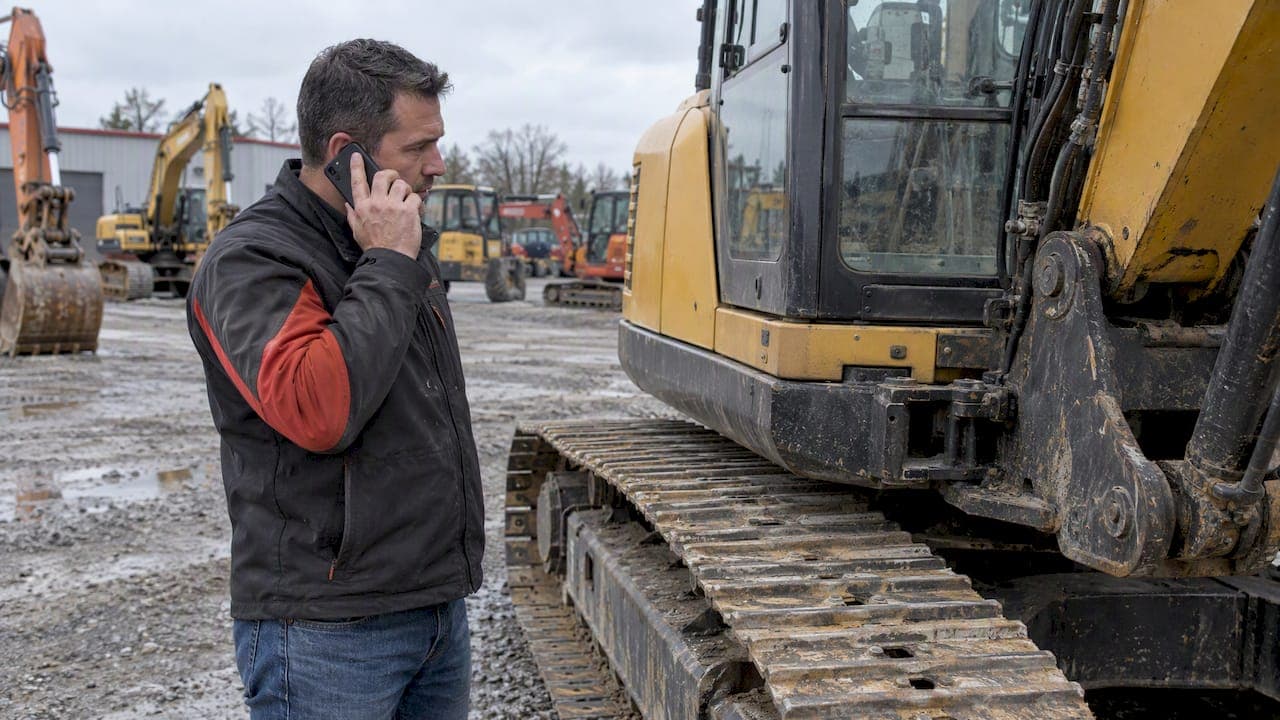
Reply within five minutes on high-intent inquiries, and keep the tone conversational. A strong reply has three parts: acknowledge the question, give one useful fact, and propose a clear next step. Speed signals competence and warmth, but only if the answer is genuinely useful. Paste the first template below, edit one detail, and send it.
TL;DR:
- Answer calls within one minute; respond to price, availability, and inspection inquiries within five minutes, while event contacts can wait up to 24 hours.
- Reply publicly to social comments, then move negotiations, complaints, personal details, or technical exchanges to a private channel and state when you will follow up.
- Use an exact unit detail and a clear next step; vary follow ups, and reserve automation for routing and alerts rather than writing first replies.
- Track response times by lead type, set visible targets, route inquiries by territory or equipment expertise, and review missed targets weekly.
Table of Contents
- Why reply speed matters and what response times to set
- How to reply on social, marketplace, email, phone and chat
- Copy-ready templates for common buyer lines
- A checklist for meeting your response targets every day
- Why a quick, conversational reply wins on heavy equipment
- Get more buyer inquiries to practice on
- FAQ
- Sources
Why reply speed matters and what response times to set
When you respond to buyer inquiries quickly, the buyer reads it as a preview of how you will behave after the sale. Vanderbilt's business school describes reply speed as a proxy for future responsiveness, and fast replies are interpreted as signals of competence, warmth, and reliability. That matters on heavy equipment, where a buyer may be messaging multiple sellers about the same excavator.
The experimental evidence points the same way. A George Mason University summary of the research reports that a one-hour delay nearly halves the chance of being hired, and that delayed or obviously automated replies can erase the speed benefit. A related Vanderbilt Owen write-up analyzed 11.6 million marketplace message exchanges and found that even short delays reduce hiring likelihood. The setting is hiring, not equipment sales, but the buyer psychology carries over: people judge a stranger by how fast and how well that stranger answers.
The benchmark to adopt: the LeanData B2B Lead Response Time Playbook calls for replies in under 1 minute for demo and highest-intent leads, and under 5 minutes for high-intent web forms. Treat your "call me about this truck" messages as the hottest tier.
A practical set of response targets for an equipment seller:
- Phone call or "call me now" request: answer live or call back within 1 minute.
- High-intent listing message (asks about price, availability or inspection): under 5 minutes.
- General spec or condition question: respond promptly during business hours.
- Event or trade show contact: within 24 hours.
- Brochure or content download: respond when practical, with lower priority.
One caveat protects all of this. A fast reply that is vague or obviously canned can cancel the advantage, so the first message should answer what the buyer actually asked.
How to reply on social, marketplace, email, phone and chat
Each channel has its own norms, and a reply that fits one can feel wrong on another.
Public social posts. Salesforce's social customer service guidance recommends a triage mindset: respond publicly and fast to show you are listening, then move complex issues to a private channel and give an ETA. Silence on a public comment tells every other buyer that questions go unanswered.
Marketplace and listing messages. Open with a quick factual line: the unit is still available, the price range, and whether you offer inspection. Then give a next step, such as a time for a walkaround or a request for the buyer's location.
Email. Answer the question in the first sentence, add supporting details underneath, and offer two or three times for a call.
Phone, SMS and chat. Ask one clarifying question right away ("Is this for hauling or yard use?") and propose the next action. Keep it short.
When to move private:
- The buyer shares personal or financial details.
- Price negotiation starts.
- The issue needs a long technical back and forth.
- A complaint is building in public.
Say it plainly and set a time: "I'll message you soon with the full spec sheet."
Pro Tip: Write your public acknowledgement and your private follow-up as a pair, and send them within a few minutes of each other so the buyer never wonders whether you saw the comment.
If you are managing inbound requests across crews or lots, a tool built for coordinating tasks and follow-ups can keep messages from slipping, like the contractor workflow ideas in this communication plan guide.
Copy-ready templates for common buyer lines
Every template follows the same structure: a short human opening, one useful fact, a clear next step, and a line that invites questions. Swap in a real detail (your name, the date the unit is available, an exact spec) so it never reads as automated.
-
"I need to think about it." "Totally fair, it's a big purchase. One thing worth knowing: this unit is one of two similar ones we have, and the other is already getting a second look. I can hold a walkaround slot for you Thursday at 2 PM without any commitment. Want me to pencil that in?"
-
"The price is too high." "Thanks for being straight with me. The price reflects [exact hours, service records, new tires]. If it helps, I can send the maintenance file so you can compare against other listings. What number would make this work for your budget?"
-
"Can you hold it?" "Yes, I can hold it until [date] with a refundable deposit. I'll send the terms in the next few minutes. Is there anything you want checked before you commit?"
-
"I need an inspection or more photos." "Happy to. I'm sending more photos now, including the engine bay and undercarriage. You're also welcome to bring your own inspector on [available dates]. Which works better?"
-
Polite follow-up sequence.
- First follow-up (if no reply): "Following up on the [make and model]. Any questions I can answer?"
- Later follow-up: "Wanted to share the service records in case they help your decision."
- Final follow-up: "I'm closing out inquiries on this unit at the end of the week. Want me to keep you on the list?"
Notes on personalization that keep replies human:
- Mention something the buyer wrote, such as their trade or location.
- Use exact specs instead of "great condition."
- Sign with your name and a direct number.
- Never send the same follow-up twice in a row.
To prepare, our guide on how to screen commercial truck buyers covers the qualifying questions worth working into your first reply, so you can spot serious buyers fast and give them priority.
A checklist for meeting your response targets every day
A target you cannot hit consistently is just a wish. Here is how a small team or a solo owner can make speed routine.
Measure first. Track your actual response times over a period of time, split by lead type. Harvard Business Review's piece on the short life of online sales leads makes the point that many companies respond too slowly, and that knowing your current number by lead type is the necessary first step. Most sellers are surprised by their own averages.
Then build the system:
- Define SLAs by lead type using the targets above, and post them where everyone on the team can see them.
- Set routing rules. Round robin works for equal teams. Territory or skill-based routing works when one rep knows excavators and another knows semis.
- Use notifications. Push alerts to phones for high-intent inquiries so a message never waits in an inbox.
- Keep a script library. Store the templates above in a shared document, and run a short coaching session when someone's replies drift generic.
- Track adherence weekly. Count how many inquiries met their SLA, review the misses, and adjust.
Use automation lightly. It belongs in routing and alerts, not in writing the first reply. The LeanData playbook itself advises prioritizing human-first replies, and the research above shows that obviously automated messages lose the speed advantage.
For dealers who want to push this into the wider sales workflow, our notes on commercial truck dealer best practices for 2026 show how response habits fit into listing management day to day.
Why a quick, conversational reply wins on heavy equipment
Here is my stance: most equipment sellers lose deals early in the process, not at the negotiating table. A buyer who sends repeated messages in quick succession is not browsing, they are choosing a seller. The seller who answers first with a real fact, like hours on the engine or a date for a walkaround, usually becomes the seller they judge everyone else against.

Speed also does practical work. A fast reply lets you ask qualifying questions while the buyer is still engaged, lock in an inspection slot before their schedule fills, and filter out tire kickers without a long exchange. On a platform like ours, a specialized listing site for commercial and industrial heavy equipment, buyers arrive ready to talk specs, and they expect a seller who talks the same way.
Conversational does not mean casual to the point of sloppy. It means writing the way you would speak across the counter: plain words, a direct answer, an offer of what happens next.
— Dave
Get more buyer inquiries to practice on
A fast-reply playbook only pays off when messages are coming in. We built Sostruckforsale as a dedicated marketplace for commercial and industrial equipment, so the buyers who find your listing are already looking for trucks, trailers, construction machinery, and material handling gear.
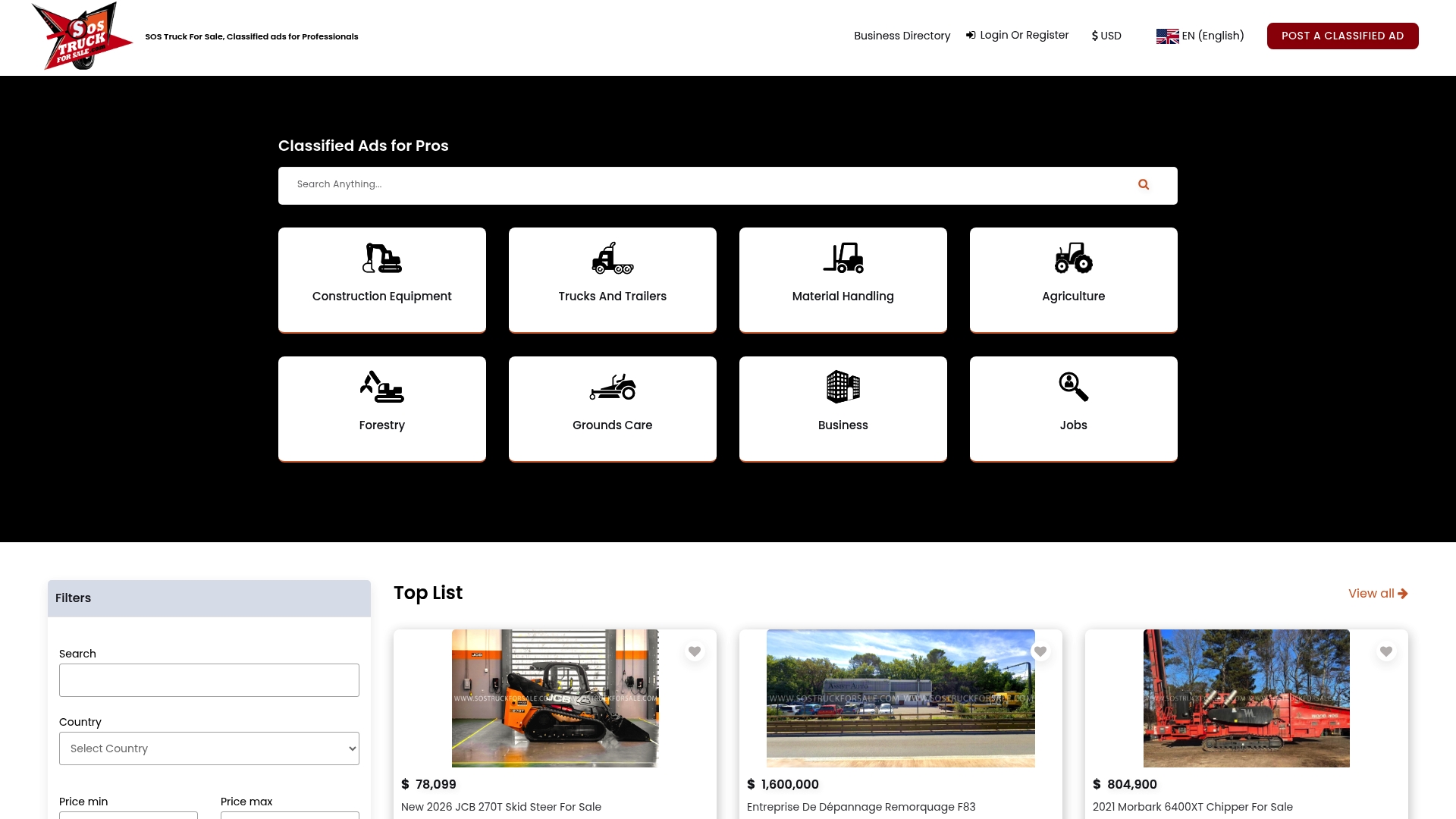
Here is how to combine the two:
- List your units on our equipment marketplace and keep specs and photos complete, so replies can be specific.
- Use the templates above for every inbound message and hold yourself to the response targets.
- Set up a dealer profile to present your whole inventory in one place, and read our dealer playbook for getting more leads from listings for tactics that pair with quick replies.
Ready to put this to work? Post your next listing today at Sostruckforsale and be ready to answer within five minutes.
FAQ
How fast should I respond to a buyer inquiry?
Aim for under five minutes on high-intent messages like price or availability questions, and under one minute for live demo or call requests. These targets come from the LeanData response time playbook. Lower-intent contacts can wait until the same day.
How do I respond to a buyer on Facebook Marketplace?
Reply fast with a factual opener: availability, a price range, and an inspection option. Then propose a next step, like a time to view the unit or a request for their location. Move to a phone call or private message once negotiation or personal details come up.
How do you respond to a client professionally?
Acknowledge their question, answer it directly, and offer a clear next step. Keep the tone warm and plain, and use specific details instead of generic phrases. A short, useful reply beats a long, polished one.
What should I do when a buyer goes quiet?
Send a short follow-up sequence spread over about a week: a check-in, a helpful piece of information such as service records, and a polite closing note. Vary each message so it never repeats, and stop after the final one.
Sources
- Business
- The B2B Lead Response Time Playbook
- Social Media Customer Service: What It Is + Examples
- Why quick responders have the edge on the job hunt | George Mason University