
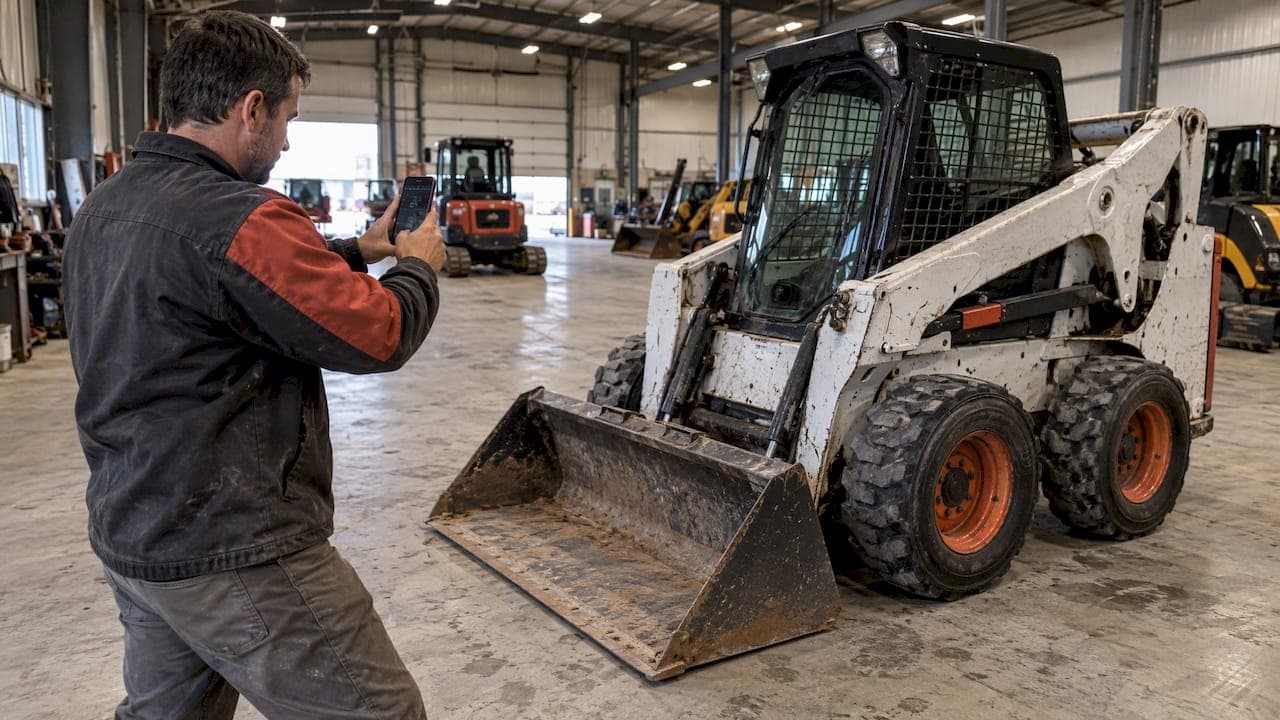
The fastest route to selling a skid steer online runs through several channels: marketplace listings, private sale, dealer direct buy, and auction. For most sellers, a marketplace listing with classified-style reach gives the best balance of price and speed. Choose a dealer buy if you need cash fast and can accept a lower net price, or an auction if you want competing bids on a desirable machine. The sections below walk through preparation, pricing, scam avoidance, taxes, and transport so you can close cleanly.
TL;DR:
- Before listing, assemble proof of ownership, lien status, service invoices, an hour meter reading, and photos of the VIN plate, undercarriage, cab, and attachments.
- Price against comparable models, years, hours, and recent auction results; account for attachments and condition, then leave negotiation room on marketplace listings.
- Accept only verified bank checks, wire transfers, or escrow; never refund an overpayment, and hold the machine until deposited funds receive final bank clearance.
- Business sellers report depreciation recapture on Form 4797, while remaining gains go on Form 8949 and Schedule D; treatment depends on use and holding period.
Table of Contents
- How marketplace listings, private sale, dealer buy and auctions compare
- What to gather before you list or meet a buyer
- How to price your skid steer using comps and condition
- Safe payment methods and the scam red flags to watch for
- What business sellers should know about taxes and depreciation
- Arranging pickup or delivery without disputes at handoff
- Listing steps that attract serious buyers faster
- Which channel actually makes sense for your machine
- List your skid steer where equipment buyers already search
- FAQ
- Sources
How marketplace listings, private sale, dealer buy and auctions compare
Each channel trades speed for price in a different way, and the right fit depends on how fast you need cash and how much documentation you have ready.
- Marketplace listings give you pricing control and wide buyer reach, with moderate listing fees and strong results when you document condition thoroughly.
- Private sale carries lower fees but limited reach, working best for local operators comfortable meeting buyers face to face.
- Dealer or direct buy closes fastest but usually nets a lower sale price, making it a fit for non-running machines or a quick liquidation.
- Auctions can draw strong competitive bids on in-demand machines, though seller commissions and sale outcomes vary by event, and a well-marketed sale can reach buyers well beyond your local market.
Before you commit to a channel, weigh key factors: how urgently you need the sale closed, the machine's running condition, whether your paperwork is ready to go, and the net proceeds you're targeting. A skid steer with clean records and good photos tends to perform well on a marketplace listing, while a unit with mechanical issues or missing history often moves faster through a dealer buy.
What to gather before you list or meet a buyer
A buyer who sees complete documentation moves faster toward an offer, so prepare these items before you post anything.
- Locate the title or other proof of ownership, prepare a bill of sale template, and check for any liens that need clearing first.
- Pull together service history, recent repair invoices, and a clear reading from the hour meter.
- Shoot a full photo set: the serial or VIN plate, the hour meter, the engine bay, the undercarriage, the cab interior, tires or tracks, and any attachments included in the sale.
- Write down the running condition honestly, note any known issues, and decide whether you'll offer transport or require buyer pickup.
Pro Tip: Photograph the hour meter and VIN plate together in one shot so buyers can verify both at a glance without scrolling through your listing.
How to price your skid steer using comps and condition
Start by pulling comparable listings with similar model, year, and hour ranges, along with recent auction results for the same or a closely related model.
- Match attachments and hour ranges as closely as possible; a skid steer with a quick-attach grapple or forks sells differently than a bare bucket machine.
- Adjust your number for condition: higher hours, known mechanical needs, or extra attachments all shift the price up or down, so document the reasoning behind your figure.
- For marketplace listings, price slightly above your target with room to negotiate; for a local private sale, a firm price can cut down on lowball offers if you'd rather field fewer inquiries.
Urgency matters here too. A seller who needs cash within days will often accept a lower number than one willing to wait out the right buyer through a marketplace listing.
Safe payment methods and the scam red flags to watch for
Stick to payment methods you can verify before you release the machine: a certified bank check confirmed directly with the issuing bank, a wire transfer to a business account, or an escrow service for any buyer you haven't met in person.
- Never accept a check for more than the agreed price, and don't rely on mobile payment apps from an unfamiliar buyer, both flagged directly by the FTC's guidance for online sellers.
- Watch for overpayment requests followed by a demand to refund the difference, a pattern the FTC has documented in fake-check scams aimed at vehicle and equipment sellers.
- Hold the machine until your bank confirms final clearance on any deposited check, since a bank's initial acceptance isn't the same as confirmed funds.
- Put buyer identity and pickup terms in writing before any payment changes hands.
Sellers who refund money from a deposited check before their bank confirms its genuine can be held liable once the check bounces, leaving them out both the machine and the refunded cash.
What business sellers should know about taxes and depreciation
If you used your skid steer as depreciable business property, the sale triggers reporting obligations beyond a simple cash transaction.
- Depreciation recapture is generally reported in Part III of Form 4797, treating that portion of your gain as ordinary income rather than a capital gain.
- Any gain above the recapture amount moves to Form 8949 and Schedule D under the same IRS instructions.
- How you report the sale depends on how long you held the equipment and how it was used in your business, so keep every sale document on file.
- A tax advisor familiar with equipment sales can confirm the right treatment for your specific situation before you file.
Arranging pickup or delivery without disputes at handoff
Decide your transport terms before you publish the listing, since buyer-arranged pickup versus seller-arranged hauling changes what a buyer is willing to pay.
- State clearly whether the price includes delivery or assumes buyer pickup, and adjust your number accordingly.
- Request proof of carrier insurance and agree on a specific pickup window in advance.
- Document the machine's condition with photos and a signed bill of sale at the moment of handoff, before the buyer or carrier leaves the site.
- Transport cost depends on distance, the machine's weight, and whether loading equipment is available on site. For context on how commercial project costs break down, a concrete flatwork pricing guide shows how distance and site logistics factor into contractor estimates.
Listing steps that attract serious buyers faster
A thin listing invites lowball offers and endless questions. A complete one shortens the path to a real offer.
- Shoot at least 10 to 15 quality photos plus a 30 to 60 second walk-around video, ordering shots from wide exterior views down to close-ups of the VIN plate, hour meter, and undercarriage.
- Write a description that leads with make, model, and year, followed by hour meter reading, included attachments, recent service highlights, and honest condition notes.
- State your transport terms plainly in the listing so buyers know upfront whether pickup or delivery is included.
- Keep a quick factsheet ready, VIN, hours, location, and title status, so you can answer the first round of buyer questions without delay.
Pro Tip: List during peak buyer traffic for your equipment category and include the model, attachments, and hour count directly in the listing title, since that's exactly what buyers search for.
Supplying this level of detail matches what industry guidance on selling heavy equipment recommends for maximizing buyer confidence and final sale price.

Which channel actually makes sense for your machine
Marketplaces reward sellers with solid documentation and some patience. Dealer buys suit anyone who needs a fast exit more than top dollar. Auctions fit a scarce or highly desired machine where competing bids can push the price past what a fixed listing would get. Follow the checklist, verify every payment, and you'll close with your net proceeds intact.
— Dave
List your skid steer where equipment buyers already search
We built Sostruckforsale as a listing site for commercial and industrial heavy equipment, including the construction equipment category where skid steers belong alongside wheel loaders, excavators, and other machinery buyers are already searching for. Our listings can be filtered by category, price, and country to help buyers find equipment like yours.
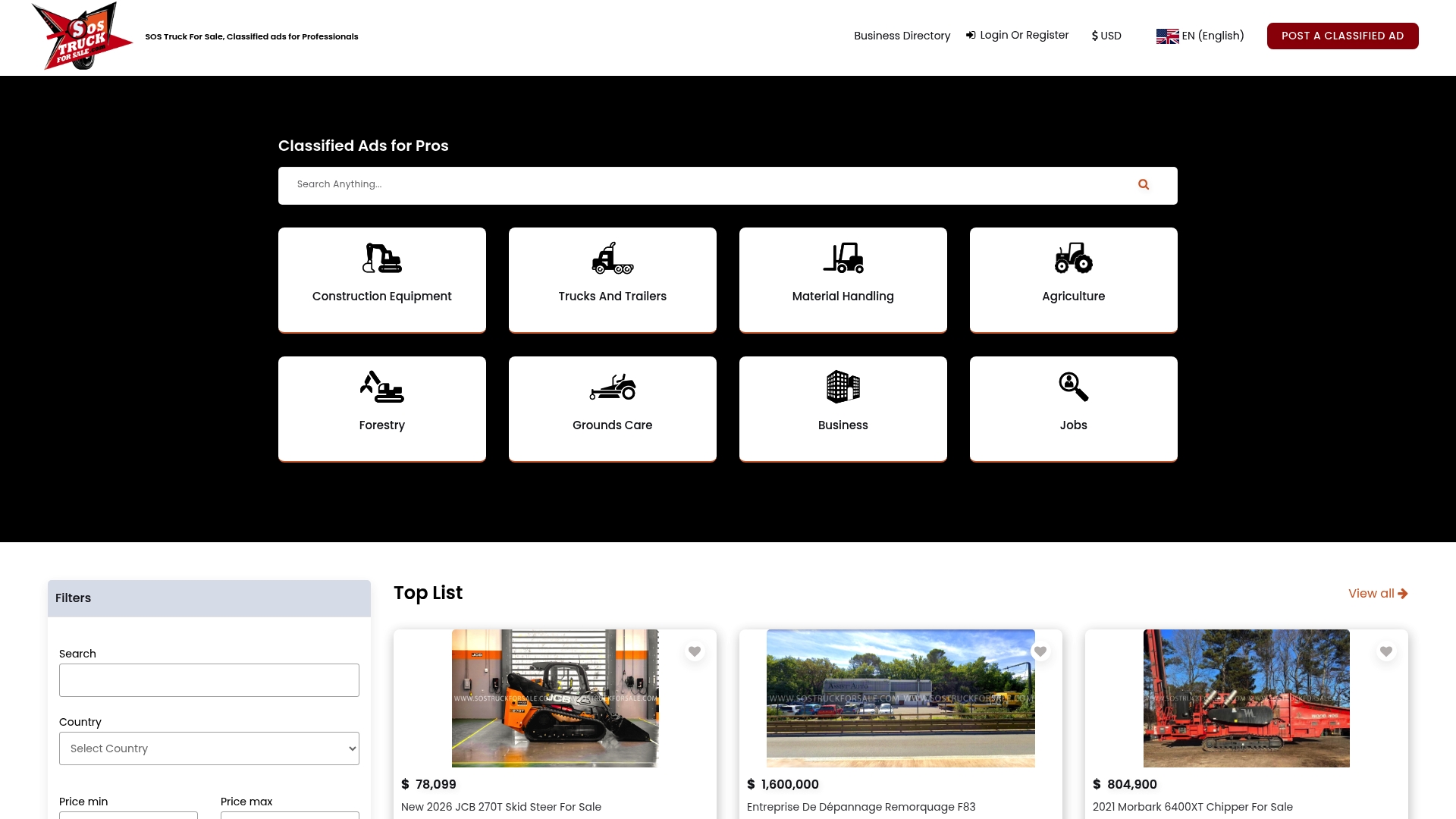
- Category filters by equipment type, price, and country help serious buyers find your skid steer without wading through unrelated listings.
- Include key details in your listing to help buyers assess the equipment.
Gather your checklist items, pull your photo set together, and head to our construction equipment listings to get your skid steer in front of buyers today.
FAQ
What's the fastest way to sell a skid steer online?
A dealer direct buy typically closes fastest, often within days, though you should expect a lower net price than a marketplace listing or auction would bring. If speed matters more than maximizing proceeds, this route skips the back-and-forth of fielding multiple buyer inquiries.
How long does it take to sell a skid steer on a marketplace?
Timelines vary by machine and market demand, but well-documented listings with complete photos tend to draw serious inquiries faster than thin ones. Marketplace sellers of similar heavy equipment have reported offers relatively quickly when the listing included clear condition details and pricing.
Do I owe taxes when I sell a skid steer used in my business?
If the machine was depreciable business property, you generally report depreciation recapture in Part III of Form 4797, with any remaining gain reported on Form 8949 and Schedule D. Keep your sale documents and talk to a tax advisor to confirm the right treatment for your situation.
How do I avoid getting scammed when selling equipment online?
Never accept a check for more than your asking price, and don't release the machine until your bank confirms the check has fully cleared, not just been accepted for deposit. The FTC's seller guidance also recommends avoiding mobile payment apps from buyers you don't know and considering escrow for any remote sale.
What documents do I need to sell a skid steer?
You'll need the title or proof of ownership, a bill of sale, service history and recent invoices, and a current hour meter reading. Having these ready before you list speeds up negotiation and builds buyer confidence from the first inquiry.
Sources
- Instructions for Form 4797 (2025) | Internal Revenue Service
- Selling stuff online? Here’s how to avoid a scam | Consumer Advice
- How Do I Sell Used Construction Equipment? - National Auction Association
- Top 10 Tips for Selling Heavy Equipment & Trucks