
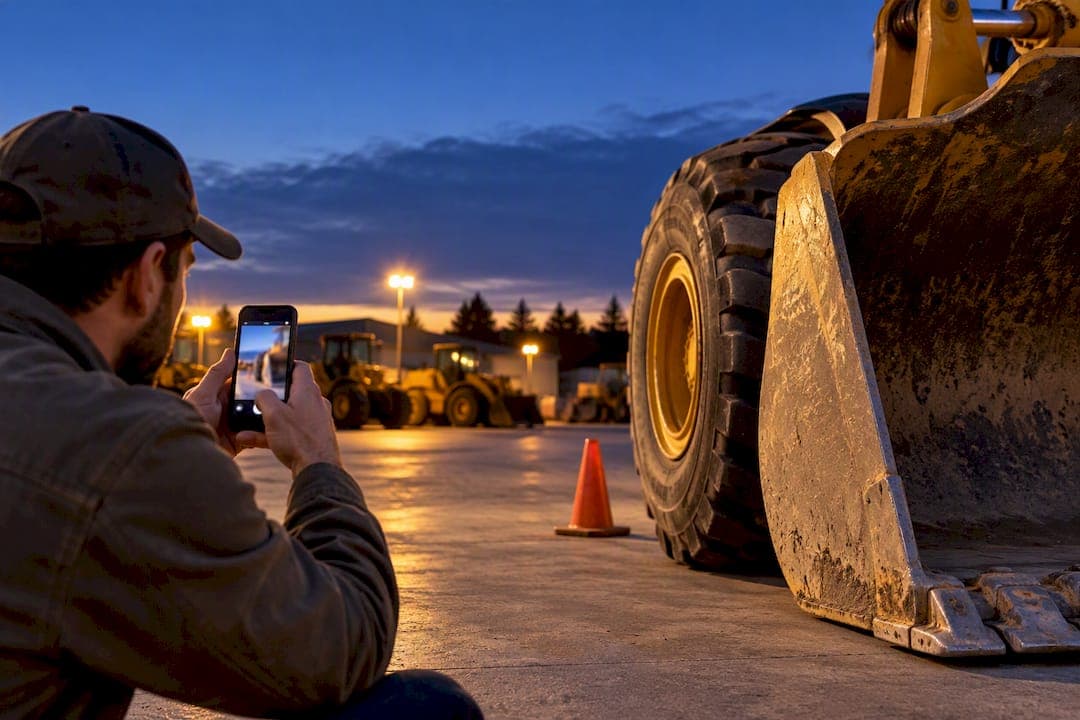
List your wheel loader on a specialized heavy-equipment marketplace and build the listing to be financing-ready. That single move puts your machine in front of dealers and buyers already searching for it, instead of waiting for a local ad to get noticed. A complete listing with hours, service history, and clear photos typically draws faster, stronger offers than a bare-bones post, and most sellers who prepare this way see serious inquiries within days rather than weeks.
TL;DR:
- Listing on a specialized heavy-equipment marketplace increases exposure to active buyers and dealers, especially when listings are fully detailed with photos and service history.
- A complete listing should include specific specs, accurate location, 8 to 12 photos, and a condition summary to attract serious offers and reduce lowball bids.
- Well-documented maintenance records and proper cleaning before photographing can significantly raise the final sale price and buyer trust.
- Pricing should be based on recent sale comparisons, considering the machine's condition, hours, attachments, and cosmetic damage, with adjustments for high hours or missing parts.
- Using secure payment methods, verifying buyer identity, and handling paperwork carefully are critical to avoiding scams and ensuring a smooth transaction.
Table of Contents
- How Do You Sell a Wheel Loader Online?
- How Does an Online Marketplace Listing Work?
- What Prep Work Gets You a Better Price?
- How Do You Price a Used Wheel Loader?
- How Do You Handle Payment, Title, and Taxes?
- What Makes a Listing Sell Faster in 2026?
- How Do Listings Reach Dealers and Buyers?
- What Does It Cost to Sell a Wheel Loader Online?
- How Do You Choose the Right Marketplace to Sell On?
- How Do You Spot a Scam Buyer?
- What Sellers Get Wrong About Timing and Documentation
- Ready to List Your Wheel Loader?
- Sources
- FAQ
How Do You Sell a Wheel Loader Online?
Four pathways dominate the used wheel loader market, and each fits a different mix of urgency, price expectations, and effort tolerance.
- Marketplace listing: You post directly to a specialized platform, set your own price or accept offers, and negotiate with buyers yourself. Fastest exposure, best control over final price, moderate effort.
- Consignment: A dealer or broker lists and markets the machine for you, usually for a percentage of the sale. Less effort, but you give up 10 to 20 percent of the final price and some control over timing.
- Dealer trade-in: A dealer buys the loader outright, often as part of a new or used equipment purchase. Fastest cash, lowest effort, but dealers typically value trade-ins around 15 percent below retail asking price and expect to move the machine within roughly 90 days.
- Auction: You consign to a live or online auction house and let bidding set the price. Works well for rare configurations or when you need a hard sale date, but final price is unpredictable and auction fees cut into proceeds.
Most sellers chasing top dollar without giving up control land on a direct marketplace listing.
How Does an Online Marketplace Listing Work?
A listing lives or dies on completeness. Buyers browsing wheel loaders skip past vague posts and click into ones that answer their questions before they have to ask.
- Enter core specs. Make, model, year, hours, serial number, engine type, and bucket or attachment configuration all need their own fields, not a paragraph description.
- Confirm your location. Buyers filter by state and region first, so an accurate location keeps you visible to the right search results.
- Upload a full photo set. Aim for 8 to 12 images: front and rear three-quarter shots, the engine bay, cab interior, hour meter, serial plate, tires or tracks, and close-ups of any wear or attachment points.
- Write a condition summary. Note recent service, known issues, and anything replaced in the last year. Vague listings breed lowball offers.
- Publish and monitor inquiries. Respond to messages within hours, not days. Track incoming offers in one place so you can compare them side by side instead of negotiating blind.
Pro Tip: Shoot photos outdoors in flat daylight and skip the flash. Buyers judge paint and hydraulic condition almost entirely from your photo set, and harsh shadows hide the details that build trust.
When multiple offers come in, don't accept the first one reflexively. A slower buyer with financing already lined up often closes faster than a quick lowball offer that stalls at the bank.
What Prep Work Gets You a Better Price?
Sellers who document maintenance and photograph the machine properly consistently land higher offers, and it's one of the most overlooked steps in the entire process.
Start with a walk-around inspection covering the same points a buyer's mechanic will check:
- Engine: oil condition, leaks, exhaust smoke color, coolant level
- Hydraulics: cylinder seals, hose condition, lift arm response under load
- Tires: tread depth, sidewall cracking, matched wear across all four
- Linkage and pins: excessive play, grease fittings intact
- Safety decals and lighting: readable and functional
- Undercarriage and frame: no visible cracks or unrepaired damage
Pull together a service file next. Include maintenance logs, fluid change receipts, any major repair invoices, and a recent inspection report if you have one. Buyers pay a premium for a paper trail because it removes their biggest fear: an unknown machine. Guidance adapted from OSHA's pre-operation inspection standards for powered industrial equipment works as a solid checklist template, even though it's written for forklifts.
Small fixes pay for themselves fast. Fresh paint on scuffed panels, a new battery, cleaned undercarriage, and repaired safety decals cost little and change a buyer's first impression instantly. A detailed skid steer inspection checklist walks through similar prep steps that translate directly to wheel loaders.
Pro Tip: Wash the machine before you photograph it, not before you list it. Dirt and mud in photos read as neglect even on a mechanically sound machine.

How Do You Price a Used Wheel Loader?
Start with comps, not a gut feeling. Pull recent sale prices for your make, model, and hour range from marketplace listings and auction results, then adjust for your machine's specific condition.
Equipment World's market data tracks which wheel loader brands and models moved fastest and at what price points, giving you a baseline for common configurations. For rarer or specialized setups, auction price indices like those Equipment World cites for resale valuation tend to be more reliable than retail asking prices, since auction results reflect what buyers actually paid rather than what sellers hoped for.
A well-documented machine typically sells in the higher half of its comp range, according to practitioner observation of listings with complete service files versus those without one.
Common downward adjustments to factor in:
- High hours relative to the model's typical service life
- Missing standard attachments like a quick-coupler or forks
- Cosmetic damage, cracked glass, or torn seats
- Aftermarket repairs not documented with receipts
Once you have a range, pick your strategy. A fixed price works for common models with plenty of comps. Accepting offers suits unique configurations where you're not sure what the market will bear. Reserve pricing through consignment or auction makes sense when you need a guaranteed floor but want competitive bidding above it.
How Do You Handle Payment, Title, and Taxes?
High-value equipment sales demand more caution than a typical online transaction, and the paperwork trail matters as much as the money.
- Use a secure payment method. Wire transfer through your bank or an escrow service designed for large purchases protects both sides. Never release the machine before funds clear, and never accept a cashier's check without verifying it with the issuing bank directly.
- Prepare your documents before you list. A bill of sale, current title, and lien release (if applicable) should be ready to hand over the moment a deal closes.
- Check your state's title transfer rules. Requirements vary, so confirm what your state's DMV or equivalent agency requires before the buyer shows up.
- Coordinate transport. Decide upfront whether you or the buyer arranges shipping, and get a transport quote ready to share during negotiations.
If you used the loader in a business, the sale likely triggers depreciation recapture. The IRS instructions for Form 4797 cover how to report the sale of depreciable business property and calculate what portion of your gain gets taxed as ordinary income versus capital gain. A primer on how equipment depreciation works for contractors is a useful plain-language starting point, but talk to a tax professional before filing, since recapture rules are easy to miscalculate.
For the physical move, a seller's checklist for shipping heavy equipment safely covers load securing and carrier vetting in more depth.
What Makes a Listing Sell Faster in 2026?
Buyers have gotten more cautious, and that changes what makes a listing stand out. Sandhills' market reporting shows that used heavy-equipment inventory is declining both month over month and year over year, with sales cycles stretching longer as buyers weigh purchases more carefully. In that environment, a financing-ready listing, one with complete specs, a documented inspection, and a clean photo set, closes faster than a thin one.
- List immediately if your machine has under 5,000 hours and a clean service file; low inventory works in your favor right now.
- Wait a few weeks to gather documentation if your machine needs minor repairs first; a rushed, incomplete listing costs you more in lowball offers than the delay costs you in time.
- Highlight service history prominently in your description, not buried at the bottom.
- Have a transport quote ready to share so buyers can calculate landed cost immediately.
- Answer inquiries within hours. Slow responses lose deals to faster-moving sellers.
Pro Tip: If your buyer needs financing, a breakdown of heavy equipment financing options you can point them to often speeds up their decision and keeps the deal from stalling at the bank.
How Do Listings Reach Dealers and Buyers?
A listing on a general classifieds site sits and waits for someone to stumble across it. A listing on a specialized equipment marketplace works differently: it gets indexed into search filters buyers actively use, by category, subcategory, price range, and location, so the right buyer finds it without needing to know your listing exists.
Many marketplaces also syndicate listings outward, pushing your posting into dealer networks and partner feeds beyond the original site. That broadens your buyer pool past whoever happens to browse the marketplace directly, reaching equipment dealers who monitor inventory feeds for machines matching their customers' needs. Some platforms offer promoted or featured placement, which bumps a listing higher in search results and category pages for a set period.
The practical effect is reach you can't replicate by posting to a single local classifieds board. A wheel loader listed with accurate specs and full photos on a marketplace built for construction equipment gets seen by buyers who are already qualified, meaning they know what a wheel loader is worth and what questions to ask about hours and hydraulics. That's a very different audience than someone scrolling a general marketplace looking for furniture and stumbling onto heavy equipment by accident.
For sellers, this means the platform choice matters more than the listing copy in some respects. A well-written description on a low-traffic site still underperforms a mediocre one on a platform with real dealer syndication behind it.
What Does It Cost to Sell a Wheel Loader Online?
Costs vary by selling pathway, and understanding them upfront prevents an unpleasant surprise at closing.
Marketplace listings typically charge a flat listing fee or a small commission on sale, sometimes both, depending on the platform and whether you add promoted placement. That's usually the lowest-cost option per dollar of final sale price, since you're paying for exposure, not a middleman's time.
Consignment arrangements run higher, often 10 to 20 percent of the final sale price, because the dealer or broker handles marketing, buyer calls, and negotiation on your behalf. That percentage buys convenience, not necessarily a higher final price.
Dealer trade-ins carry no direct listing fee, but the cost shows up in the offer itself. Dealers build their margin into the trade value, which is why trade-in offers tend to land around 15 percent below retail asking price.

Auction fees vary by house but commonly include a seller's commission plus transport and setup costs to get the machine to the auction site. Add those together and auction can end up costing more than a marketplace listing once you factor in logistics.
Beyond the platform fee itself, budget for professional photos if you're not comfortable shooting your own, any pre-sale repairs identified during inspection, and shipping coordination if you're not handling transport yourself. None of these are mandatory, but skipping them usually costs more in lower offers than it saves in fees.
How Do You Choose the Right Marketplace to Sell On?
Not every listing site treats heavy equipment the same way, and that difference shows up directly in how fast your loader sells.
Look for a platform built specifically for commercial and industrial equipment rather than a general classifieds site. Category-specific filtering (make, model, hours, price, location) means buyers searching for a wheel loader actually find yours, instead of it getting buried under cars and furniture. Check whether the platform reaches dealers through a business directory or syndication network, since dealer buyers often move faster and pay more predictably than individual buyers hunting for a bargain.
Compare fee structures before you commit. A flat listing fee is easier to budget than a percentage commission, especially on a high-value machine where a percentage cut adds up fast. Confirm whether promoted or featured placement is available and what it costs, since that option can matter more in a slower, buyer-leaning market where standing out from other listings actually moves the needle.
Finally, weigh how the platform handles buyer inquiries. A marketplace that routes messages directly to you, without forcing a broker in the middle, keeps you in control of negotiation and timing. That combination, industry-specific filtering, dealer reach, transparent fees, and direct buyer contact, is the practical checklist for picking where to list.
How Do You Spot a Scam Buyer?
Fraud attempts follow predictable patterns once you know what to watch for, and heavy equipment sales attract more of them than smaller transactions because the dollar amounts are larger.
Be wary of a buyer who agrees to your asking price without negotiating, then asks you to ship the machine before payment clears. Legitimate buyers push back on price at least a little, and they never expect delivery before funds settle. Overpayment scams follow a similar script: a buyer sends a check for more than the agreed price and asks you to refund the difference, banking on you releasing the "refund" before the original check bounces.
Watch for buyers who refuse a phone call and insist on communicating only through text or email, especially if their messages contain awkward phrasing or urgent pressure to close quickly. Verify any cashier's check or wire confirmation directly with the issuing bank before you release the machine or the title, never by calling a number the buyer provided. Ask for ID and a business name you can independently verify, and be suspicious of any buyer who wants to arrange their own "inspector" to visit before offering payment details that don't match their claimed identity.
The safest transactions close through verified payment methods, in person or through escrow, with title and bill of sale exchanged at the same time funds clear. If a deal feels rushed or a buyer avoids basic verification steps, walk away. There are always other buyers for a well-documented machine.
What Sellers Get Wrong About Timing and Documentation
The biggest mistake sellers make is treating the listing as the finish line instead of the starting point. A post with a price and a phone number gets buried under listings that answer every question a serious buyer has before they ever pick up the phone.
The publisher's marketplace platform is built around that gap: category and subcategory filtering, a business dealer directory, and equipment listings organized by price and location so a wheel loader listing surfaces for buyers actually searching for one, not general browsers. The listing workflow walks sellers through the specs, photos, and documentation fields that matter most, and promotional placement options exist for sellers who want extra visibility in a slower market.
Case studies and example listings live directly on the site for sellers who want to see how a well-documented machine gets presented before they build their own.
— Dave
Ready to List Your Wheel Loader?
This marketplace platform is built specifically for commercial and industrial equipment, avoiding a general classifieds board where a wheel loader might compete for attention against unrelated categories. Listings are organized by category, subcategory, price, and location, helping buyers who are searching for a wheel loader find relevant listings more easily.
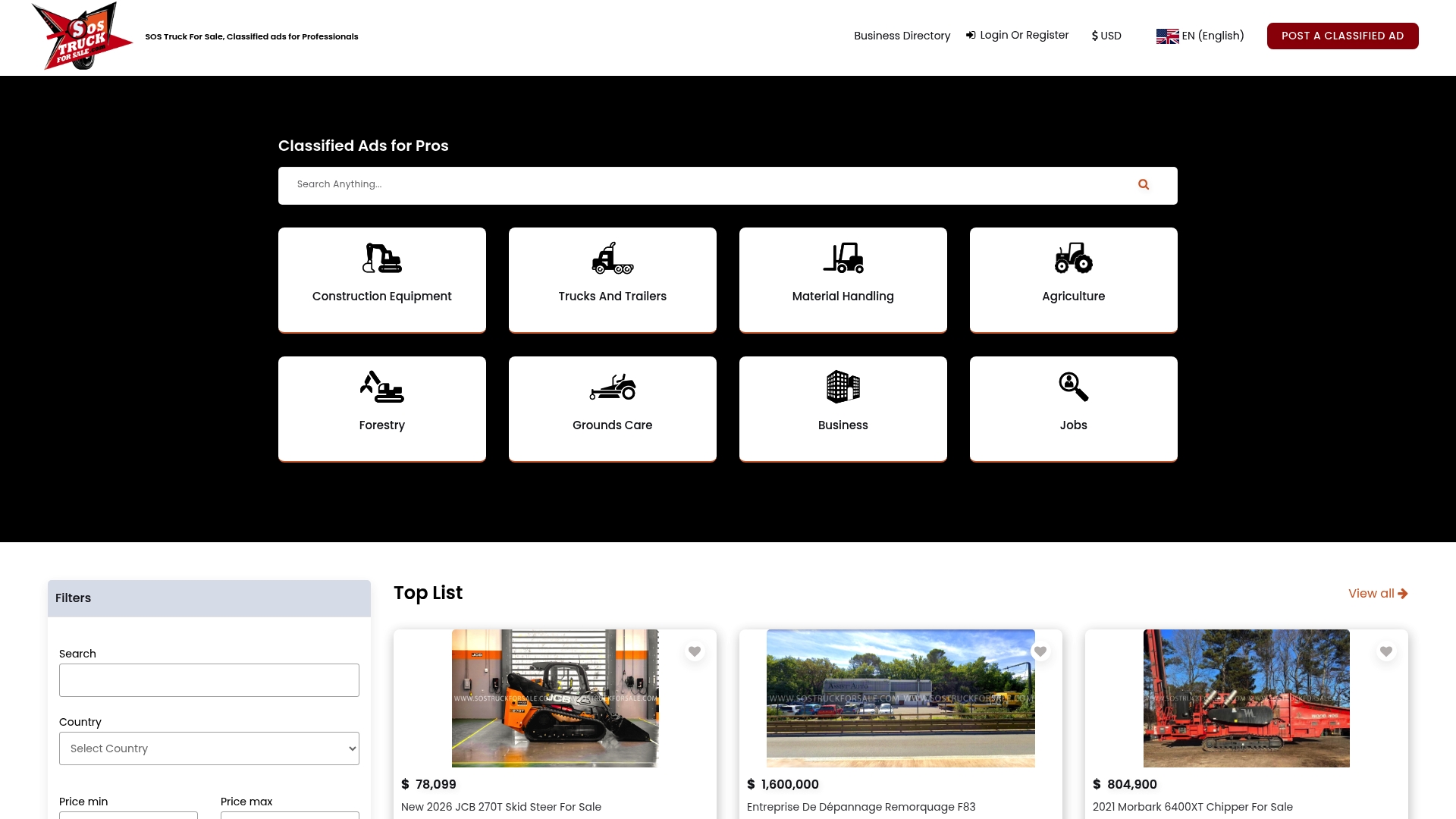
Getting started takes three steps: gather your specs and serial number, shoot a full photo set covering the engine bay, cab, hour meter, and serial plate, and publish through the listing workflow. From there, your posting reaches buyers browsing the construction equipment category and associated dealer networks, and you handle inquiries directly as they come in. Pull together your maintenance logs and any repair receipts before you publish. Sellers who list with a documented service file consistently field stronger offers than those who post specs alone. When you're ready, start your listing on Sostruckforsale and put your wheel loader in front of buyers who are already looking for one.
Sources
- Economic Uncertainty Extending Sales Cycles in Used Heavy Equipment Market
- Instructions for Form 4797 (Sales of Business Property)
FAQ
How Long Does It Take to Sell a Wheel Loader Online?
Timelines vary by market conditions and how complete your listing is, but a financing-ready listing with full specs, photos, and service history typically draws serious inquiries within days rather than weeks. Sandhills' reporting shows sales cycles have lengthened recently as buyers grow more cautious, which makes a complete listing more important than ever.
What Documents Do I Need to Sell a Wheel Loader?
You need a current title, a bill of sale, and a lien release if the machine still carries a loan balance. If you used the loader in a business, keep your maintenance and depreciation records handy for tax reporting through Form 4797.
How Much Does It Cost to List a Wheel Loader on Sostruckforsale?
Current listing prices and any promoted placement fees are available directly on the Sostruckforsale site, where you can review options before you publish. Costs vary depending on whether you add featured placement to a standard listing.
Should I Sell Through a Marketplace or Trade In to a Dealer?
A marketplace listing usually nets a higher final price because you're selling directly to the end buyer instead of through a dealer's margin. Trade-ins are faster and lower effort, but dealers typically offer around 15 percent below retail asking price in exchange for that speed.
How Do I Avoid Scams When Selling Heavy Equipment Online?
Never release the machine or title before payment clears through a verified method like wire transfer or escrow, and always confirm cashier's checks directly with the issuing bank. Be suspicious of buyers who agree to your price instantly, avoid phone calls, or push for a rushed close before basic verification.