

New Class 8 trucks typically run $170,000 to $220,000, while solid used late-models trade between $45,000 and $115,000 depending on miles and spec. Cab type, engine choice, and upfit work move both ends of that band. If you're pricing a specific truck right now, run a financing calculation against the appraised value before you negotiate, or schedule an inspection if you're eyeing a used listing.
TL;DR:
- Used late-model trucks can range from $45,000 to $115,000, with lower-mileage, better specs, and recent model years pushing prices higher.
- Cab type, upfit work, and whether the truck is diesel or electric significantly influence the final price, with electric trucks commanding a large premium.
- Market factors such as inventory surges from carrier liquidations and tariff surcharges have impacted new truck prices, causing fluctuations in affordability.
- Financing typically requires a 10-20% down payment, with monthly payments around $200 to $225 per $10,000 financed over a 60-month term at current rates.
- Total ownership costs including fuel, maintenance, and insurance often outweigh initial purchase price, especially for trucks with higher fuel consumption or aging components.
Table of Contents
- Semi Truck Pricing: New vs. Used Ranges Explained
- How Truck Type and Spec Change the Price
- What Actually Drives the Sticker Price
- Financing Benchmarks: Down Payments, Rates, and Terms
- Total Cost of Ownership: Beyond the Purchase Price
- Choosing New vs. Used, and What to Inspect
- Why These Numbers Hold Up
- Find Trucks in Your Price Range on SOS Truck For Sale
- Sources
Semi Truck Pricing: New vs. Used Ranges Explained
A new sleeper cab commonly lists between $170,000 and $220,000, while day cabs start lower, often around $139,000 and up, since they skip the sleeper box, bunk equipment, and extra insulation. Used trucks tell a different story. Clean units in good working order commonly land in the $45,000 to $100,000 range, with late-model 2019 to 2021 trucks often pushing past $100,000 when mileage is low and the spec sheet is strong.
What you get at each price point varies more than the sticker suggests:
- Entry-level used ($45K-$65K): higher mileage, limited or expired factory warranty, older emissions hardware.
- Mid-range used ($65K-$100K): 2019-2021 model years, moderate mileage, some warranty coverage remaining.
- New builds ($170K-$220K): full factory warranty, current emissions and safety tech, custom spec options.
Outliers exist on both ends.
How Truck Type and Spec Change the Price
Cab configuration is the first fork in the road. A day cab typically costs less than a comparably specced sleeper, simply because it carries less equipment and weight. Sleepers make sense for over-the-road hauling; day cabs suit regional or local routes where the driver goes home nightly.
Vocational trucks (dump, mixer, or utility bodies) add a separate cost layer entirely. The upfit itself, not the chassis, often drives the biggest swing in final price:
- Body and upfit work: can add $20,000 to $80,000 depending on the application.
- Sleeper premium over day cab: commonly adds tens of thousands to the base price.
- Electric trucks: carry a significant premium over diesel baseline pricing, though available incentives can offset part of that gap depending on your state and use case.
Match the configuration to your actual freight pattern before you shop. Paying for a sleeper you'll never use overnight is money wasted.
What Actually Drives the Sticker Price
Engines, transmissions, and aftertreatment systems account for a large share of a truck's value, and they're the first thing that affects resale years down the road. A worn-out DPF or a transmission nearing rebuild time can knock thousands off an asking price, even if the rest of the truck looks clean.
Several forces push prices up or down beyond the components themselves:
- Factory add-ons and extended warranties raise the sticker but can lower long-term repair risk.
- Dealer fees and documentation charges vary widely and are often negotiable.
- Tariff surcharges have added roughly $10,000 to $15,000 to new-truck pricing during the 2024-2026 period, tightening new-truck budgets industry-wide.
- Inventory cycles and carrier liquidations can flood the used market with trucks at below-average prices, particularly when freight rates soften and fleets downsize.
Watch inventory swings closely. A liquidation event can put a fleet-maintained truck in front of you at a price that wouldn't exist in a tighter market.
Financing Benchmarks: Down Payments, Rates, and Terms
Most lenders want 10% to 20% down before they'll finance a semi truck, and loan terms typically stretch 24 to 84 months. Specialty truck lenders and finance panels report APR bands around 9% to 18%, with your credit profile and the truck's age determining where you land in that range.
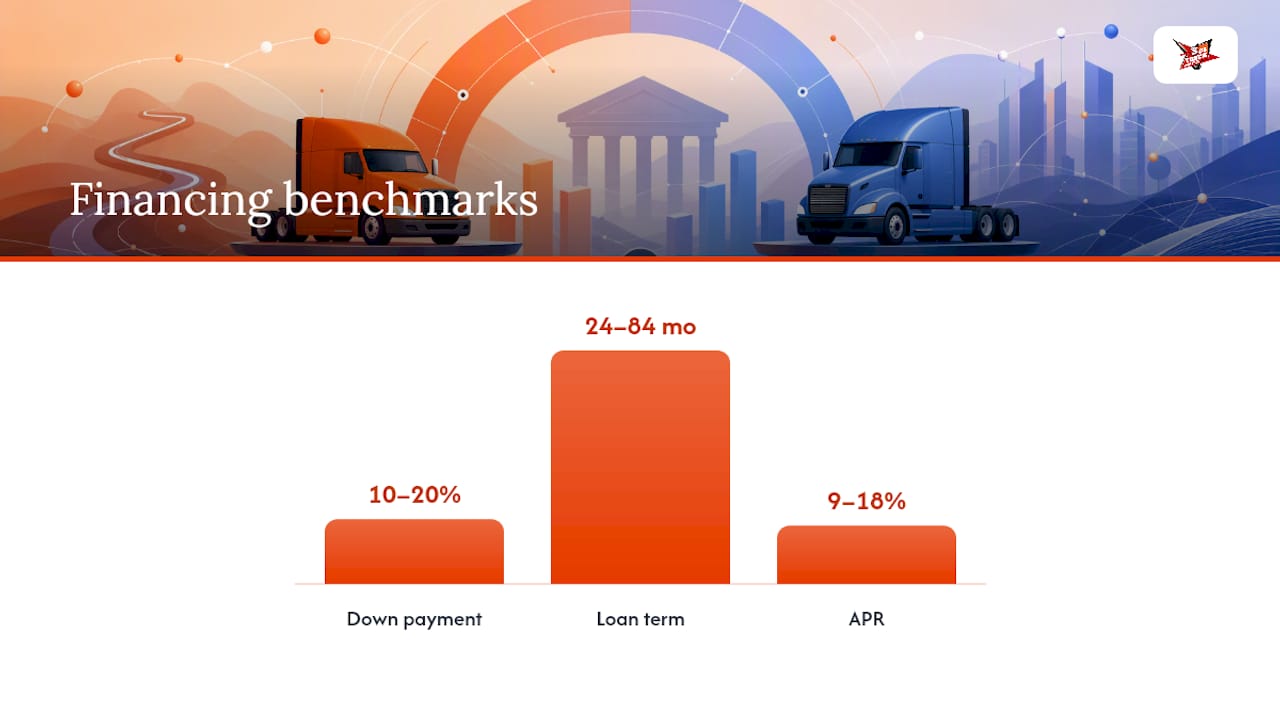
Statistic to remember: a practical rule-of-thumb puts monthly payments around $200 to $225 per $10,000 financed on a typical 60-month note at current rates.
Lender types break down roughly like this:
- Banks offer the lowest rates but the strictest credit and time-in-business requirements.
- SBA-backed loans work well for established small businesses with solid financials.
- Specialty truck lenders understand the equipment and move faster, often at higher rates.
- Online lenders approve quickly but usually charge premium APRs for that speed.
Zero-down offers exist, but they carry materially higher APRs. A modest down payment often unlocks meaningfully better pricing on the rest of the loan. Keep in mind that lenders fund against the truck's appraised value, not the asking price, so any gap between the two comes out of your pocket at closing. A commercial truck financing resource can walk you through how lenders structure these deals, and a lender partner like Formosity Funding can help you compare funding options before you commit to a specific truck.
Total Cost of Ownership: Beyond the Purchase Price
Sticker price is only the entry fee. Industry estimates put marginal operating cost around $1.50 to $2.50 per mile once you factor in fuel, maintenance, and depreciation, with fuel and insurance typically the two largest recurring line items.
Statistic to remember: at mid-single-digit MPG averages for heavy OTR trucks, a truck running 100,000 miles a year can burn tens of thousands of dollars in fuel alone, before a single repair bill shows up.
Budget across these categories before you commit to a truck:
- Fuel: the single largest recurring cost, tied directly to MPG and route type.
- Insurance: annual premiums vary by driver record, cargo type, and operating radius.
- Maintenance: routine service plus a reserve for big-ticket items like transmissions or aftertreatment repairs.
- Tires: a full set replacement is a predictable, recurring expense worth budgeting per mile.
A truck with a lower sticker price but higher fuel burn or an aging DPF can cost more over three years than a pricier, better-maintained unit.
Choosing New vs. Used, and What to Inspect
Your decision comes down to three questions: how much cash you have upfront, how many years you plan to run the truck, and how much downtime you can tolerate. A new truck buys warranty coverage and predictability. A used truck buys lower entry cost but shifts more risk onto your inspection process.
Before you buy any used unit, work through this checklist:
- Pull the VIN and full service history to confirm the truck matches its listed record.
- Check the engine and transmission for leaks, unusual noise, or recent rebuild work.
- Review DPF and turbo history, since aftertreatment repairs are among the costliest surprises.
- Inspect the frame and cab for rust, cracks, or accident repair signs.
- Ask about any repairs in the last six months, and get documentation, not just a verbal answer.
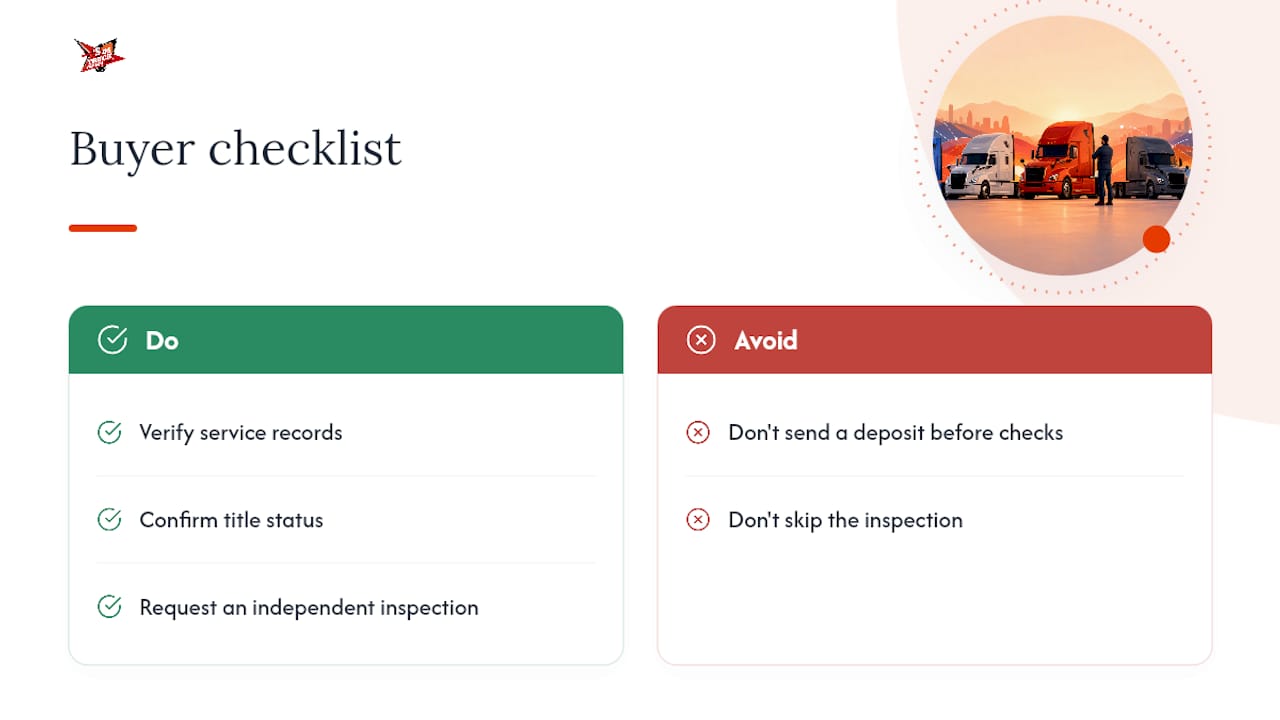
Pro Tip: If a seller can't produce service records or hesitates on a third-party inspection, treat that as a red flag worth walking away from, not negotiating past.
Why These Numbers Hold Up
Dave has spent years tracking freight equipment values and financing trends for owner-operators and small fleets. The price bands in this guide come from patterns observed across SOS Truck For Sale's own marketplace listings, cross-checked against lender and industry reporting. Use the marketplace the way any careful buyer should: verify service records, confirm title status, and request an independent inspection before you send a deposit.
Find Trucks in Your Price Range on SOS Truck For Sale
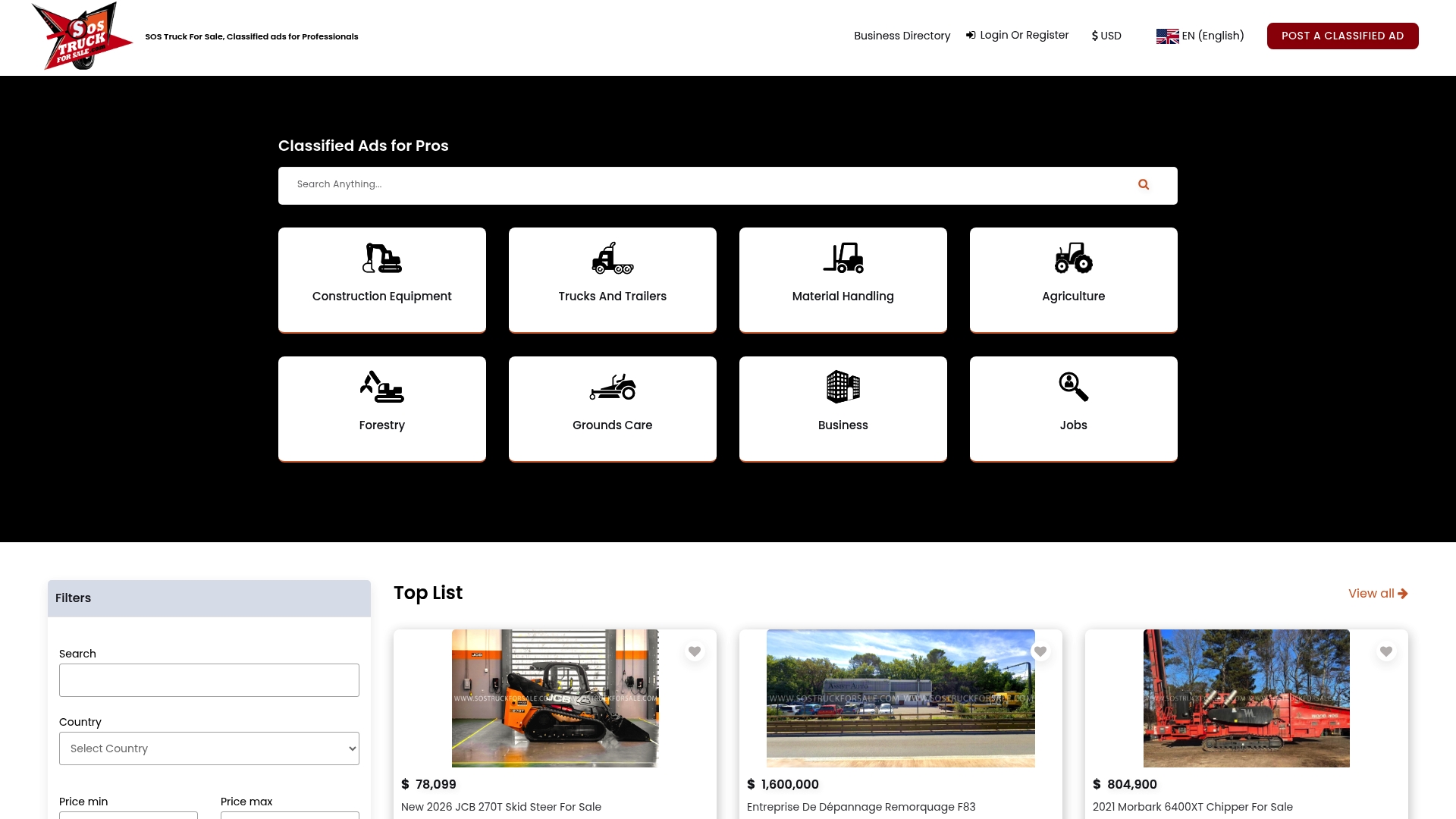
Once you know your target price band, the next step is filtering real listings against it. Sostruckforsale lets you narrow results by price, mileage, cab type, and financing-ready sellers, so you're not scrolling through trucks outside your budget or spec.
Before you commit to any listing, request the service records, current title, and any recent inspection reports directly from the seller. That paperwork tells you more about real condition than the photos ever will, and it protects you if a lender's appraisal comes in below the asking price. Reach out to sellers directly through Sostruckforsale and arrange a professional inspection before you finalize anything. Whether you're comparing a new sleeper against a late-model used truck or narrowing down vocational upfits, browsing active listings by price band is the fastest way to see what your budget actually buys today.
Sources
For rates and terms specific to your credit profile, check NerdWallet's financing breakdown and Dispatched's lender panel data directly, since APRs and down payment requirements shift with market conditions.
- Should You Buy a Truck in 2026? Equipment Price Guide
- How to Finance a New or Used Semi Truck - NerdWallet
- Semi-truck financing (SMB Compass)