

When you sell business equipment for more than its adjusted basis, depreciation recapture kicks in under Section 1245, taxing the lesser of your gain or total depreciation claimed as ordinary income rather than capital gain. Any remaining gain beyond that recapture amount typically qualifies for Section 1231 capital gain treatment. You report the sale on Form 4797, where Part III separates the recaptured ordinary income from any excess gain.
TL;DR:
- Depreciation recapture on equipment is limited to the lesser of recognized gain or total depreciation claimed, with any excess gaining capital gain treatment.
- Accurate calculation requires assembling original purchase documents, depreciation schedules, sale price, and any allocated proceeds for bundled sales.
- The recapture amount must be reported on Form 4797, with excess gain flowing to Schedule D and Form 8949, especially when multiple assets are involved.
- Recapture is taxed as ordinary income, and improper handling—such as neglecting allowable depreciation or misallocating proceeds—can trigger IRS problems.
- Strategies like installment sales or precise price allocation can help manage the tax impact but do not eliminate recapture obligations.
Table of Contents
- What to Gather Before You Price or Close the Sale
- How to Calculate Depreciation Recapture Step by Step
- Two Worked Examples With Full Math Shown
- Where Recapture Gets Reported on Your Tax Return
- Special Situations That Change the Math
- Managing the Cash-Tax Impact of a Sale
- Records to Keep and Mistakes That Trigger Problems
- Preparing a Heavy Equipment Sale the Right Way
- Why Recapture Belongs in Your Pricing Conversation
- List Your Equipment With Sellers Who Know the Market
- FAQ
- Sources
What to Gather Before You Price or Close the Sale
Before you set an asking price or sign a sale agreement, pull together the numbers that determine your tax exposure. Guessing at these figures after the sale closes leads to amended returns and unpleasant surprises at filing time.
Start with your original purchase documentation and depreciation records, then run the basic math to see where you stand:
- Original cost of the equipment plus any capital improvements made since purchase.
- Accumulated depreciation, including any Section 179 expensing or bonus depreciation claimed in prior years.
- Sale price, selling expenses, and the fair market value of any non-cash consideration (trade-ins, assumed debt) as defined under IRS rules.
- Allocation schedule if you are selling multiple assets or an entire fleet in one transaction.
Run the quick sequence: amount realized minus adjusted basis equals gain or loss. If the result is negative, recapture does not apply at all, since recapture only triggers on a gain. Watch for two red flags before you go further: a bundled sale involving several asset types (which requires fair market value allocation) and listed property where business use has dropped below 50%, since both change the math substantially.
How to Calculate Depreciation Recapture Step by Step
The calculation for Section 1245 equipment follows a fixed sequence, and once you know the formula, the arithmetic is straightforward even for a complex sale.
Amount realized is the starting point: cash received, plus the fair market value of any property received, plus debt the buyer assumes, minus your selling expenses (commissions, closing costs, transport fees). This figure represents what you actually got for the equipment, not just the sticker price on the bill of sale.
Adjusted basis comes next: original cost plus the cost of any capital improvements, minus total accumulated depreciation, including Section 179 deductions and any special depreciation allowances you claimed. Our equipment depreciation primer walks through how MACRS schedules build that depreciation figure year by year, which is worth reviewing if you have not touched your depreciation schedule since the purchase.
From there, the calculation runs in order:
- Gain or loss equals amount realized minus adjusted basis. A negative number means you sold at a loss, and no recapture applies since there is no gain to recharacterize.
- Recapture amount equals the lesser of the recognized gain or the total depreciation allowed or allowable on the asset. This is the core rule under Section 1245: depreciation deductions you benefited from get clawed back as ordinary income when you sell at a gain.
- Excess gain, if any, equals total gain minus the recapture amount. That remainder gets Section 1231 treatment, which often qualifies for long-term capital gain rates.
Section 1245 requires that gain up to the amount of prior depreciation deductions be taxed as ordinary income, with any remaining gain eligible for Section 1231 capital gain treatment. That split is the single most consequential number in the entire sale, since ordinary income rates can run well above long-term capital gains rates depending on your tax bracket.
One phrase trips up a lot of sellers: "allowed or allowable." The IRS does not care whether you actually claimed every dollar of depreciation you were entitled to. If you could have taken a deduction in a prior year and did not, the IRS still treats it as allowable and factors it into your adjusted basis calculation. Skipping depreciation on purpose to avoid future recapture does not work. It only lowers your current deductions while your adjusted basis still drops as if you had claimed it, which can leave you worse off on both ends.
The practical upshot: recapture is not a penalty, it is a reclassification. You already got the tax benefit of those depreciation deductions when you took them against ordinary income in prior years. Recapture simply makes sure the gain attributable to that benefit gets taxed the same way it was deducted.
Two Worked Examples With Full Math Shown
Numbers make this rule click faster than formulas alone. Here are two scenarios built around a mid-size piece of equipment, like an excavator or a day cab tractor, with every intermediate figure shown.
Example A: Sale price below original cost, full recapture.
Say you bought an excavator for $120,000, made no capital improvements, and claimed $90,000 in accumulated depreciation over several years. Your adjusted basis is $30,000. You sell the machine for $70,000 with $2,000 in selling expenses, so your amount realized is $68,000.
Here, the gain of $38,000 is smaller than the $90,000 in accumulated depreciation, so the entire gain is recaptured as ordinary income. None of it gets capital gain treatment.

Example B: Sale price above original cost, split treatment.
Now say the same excavator sells instead for $140,000 after a strong used-equipment market, with $3,000 in selling expenses, giving an amount realized of $137,000. Adjusted basis stays at $30,000.
- Gain equals $137,000 minus $30,000, or $107,000.
- Recapture amount is the lesser of gain ($107,000) or accumulated depreciation ($90,000), so $90,000 is taxed as ordinary income.
- Excess gain is $107,000 minus $90,000, or $17,000, which gets Section 1231 treatment and typically flows through as long-term capital gain.
In both examples, the recapture figure reports on Form 4797 Part III, while any excess gain in Example B carries over to Form 8949 and Schedule D. Our post on used equipment sales tax surprises covers a related scenario where a sale below adjusted basis produces a Section 1231 loss instead, which nets against other gains rather than triggering recapture at all.
Where Recapture Gets Reported on Your Tax Return
Form 4797 is the form that ties the whole calculation together, and the Instructions for Form 4797 walk through exactly which lines to use for each piece of the transaction.
- Part III is where you figure recapture of depreciation on Section 1245 property; it asks for the same inputs you already calculated (cost, depreciation, adjusted basis, amount realized) and computes the ordinary income portion automatically.
- Excess gain beyond recapture carries to Form 8949 and then Schedule D, with the notation "From Form 4797" and certain columns left blank per the form's own instructions, since the character of the gain was already determined on Form 4797.
- Mixed-asset sales (equipment plus inventory, real property, or goodwill in one transaction) require a fair market value allocation across asset types, and Publication 544 explains how to support and document that split with a separate worksheet or statement.
- Installment sales add a layer of complexity because recapture income is generally recognized in full in the year of sale regardless of when payments are actually received, even though the remaining gain can be spread across future years.
- Self-employment tax generally does not apply to recapture reported on Form 4797 for most equipment sellers, but if the sale is part of a trade or business reported on Schedule C with equipment treated as inventory rather than a capital asset, the treatment shifts, so check which category your equipment falls into before you file.
Keeping a clean paper trail between your depreciation schedule (Form 4562) and the figures you enter on Form 4797 saves time if the return gets a second look.
Special Situations That Change the Math
A handful of common scenarios modify the standard recapture calculation, and missing one of these can throw off your entire filing.
- Section 179 deductions get recaptured the same way as regular depreciation when the underlying asset is sold at a gain. The Form 4797 instructions list specific lines for reporting the portion of recapture tied to Section 179 amounts separately from regular MACRS depreciation.
- Listed property under Section 280F (vehicles and certain mixed-use equipment) faces stricter recapture rules. If business use drops below 50% in any year after you claimed accelerated depreciation, a portion of that deduction can be recaptured in the year the drop occurs, separate from any eventual sale.
- Partial dispositions under MACRS let you remove a component of a larger asset (say, a replaced engine on a truck) from your depreciation schedule and recognize gain or loss on just that piece, which changes the remaining basis of the whole asset going forward.
- Section 1231 losses occur when the sale price falls below adjusted basis. No recapture applies in that case, and the loss can offset other ordinary income depending on your overall Section 1231 netting for the year.
Pro Tip: Pull your depreciation schedule and check business-use percentage for any listed property before you list it for sale, since a drop below 50% use can trigger recapture even without a sale.
Managing the Cash-Tax Impact of a Sale
A handful of realistic strategies come up when sellers talk to their advisors about softening the tax hit from a large equipment sale, though each comes with real limits.
- Installment sales spread the receipt of cash over multiple years, but the depreciation recapture portion is still recognized as income in the year of sale regardless of the payment schedule, so this strategy helps with the capital gain piece more than the recapture piece.
- Careful price allocation across asset classes in a bundled sale, backed by fair market value support, can shift how much of the total price lands on equipment subject to recapture versus other property taxed differently; Publication 544 requires that allocation to reflect actual FMV, not an arbitrary split chosen to minimize tax.
- Qualified Opportunity Fund deferral is available for Section 1231 capital gains reinvested within the required window, but it does not apply to the depreciation recapture portion of your gain, since recapture is ordinary income rather than a capital gain eligible for QOF treatment.
- State tax treatment of recapture income varies, and some states tax it differently than the federal ordinary income rate, so modeling the full picture with a tax advisor before closing a large sale is worth the hour it takes.
Sellers in capital-intensive sectors sometimes look at depreciation and recapture through the lens of larger project financing. Our renewable energy partner's overview of MACRS solar depreciation and FieldVest's guide to depreciation in energy projects cover similar recapture mechanics for owners of high-capex equipment in those industries, which can be a useful comparison if your fleet includes assets used in energy-adjacent operations.
Records to Keep and Mistakes That Trigger Problems
The documentation behind your recapture calculation matters as much as the calculation itself, since an examiner will ask for support, not just the final number.
Keep these on file for every piece of equipment you sell:
- Original invoices and purchase agreements showing the full cost basis.
- Depreciation schedules (Form 4562) for every year the asset was in service.
- Closing statements and bills of sale documenting the actual sale price and terms.
- Allocation worksheets for any multi-asset transaction, with fair market value support for each category.
- Business-use records for listed property, especially if use percentage changed over time.
The most frequent mistakes we see involve forgetting depreciation that was allowable but never claimed, splitting sale proceeds across asset types without real FMV support, and confusing installment-sale basis rules with a standard lump-sum sale. A one-page worksheet showing each calculation step, attached to your return or kept with your records, goes a long way toward avoiding a drawn-out follow-up with the IRS.
Preparing a Heavy Equipment Sale the Right Way
Selling an excavator, a semi truck, or a fleet of grounds care equipment comes with its own documentation challenges, since buyers and tax preparers alike want clean records tying the sale back to your depreciation history.
Our guide on equipment depreciation methods and calculations breaks down how MACRS schedules build the accumulated depreciation figure you need for the recapture formula. If you are selling multiple pieces in one transaction, our post on selling surplus equipment without the hassle covers allocation basics for bundled sales, and our heavy equipment pricing guide using auction comps helps you support the fair market value figures an allocation worksheet requires.
Before you list equipment for sale, run through this short prep list:
- Export your current depreciation schedule for the asset.
- Assemble closing documents and any trade-in or debt-assumption paperwork.
- Draft an allocation worksheet if the sale includes more than one asset type.
Why Recapture Belongs in Your Pricing Conversation
Many equipment owners price a sale around the number they want to walk away with, then get surprised by the tax bill months later. Recapture is predictable math, not a mystery, and factoring it into your asking price and cash-flow planning before you list the equipment gives you a far more accurate picture of actual net proceeds.
For anything beyond a single straightforward sale, especially bundled transactions or installment deals, a tax advisor familiar with your state's treatment of recapture income is worth the consultation fee.
— Dave
List Your Equipment With Sellers Who Know the Market
This kind of marketplace supports sales of commercial trucks, trailers, construction equipment, material handling machinery, and more, listed where serious buyers look. Preparing clean documentation before you list makes the whole transaction smoother for both sides.
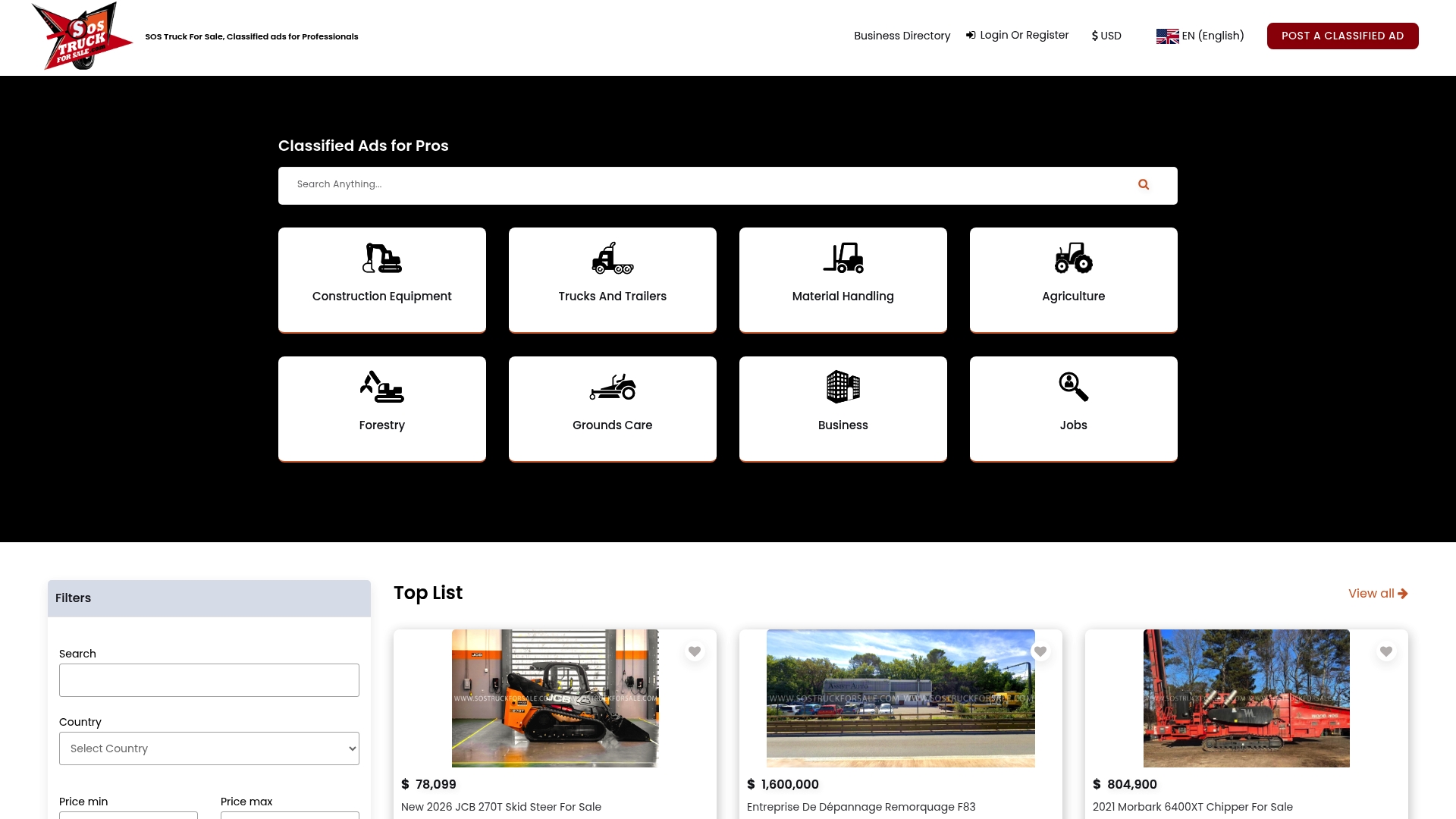
Ready to move your equipment? List it on our marketplace and connect with buyers searching by category, price, and location right now.
This article is general information, not a substitute for advice from a qualified financial advisor. Consult a qualified financial professional about your own circumstances before acting on anything here.
FAQ
Is depreciation recapture always taxed at 25%?
No, the 25% figure applies to unrecaptured Section 1250 gain on real property, not to equipment. Equipment recapture under Section 1245 is taxed as ordinary income at your regular tax rate, which can be higher or lower than 25% depending on your bracket.
What are the basic rules for depreciation recapture on equipment?
Recapture equals the lesser of your recognized gain on sale or the total depreciation you claimed, treated as ordinary income under Section 1245. Any gain beyond that recapture amount typically gets Section 1231 capital gain treatment, and you report the whole transaction on Form 4797.
What types of depreciation are not subject to recapture?
If you sell equipment at a loss, there is no recapture at all since recapture only applies to gains. Section 1231 losses also fall outside recapture rules entirely and instead net against other Section 1231 gains for the year.
How can I reduce or defer taxes on depreciation recapture?
Installment sales can spread the capital gain portion of a sale over several years, though the recapture amount itself is generally recognized in full in the year of sale. Qualified Opportunity Fund deferral is available for the Section 1231 capital gain portion of a sale but does not extend to the recapture amount, since that income is ordinary, not capital gain.
Sources
- 26 U.S. Code § 1245 — Gain from disposition of certain depreciable property
- Publication 544 (Sales and Other Dispositions of Assets)