
List your excavator on a specialized heavy-equipment marketplace with complete photos, a cold-start video, and full maintenance documentation. That combination attracts serious buyers and moves faster than a bare-bones classified ad. Save auction or consignment for situations where speed or volume outweighs getting top dollar. Start now by pulling your service records, noting the serial number, and photographing the hour meter.
TL;DR:
- A complete listing with detailed photos, a cold-start video, and maintenance records attracts serious buyers and speeds up the sale process.
- Setting the asking price within 10% of current market values, adjusted for hours and condition, maximizes your chances of a profitable sale.
- Using structured titles and photo checklists improves listing visibility and clarity, leading to faster inquiries and better search results.
- Private marketplace listings allow control over price and negotiations, making them ideal when you prioritize higher margins over speed.
- Proper screening, proof of funds, and secure payment methods are essential to prevent scams and ensure safe, smooth transactions.
Table of Contents
- Where to Sell: Marketplace, Auction, Consignment, or Broker
- How Do You Prepare an Excavator Before Listing It?
- How Much Is My Excavator Worth?
- What Makes a Listing Actually Sell?
- How Do You Screen Buyers and Get Paid Safely?
- What Paperwork Do You Need to Transfer Ownership?
- How Do You Handle Shipping and Final Handover?
- Why Consistency Beats Cleverness When Selling Equipment
- List Your Excavator Where Serious Buyers Are Already Looking
- Sources
- FAQ
Where to Sell: Marketplace, Auction, Consignment, or Broker
Every seller wants the same thing: the highest price with the least hassle. The problem is you can rarely maximize both at once.
A private, do-it-yourself listing gives you full control over price and buyer conversations, but you handle every question, showing, and negotiation yourself. An online marketplace listing spreads that workload while still putting you in charge of the asking price and final say on offers. Caterpillar's own seller guidance frames these as points on a spectrum between control and convenience, and five common routes cover most sellers' needs.
- Marketplace listing: broad buyer reach, you set the price, moderate effort.
- Unreserved auction: fastest sale, but final price depends entirely on who shows up that day.
- Consignment or dealer trade-in: hands-off, someone else markets and sells it, but expect a lower net after fees.
- Broker: professional negotiation on your behalf, useful for high-value machines, but you give up a commission.
If speed matters more than price, an unreserved auction is the cleanest exit. If margin matters more, a controlled marketplace listing or targeted consignment through a resource like Sostruckforsale's consignment guide usually nets more, even after fees.
How Do You Prepare an Excavator Before Listing It?
Buyers judge condition in the first ten seconds of scrolling through photos. A dirty machine with mystery hydraulic leaks reads as neglected, even if the undercarriage is solid.
- Wash it. Pressure-wash the frame and undercarriage, degrease the engine bay, and park it against a plain background, ideally on level gravel or concrete, not mud.
- Fix the cheap stuff. Replace burnt-out lights, swap cracked hoses, and top off fluids before you shoot a single photo. These fixes cost little and remove the first objections a buyer raises.
- Compile your paperwork. Gather service records, note every major part replaced, and photograph the hour meter and serial plate together in one shot.
- Shoot the cold-start video. Record the machine starting from a dead cold engine, then run through every hydraulic function, boom, stick, bucket curl, and swing, in one continuous take.
Documented maintenance history lowers a buyer's perceived risk and tends to shorten how long a listing sits, since it answers the "what's wrong with it" question before anyone has to ask. A clean machine paired with clear records consistently draws faster inquiries than an ad with vague specs and a couple of blurry photos.
Pro Tip: A tool like Ditch — Easy jobsite photo management for construction crews can help you organize and tag job-site photos and video clips by machine, so you're not digging through your phone for the right cold-start clip when a buyer asks for it.
How Much Is My Excavator Worth?
Start with comparables, not gut feeling. Pull current asking prices for the same model and hour range on marketplace listings, then check recent auction sold-lot results for a reality check on what buyers actually paid, not just what sellers hoped for.
- Baseline comps: Match year, brand, and model as closely as possible before adjusting for hours.
- Adjust up for low hours, recent undercarriage or hydraulic pump work, and attachments included in the sale.
- Adjust down for high hours, deferred maintenance, or missing attachments buyers would expect.
- Set your range roughly within 10% of that adjusted market value, then anchor your asking price at the top of that range with room to negotiate.
If you're setting a reserve for an auction, use your adjusted comp value as the floor, not your original purchase price. For an unusual or high-value machine, a professional inspection or a dealer trade-in quote gives you a useful pricing floor even if you don't take the offer. Sostruckforsale's own pricing and comps guide walks through pulling those numbers step by step.
What Makes a Listing Actually Sell?
Your title does more work than any other line in the ad. Use this formula: Year + Brand + Model + Key Configuration + Hours. "2018 Caterpillar 320 Hydraulic Thumb, 4,200 Hrs" tells a buyer everything they need to decide whether to click.
| Listing element | What to include |
|---|---|
| Title | Year, brand, model, configuration, hour count |
| Spec sheet | Engine hours, operating weight, bucket size, attachments, undercarriage condition |
| Serial/VIN photo | Clear, well-lit shot of the plate matched to your documents |
| Photo set | 15–20 images covering all four sides, cab interior, undercarriage, and attachments |
| Video | One minute, cold start plus full hydraulic cycle |
| CTA | "Call or text for a walkaround video" or "Financing available, ask for details" |
A structured photo and title checklist tends to outperform ad-hoc listings because it gives search algorithms and human buyers the same clear signal: this seller did the work. Post the full listing on one primary marketplace, then cross-post identical copy to secondary channels rather than rewriting it each time, which keeps your story consistent across every place a buyer might find it.
Pro Tip: Photograph the serial plate and hour meter together in the same frame. It's a small detail that immediately signals you have nothing to hide.
How Do You Screen Buyers and Get Paid Safely?
Not every inquiry deserves your time. Ask every serious lead three questions upfront: how do they plan to transport it, what will they use it for, and are they paying cash or financing.
- Require proof of funds before you agree to hold the machine for anyone.
- Use escrow or a verified payment service for out-of-state sales rather than accepting a personal check.
- Watch for red flags: overpayment offers, requests to ship before payment clears, or buyers who won't get on a call.
- Take a deposit with written terms spelling out what happens if the buyer backs out.
- Have your comps ready so you can justify your price the moment someone tries to negotiate it down.
Triaging leads into hot, warm, and cold buckets as they come in keeps you focused on people who are actually ready to buy, instead of chasing every tire kicker who messages you.
What Paperwork Do You Need to Transfer Ownership?
A clean paper trail protects both sides of the deal and speeds up closing. At minimum, your bill of sale should include the make, model, year, serial number, sale price, sale date, and clear "sold as-is" language unless you're offering a specific warranty.
- Verify the serial number matches the plate, your title documents, and the bill of sale exactly.
- Keep copies of every document for your own tax and accounting records.
- Check your state's DMV or titling rules if your excavator carries any road-registered components, since requirements vary by state.
- Use a template rather than drafting language from scratch, since missing a clause is an easy way to create disputes later.
Sostruckforsale's ownership transfer checklist walks through the exact documents and language most private sales need, with a bill-of-sale template included.
How Do You Handle Shipping and Final Handover?
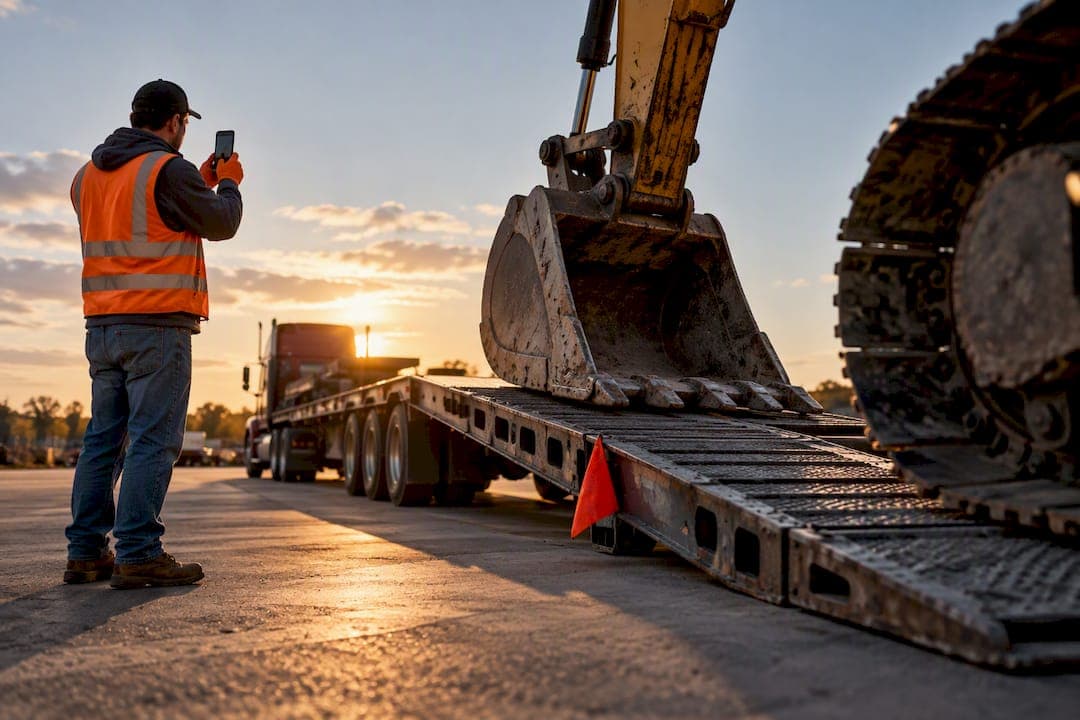
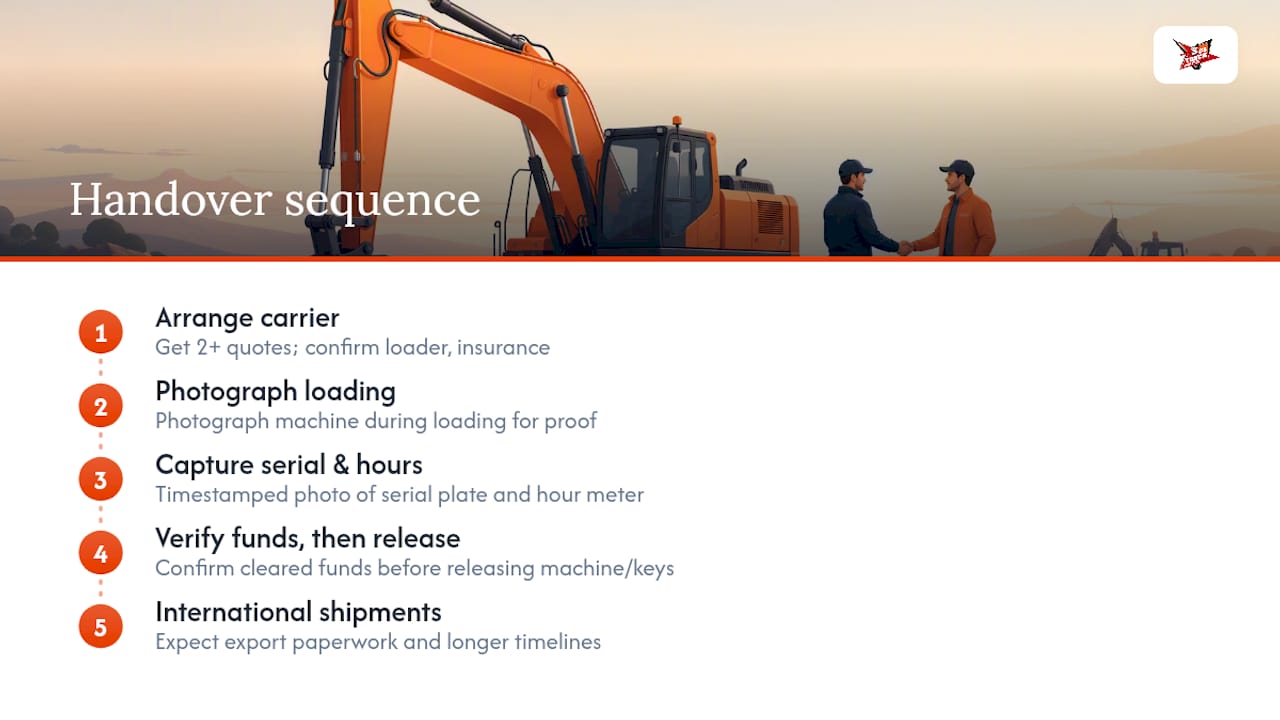
Get at least two carrier quotes before you commit, and confirm who's responsible for loading and who's paying for transport insurance. Buyers on out-of-state deals often arrange their own carrier, but you should still photograph the machine during loading as proof of condition at handover.
Capture the serial plate and hour meter one more time as the machine goes on the trailer. That timestamped photo protects you if a dispute comes up later. Confirm funds have actually cleared, not just that a transfer was initiated, before you release the machine or the keys. For international shipments, expect additional export paperwork and longer timelines, so build that into your price and delivery expectations upfront.
Why Consistency Beats Cleverness When Selling Equipment
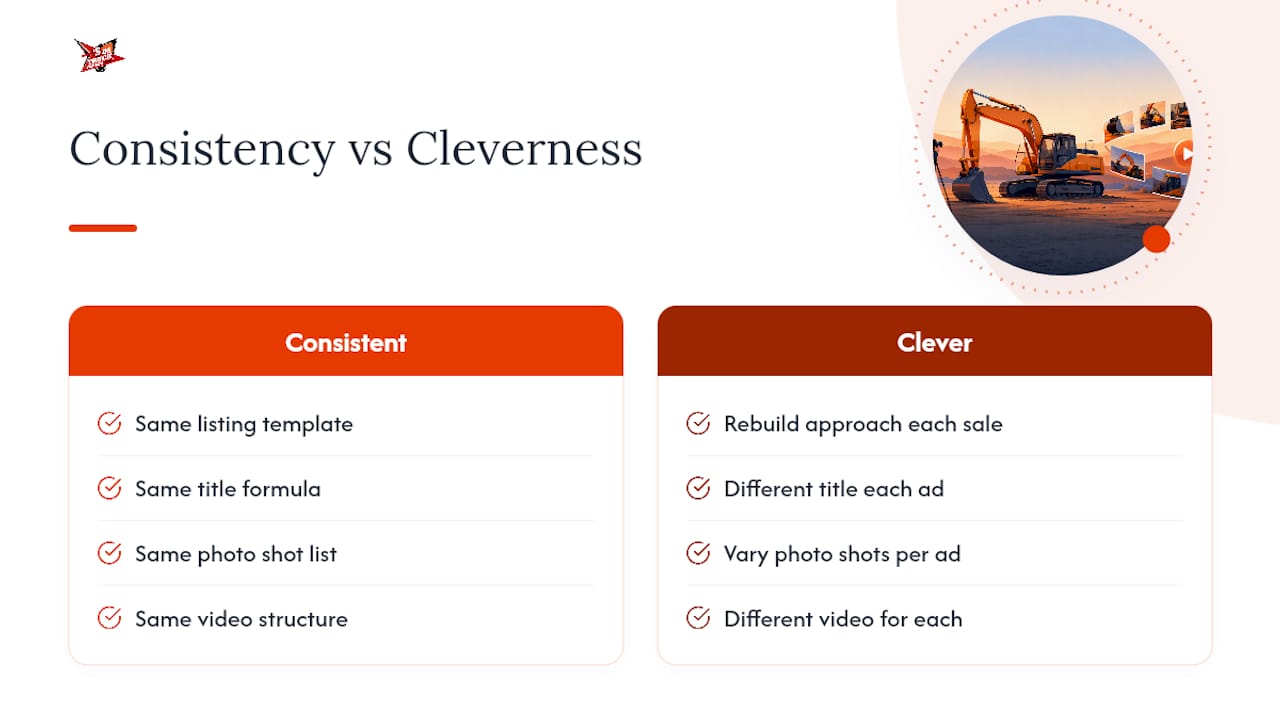
Most sellers treat every excavator sale as a one-off project, rebuilding their approach from scratch each time. That's the wrong instinct. A standardized listing template, same title formula, same photo shot list, same video structure, saves hours and produces more consistent results than trying to get creative with each ad.
The second habit worth stealing: triage your leads fast. A buyer who asks about financing and transport in their first message is worth a same-day callback. One who only asks "what's your best price" with no other context can wait. Sellers who treat every inquiry with equal urgency burn time on buyers who were never going to close. For a deeper breakdown of listing tactics and lead management, the full selling guide covers both in more detail.
— Dave
List Your Excavator Where Serious Buyers Are Already Looking
Some specialized marketplaces are built specifically for sellers of construction equipment, not general classifieds sites where your excavator competes with unrelated items. Listings often include structured spec fields, multiple photos, and category filtering by price and location, so buyers searching specifically for excavators find your machine instead of scrolling past it.
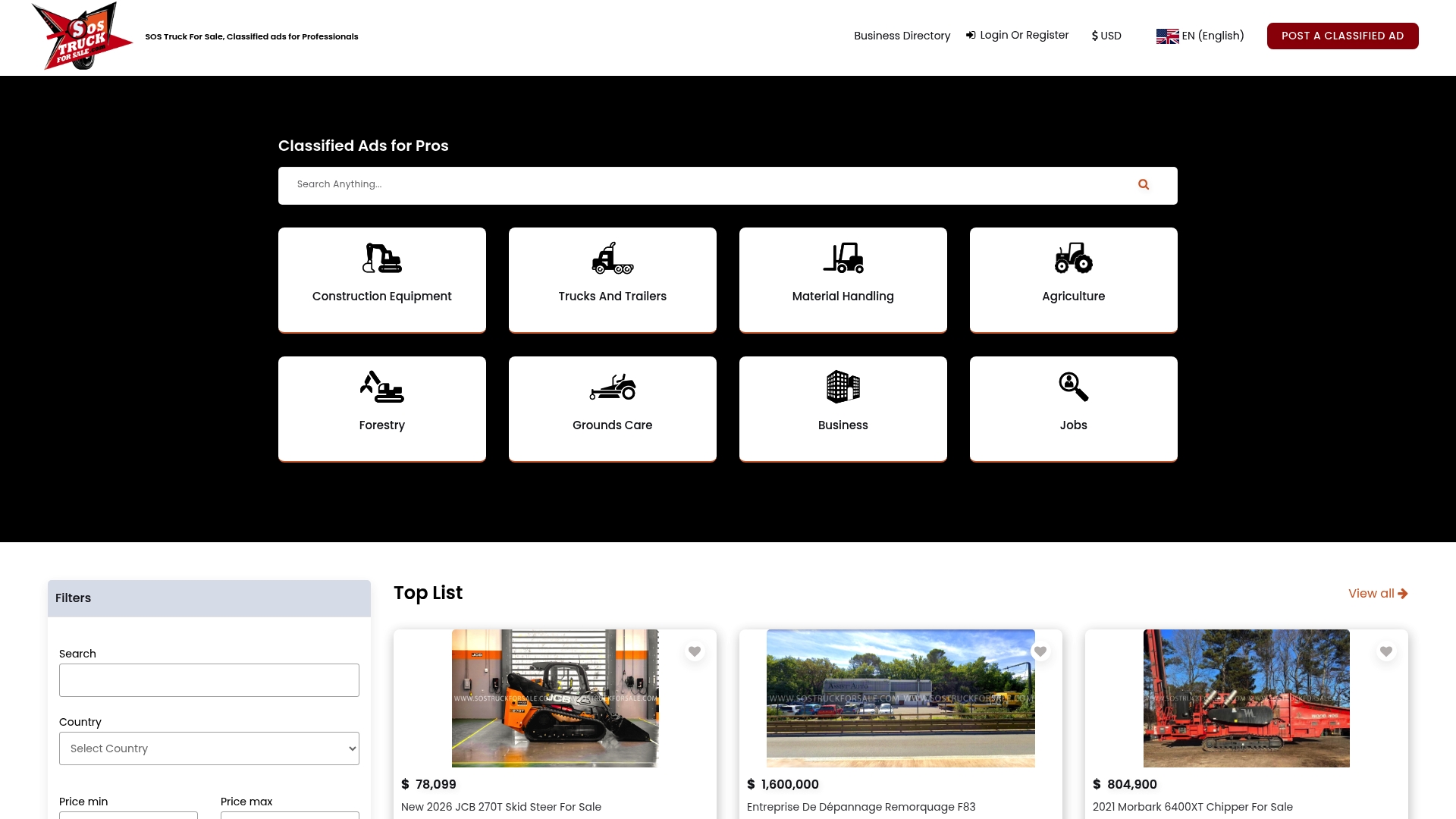
Choose a marketplace listing here over auction or consignment when you want to set your own price and keep full control of negotiations, rather than accepting whatever an auction floor produces or splitting proceeds with a consignment partner. It's the right fit for most private sellers who have the time to answer buyer questions directly but still want their machine seen by people actively shopping for heavy equipment. When your photos, records, and video are ready, create your listing on Sostruckforsale and get your excavator in front of buyers who are already looking.
Sources
For deeper detail on preparation steps, sourcing comps, and inspection standards, see the seller's guide to online heavy equipment sales, Caterpillar's breakdown of the five selling options, and Ritchie Bros.' tips on maximizing sale price.
- How to Sell Heavy Equipment Online: 10 Proven Steps for Dealers
- 5 Options for Selling Used Equipment | Cat | Caterpillar
FAQ
How Much Is My Excavator Worth?
Value comes from comparing your machine's hours, model, and attachments against current marketplace asking prices and recent auction sold-lot results, then adjusting for condition and recent repairs. Most sellers land within about 10% of that adjusted comp value when they research comparables properly before listing.
What Is the Best Way to Sell Used Heavy Equipment?
For most private sellers, a specialized marketplace listing with complete photos, a cold-start video, and maintenance records offers the best balance of speed and price. Auctions move faster but trade price certainty for speed, while consignment trades net proceeds for convenience.
Where Can I Sell My Used Machinery?
Specialized equipment marketplaces like Sostruckforsale connect you directly with buyers actively searching for excavators and other heavy equipment by category and location. Auctions, dealer trade-ins, and brokers are the other main routes, each suited to different seller priorities around speed versus margin.
What Is the Best Way to Sell Machinery Quickly?
An unreserved auction is generally the fastest path to a completed sale, since it sets a hard closing date rather than waiting for the right buyer to appear. If you need speed but still want some price control, a marketplace listing paired with aggressive, responsive lead follow-up is the next-fastest option.
How Long Does It Typically Take to Sell an Excavator?
Timelines vary widely by machine condition, price, and market demand, but a well-prepared marketplace listing with full documentation and video typically generates serious inquiries faster than a bare listing. Consignment arrangements often take longer because the machine sits with a third party waiting for the right buyer.