

Most listing platforms support six duration windows: 1, 3, 5, 7, 10, and 30 days, plus a Good 'Til Cancelled (GTC) option that renews automatically. Only auction-format listings accept a fixed duration value; fixed-price listings typically run on GTC or until canceled. For most sellers, a typical auction duration between a few days and about a week balances exposure and buyer urgency, though hot items often sell faster on shorter windows and GTC suits standing inventory.
TL;DR:
- Short durations of 1 to 3 days are best for items with high demand and require quick bidding, while 7 to 10 days balance exposure and urgency.
- Longer auction windows can lead to bid fatigue or late sniping, with proxy bidding leading to sharp price jumps from late high bids.
- GTC listings renew every 30 days and incur multiple fees, requiring careful tracking and strategic relisting to avoid unexpected costs.
- Heavy equipment sellers should focus on the first two weeks of listing with quality photos and active promotion, rather than relying solely on duration settings.
- Effective listing management involves adjusting details or prices without starting from scratch, with 5 to 7 days being a safe default for general goods.
Table of Contents
- Which durations eBay supports and when to use them
- How duration shapes bidding, sniping, and buyer behavior
- How to pick a duration by item type, value, and goal
- Scheduling, relisting, and the fees you need to track
- Heavy equipment seller insights from the SoSTruckForSale marketplace
- Practical takeaways from marketplace practice
- List heavy equipment on SoSTruckForSale.com
- FAQ
- Sources
- Primary sources and authoritative links for sellers
Which durations eBay supports and when to use them
eBay's auction-format listings accept six duration values, and each one changes how buyers interact with your item. According to eBay US listing strategies, the standard options are:
- 1, 3, or 5 days: short windows built for urgency and fast turnover on in-demand items.
- 7 or 10 days: the common middle ground, giving buyers a full weekend or two to find and bid on your listing.
- 30 days: a longer single run, useful when an item needs more time to reach the right buyer.
- Good 'Til Cancelled (GTC): a fixed-price format that renews every 30 days until you end it or it sells.
Duration values apply to auction-style listings. Sending a duration field on a fixed-price listing is a common mistake that produces a listing error, since fixed-price items run on GTC or until cancellation instead. GTC listings also carry their own fee cadence: insertion fees apply at each 30-day renewal, not just at the initial posting, so sellers running GTC inventory should track renewal dates to avoid surprise charges. Scheduling tools also let you queue a listing to start up to about three weeks ahead, per eBay US listing strategies, though the listing still ends in line with the platform's standard start-to-end timing once it goes live.
How duration shapes bidding, sniping, and buyer behavior
Auction duration does more than set a deadline. It shapes how buyers bid and how final prices form. Under eBay's proxy bidding system, the current displayed bid updates to the minimum of the highest proxy bid and the second-highest bid plus the required increment, according to The Effects of Proxy Bidding and Minimum Bid Increments within eBay Auctions. That mechanism means prices don't simply climb in neat steps. Late bids can jump the price sharply once a higher proxy is revealed.

A documented mechanic shapes outcomes more than most sellers realize: proxy bidding's increment rule means a single late, high proxy bid can outpace a long string of smaller bids placed earlier in the auction.
This is also why sniping, placing a bid in the final seconds, persists as a strategy:
- Snipers rely on the auction's hard end time, betting that a last-second bid leaves no room for a counter-bid.
- Longer durations don't eliminate sniping; they just move the final seconds further out.
- Setting a reasonable reserve or starting price protects you from a weak final-moment bid being your only bid.
- Some marketplaces have tested extended or soft-close bidding to blunt last-second sniping, though adoption varies across platforms.
A longer window spreads attention across more days but risks fatigue if buyers see the item repeatedly without bidding. A shorter window concentrates bidders at one moment, which often produces a sharper price but a smaller audience.
How to pick a duration by item type, value, and goal
Choosing a duration comes down to three questions: how urgent is the sale, how competitive is the item, and how long does the right buyer need to find it. Fast-moving, commodity-style goods do well on short clocks. Rare or high-value items need more discovery time before a serious buyer even sees them.
A practical decision framework looks like this:
- Set 1 to 3 days for items with strong existing demand, where urgency drives competitive bidding.
- Set 5 to 7 days for general consumer goods, the most common choice for broad exposure without losing momentum.
- Set 10 to 30 days for seasonal items waiting for the right buying window, or for niche goods that need time to surface in search.
- Switch to GTC once an item becomes standing inventory you expect to relist indefinitely.
Heavy equipment and industrial assets follow a different rhythm than everyday consumer goods.
Pro Tip: For a single high-value asset like a crane or semi truck, pair a 30-day or GTC listing with active promotion in the first two weeks rather than relying on the listing duration alone to generate interest.
A short checklist before you publish: confirm the item's demand level, confirm whether buyers need research time, confirm your promotion plan for the opening days, and confirm whether you'll relist or switch to GTC if it doesn't sell the first time.

Scheduling, relisting, and the fees you need to track
Auctions end at a fixed point relative to when they start. You can't arbitrarily stretch the window beyond the duration you select, and most scheduling tools only let you queue a start time, not an independent end time. Once the clock starts, the countdown follows the duration you chose.
GTC listings work differently. They don't have a single end date; instead, they renew every 30 days until you cancel them or the item sells, and insertion fees apply at each renewal, per eBay US listing strategies.
A few rules keep relisting costs predictable:
- Relist thoughtfully rather than immediately; repeated back-to-back relists can rack up multiple insertion fees without changing the outcome.
- Revise the title, photos, or price before relisting an unsold item instead of posting the same listing again unchanged.
- Treat a failed auction as a signal to adjust, not just a reason to repost.
Our guide on relisting unsold semi trucks effectively covers this in more detail for sellers moving larger equipment.
Heavy equipment seller insights from the SoSTruckForSale marketplace
Heavy equipment sells on a different clock than consumer goods, and the first few weeks of a listing matter most. Our guide on selling a crane online shows sellers getting serious offers within 1 to 2 weeks when the listing is priced right and promoted early. Equipment that sits idle for months often needs a price correction or a different sales channel, which is where used equipment consignment can help sellers avoid a 60 to 120 day wait.
A short checklist for equipment sellers:
- Front-load photos and detailed specs before the first week, not after.
- Watch the first 1 to 4 weeks closely for buyer inquiries.
- Consider consignment or a price revision if interest stalls past that window.
Pro Tip: Clean, well-lit photos matter more for heavy equipment than for most categories; buyers researching a crane or excavator often rule out a listing on image quality alone before reading the description. Preparing equipment properly, including surface work like machinery powder coating, can make a real difference in first impressions.
Practical takeaways from marketplace practice
In the listings I follow across marketplaces, the sellers who do best rarely chase the longest possible window. They match duration to how fast their item needs to move and how much research a buyer realistically needs before bidding. A 5 to 7 day auction remains the safest default for general goods. For heavy equipment, the real lever isn't the duration setting itself; it's whether the listing gets attention in its first couple of weeks, the same window our heavy equipment sales guide points to again and again.
— Dave
List heavy equipment on SoSTruckForSale.com
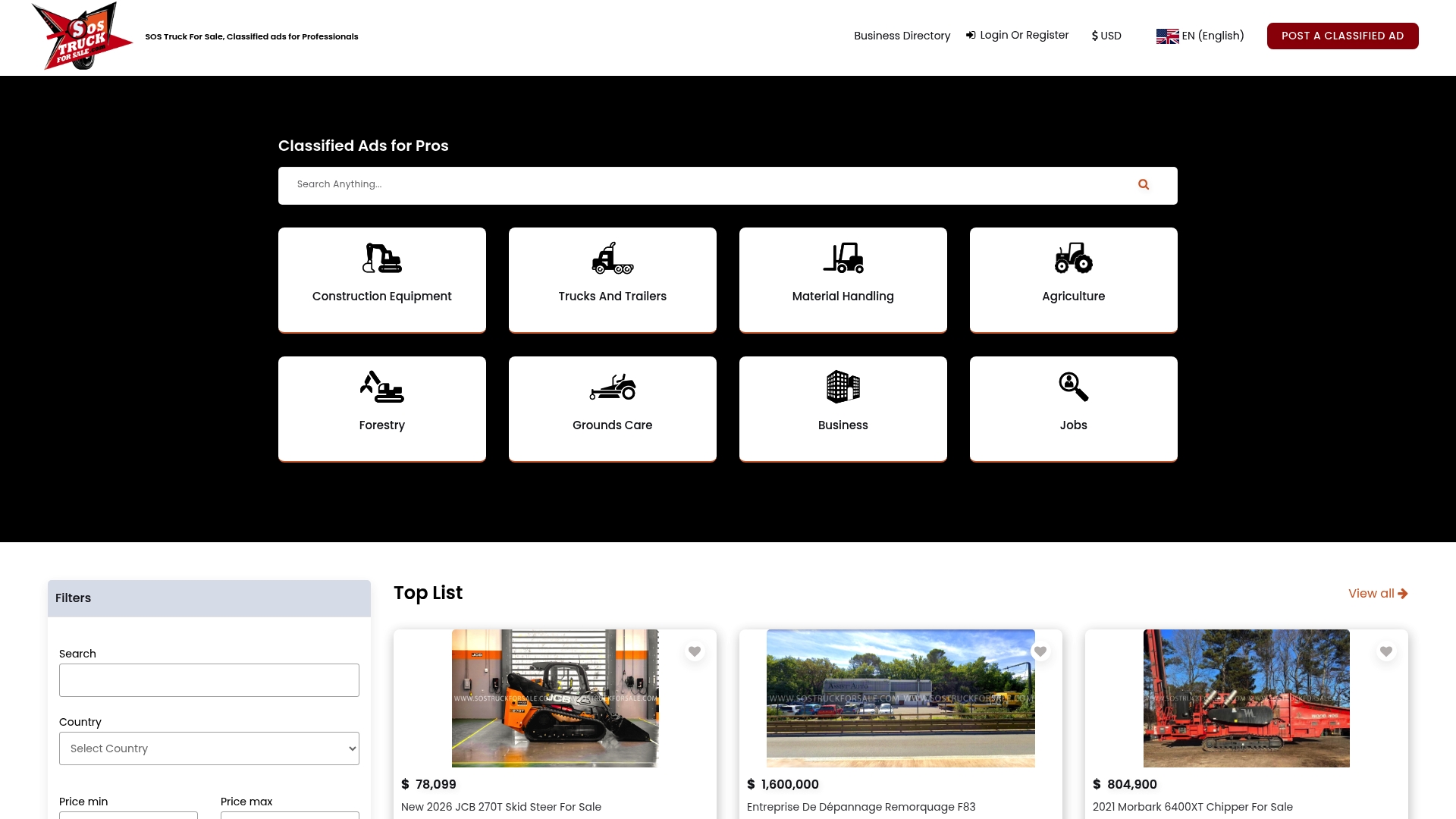
Selling heavy equipment takes more patience than a weekend auction, and marketplaces for such items are built around that reality. Listings typically cover categories like Construction Equipment, Trucks and Trailers, Material Handling, Agriculture, Forestry, and Grounds Care, often with relist controls that let sellers adjust a listing instead of starting from zero when it stalls.
- Post a listing with the detail buyers expect before they call: specs, photos, and condition history.
- Adjust pricing or details mid-run without losing your existing listing's visibility.
- Relist with a few changes instead of rebuilding a new ad from scratch.
If you're ready to put equipment in front of buyers who are already searching for it, Sostruckforsale today.
FAQ
What is the 3-minute rule in auctions?
The "3-minute rule" refers to the final moments before an auction closes, when most bidding activity tends to cluster as buyers wait to see competing bids before committing. It's informal seller shorthand rather than a platform rule, and it's closely tied to sniping behavior near the listing's end time.
Is eBay sniping still a thing?
Yes, sniping remains common because standard auctions have a fixed end time that rewards a well-timed final bid. Some platforms have tested extended or soft-close bidding, as noted in coverage of eBay's extended bidding test, but adoption and rules vary, so sellers should still expect last-second bids on standard auctions.
What is the slowest month to sell on eBay?
There's no single confirmed slowest month that applies universally across categories, since buyer demand shifts by item type and season. Sellers of seasonal or heavy equipment should plan around their specific category's demand cycle rather than a fixed calendar month.
Does Buy It Now go away after a bid?
On a standard auction listing with a Buy It Now option, that option typically disappears once the first bid is placed, since the item has moved into active bidding. The listing then runs to its scheduled end time like any other auction, following the duration originally selected.
Sources
- eBay US listing strategies
- The Effects of Proxy Bidding and Minimum Bid Increments within eBay Auctions
Primary sources and authoritative links for sellers
- The Effects of Proxy Bidding and Minimum Bid Increments within eBay Auctions
- eBay US listing strategies
- eBay Auction Duration Tips
- eBay extended bidding test coverage