

Federal law requires the seller of a covered truck to state its mileage in writing at every transfer of ownership. The biggest exemption for commercial sellers is weight: a vehicle with a gross vehicle weight rating (GVWR) of more than 16,000 pounds does not need a federal odometer disclosure. Pickups, light-duty work trucks and some medium-duty units usually fall below that line and are covered for up to 20 years. This guide explains how to tell which side of the line your truck is on, what the disclosure must contain and what happens when it is wrong.
TL;DR
- Under 49 CFR § 580.17, trucks with a GVWR over 16,000 pounds are exempt from federal odometer disclosure, as are vehicles that are not self-propelled.
- Model year 2011 and newer vehicles need a disclosure at every transfer for their first 20 years. Model year 2010 and older are exempt after 10 years.
- The seller (transferor) discloses mileage on the title or reassignment document, signs and prints their name. No tenths of a mile.
- False or missing disclosures can bring fines and/or imprisonment, and states can add their own penalties and title holds.
- States write their own title forms and some word exemptions differently, so check your state DMV before you list.
Table of Contents
- Which trucks the federal rule covers
- Who discloses, and when
- What the disclosure must contain
- Penalties for a missing or false disclosure
- How state rules differ from the federal baseline
- A quick coverage check for your truck
- Our perspective
- Put your truck in front of equipment buyers
- Common mistakes to avoid
- FAQ
- Sources
Which trucks the federal rule covers
The federal odometer rule is Part 580 of Title 49 of the Code of Federal Regulations, enforced by NHTSA. It starts from a broad position: a transfer of ownership of a motor vehicle needs a mileage disclosure. Section 580.17 then lists what the seller does not have to disclose. For trucks, three tests decide coverage: weight, age and whether the vehicle drives itself.
Weight: the 16,000-pound GVWR line
A seller need not disclose odometer mileage on a vehicle with a GVWR of more than 16,000 pounds. GVWR is the maximum loaded weight the manufacturer rates the vehicle for, and it appears on the certification label, usually on the driver's door jamb. It is not the same as the empty (curb) weight or the weight you actually haul.
In practice:
- Most Class 8 tractors, dump trucks and heavy straight trucks sit well above 16,000 pounds GVWR and are exempt from the federal requirement.
- Half-ton and heavier pickups, vans and lighter box or service trucks are often at or below 16,000 pounds and are covered.
- A vehicle at exactly 16,000 pounds is not "more than" 16,000 under the federal wording. Some states phrase the cutoff differently. Arizona's statute, for example, uses 16,000 pounds or more. Read your state's wording when your unit is close to the line.
Age: 10 years or 20 years
The age exemption changed on January 1, 2021. NHTSA announced that disclosures are required for every transfer during the first 20 years for model year 2011 and newer vehicles, while model year 2010 and older stay under the earlier 10-year rule.
The regulation counts from January 1 of the calendar year matching the model year:
| Model year | Disclosure required until | Example (transfer in 2026) |
|---|---|---|
| 2010 or older | 10 years after Jan 1 of the model year | A 2009 pickup: exempt |
| 2011 or newer | 20 years after Jan 1 of the model year | A 2015 pickup: disclosure required |
The age exemption applies only to vehicles that are otherwise covered. A 2022 tractor over 16,000 pounds GVWR is exempt on weight alone, and a 2022 pickup under that weight is covered for years to come.
Other exempt vehicles
Two more exemptions matter to equipment and truck sellers:
- Vehicles that are not self-propelled. Trailers, for example, have no odometer to disclose.
- Manufacturer direct sales to a U.S. agency under contractual specifications.
The regulation also says the seller of a new vehicle need not disclose mileage before its first transfer for purposes other than resale. That is why a new truck moving from a manufacturer to a dealer carries no mileage statement.
Who discloses, and when
The duty sits with the seller. When ownership of a covered vehicle transfers, the transferor must disclose the mileage to the transferee on the physical or electronic title. When the vehicle is not titled in the transferor's name, as with a dealer holding a reassigned title, the disclosure goes on the physical reassignment document instead. The transferor signs and prints their name.
Timing matters. Louisiana's motor vehicle policy explains that the seller provides the disclosure at the time of sale or transfer, and that a completed disclosure must be on file for every non-exempt vehicle when the buyer applies for title. Waiting until after the buyer drives away invites mistakes and missing signatures.
Dealers carry an additional burden. Georgia's Department of Revenue says dealers must keep records with the odometer declaration for five years and make them available for inspection by specified state officials. Other states set their own retention periods, so confirm yours.

What the disclosure must contain
Under 49 CFR § 580.5, the statement includes:
- The odometer reading at the time of transfer, without tenths of a mile.
- The date of transfer.
- The printed names and current addresses of the seller and the buyer.
- The vehicle's make, model, year, body type and VIN.
- A reference to federal law and a warning that failing to complete the statement or giving false information may result in fines and/or imprisonment.
The seller also certifies one of the following about the reading:
- It reflects the actual mileage, to the best of the seller's knowledge.
- The mileage exceeds the odometer's mechanical limits (for example, the dial has rolled over).
- The reading does not reflect the actual mileage and should not be relied on, because the seller knows it does not show a valid display or differs from true mileage by more than the odometer's calibration error. The statement carries a warning that a discrepancy exists.
Reporting an inaccurate or unknown reading
High-mileage trucks are the ones where this comes up. A replaced instrument cluster, a failed ECM display or a rolled-over odometer all change the answer. Do not guess and do not leave the field blank. Pick the status that matches what you know, and keep service records, cluster replacement invoices or ECM downloads that back it up. If you are the buyer, a "not actual mileage" status is a disclosure to price in, not something to argue over after the sale.

Our guide to selling high mileage semi trucks covers how sellers present mileage and records in a listing.
Penalties for a missing or false disclosure
The federal form itself spells out the risk: fines and/or imprisonment for failing to complete the disclosure or providing false information. States add their own layer. Florida, for instance, makes failure to complete or acknowledge the statement a second-degree misdemeanor and bars the department from issuing a certificate of title unless the requirement has been met. In practice, the quickest consequence is a title that will not issue, which stalls a sale and can leave a buyer with a truck they cannot register.
Florida's statute also requires the buyer to acknowledge the statement by signing and printing their name. Buyers are part of the paperwork, not bystanders.
How state rules differ from the federal baseline
Federal law sets the minimum. States run the titling process, print the forms and decide how the disclosure shows up on them. Three examples from official state documents:
- Nevada. The state's Registration and Title Guide (revised April 2025) calls for odometer miles on 2011 model year and newer vehicles until they are 20 years old, unless they meet a 49 CFR Part 580.17 exemption. The disclosure goes in writing on the secure title or secure reassignment document, without tenths.
- Texas. The state's title application instructions list exemptions that include vehicles over 16,000 pounds GVWR, not self-propelled vehicles and new vehicles before the first retail sale. The age rule in that 2016 edition reflects the 10-year standard then in force, so use the current form for the age exemption.
- Arizona. The state's transfer of title statute lists the 10-year and 20-year model year rules, the 16,000-pound GVWR exemption, not self-propelled vehicles, manufacturer sales to a U.S. agency, and new vehicles bought for resale.
The pattern is consistent, but the details are not identical. Before you finalize a sale across state lines, check the title form of the state that will issue the new title. Our walkthrough on transferring a semi truck title properly covers the rest of the process, and the excavator ownership paperwork checklist is useful when you sell equipment alongside trucks.
A quick coverage check for your truck
Work through these in order:
- Is it self-propelled? If not, such as a trailer, no federal odometer disclosure applies.
- What is the GVWR on the certification label? Over 16,000 pounds is exempt federally. At or below, continue.
- What is the model year? 2010 or older: exempt once 10 years have passed since January 1 of that year. 2011 or newer: covered for 20 years.
- Does your state differ? Check the DMV title instructions for wording on weight and age, and for any state-specific form.
- Is the title clean on mileage? Look for odometer brands from previous owners. A prior "not actual mileage" status stays part of the vehicle's history.
When a truck is exempt, it is still good practice to give the buyer a written mileage note with service records. Exempt means you are not required to disclose on the federal form, not that mileage stops mattering to buyers.
Our perspective
Most of the odometer questions we see from dealers come from a gap between the heavy truck and the light truck side of a yard. A dealer sells Class 8 tractors that never need the federal statement, then takes in a pickup or a service body truck that does, and the paperwork habits do not carry over.
Our advice is to treat the disclosure as part of the listing, not a closing-day task. Know the GVWR, the model year and your state's title wording before you post. Buyers searching a multi-category marketplace compare many units at once, and a listing that states mileage, GVWR and title status clearly gets fewer wasted inquiries.
That is what Sostruckforsale is designed for: a classified environment built for industry professionals, with trucks, trailers, construction, material handling, agriculture, forestry and grounds care equipment in one place, plus dealer registration so your inventory is easy to find. Put the paperwork facts in the ad, and the right buyers arrive ready to close.
Dave
Put your truck in front of equipment buyers
If you have a truck, trailer or machine ready to sell, list it where commercial buyers already look. Sostruckforsale lets dealers and private sellers post equipment by category, subcategory, price and country, and register as a business dealer.
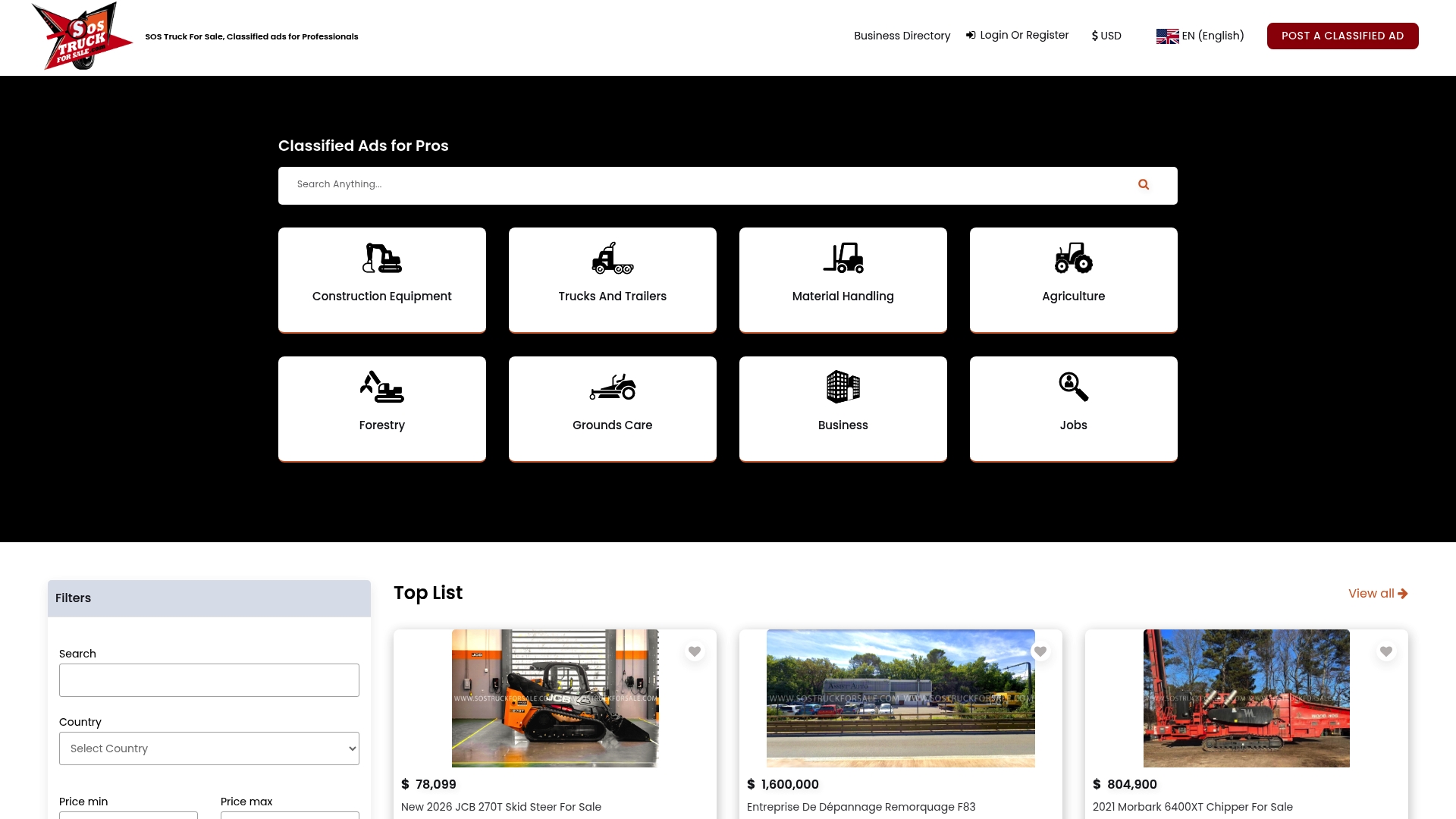
Browse the categories or start your listing at Sostruckforsale. Include the GVWR, model year, odometer reading and title status in your description so buyers know what paperwork to expect.
Common mistakes to avoid
- Writing tenths. The federal statement records the reading without tenths.
- Signing on the wrong document. Use the title when it is in your name, and the reassignment document when it is not.
- Guessing at a replaced cluster. Select the correct status and keep the records behind it.
- Assuming exemption by age alone. Age and weight are separate tests, and the 20-year period applies to model year 2011 and newer.
- Skipping record retention. Dealers should keep signed disclosures for the period their state requires.
For wider resale pitfalls, see these common semi truck resale mistakes. If the title has a brand, the guide on selling a truck with a salvage title explains how to stay compliant.
FAQ
Do semi trucks need an odometer disclosure statement?
Usually not under federal law. A vehicle with a GVWR of more than 16,000 pounds is exempt under 49 CFR § 580.17, and most Class 8 tractors are rated above that. Confirm the GVWR on the certification label and check your state's wording, because some states phrase the cutoff differently.
Does a trailer need an odometer disclosure?
No. Vehicles that are not self-propelled are exempt from the federal disclosure requirement. Texas and Arizona list the same exemption in their title rules.
How long is a truck covered by the odometer disclosure rule?
For model year 2011 and newer vehicles that are not otherwise exempt, disclosure is required for 20 years, counted from January 1 of the model year. Model year 2010 and older follow the 10-year rule, so a 2009 pickup is already exempt.
What happens if the odometer reading is wrong or the disclosure is missing?
The federal form warns of fines and/or imprisonment for failing to complete the disclosure or providing false information. States can add penalties. Florida treats it as a second-degree misdemeanor and will not issue a title until the requirement is met.
Who signs the odometer disclosure?
The seller completes and signs it, printing their name. In some states, such as Florida, the buyer also acknowledges it by signing and printing their name. Use the title, or the reassignment document when the vehicle is not titled in the seller's name.
Sources
- eCFR: 49 CFR 580.17, Exemptions
- eCFR: 49 CFR 580.5, Disclosure of odometer information
- NHTSA: Changes to Odometer Disclosure Requirements
- Arizona Revised Statutes 28-2058
- Louisiana Department of Public Safety odometer disclosure policy
- Georgia Department of Revenue: Odometer Disclosure Information
- Florida Statutes, Chapter 319, Section 225
- Nevada DMV Registration and Title Guide
- Texas DMV Application for Title instructions