
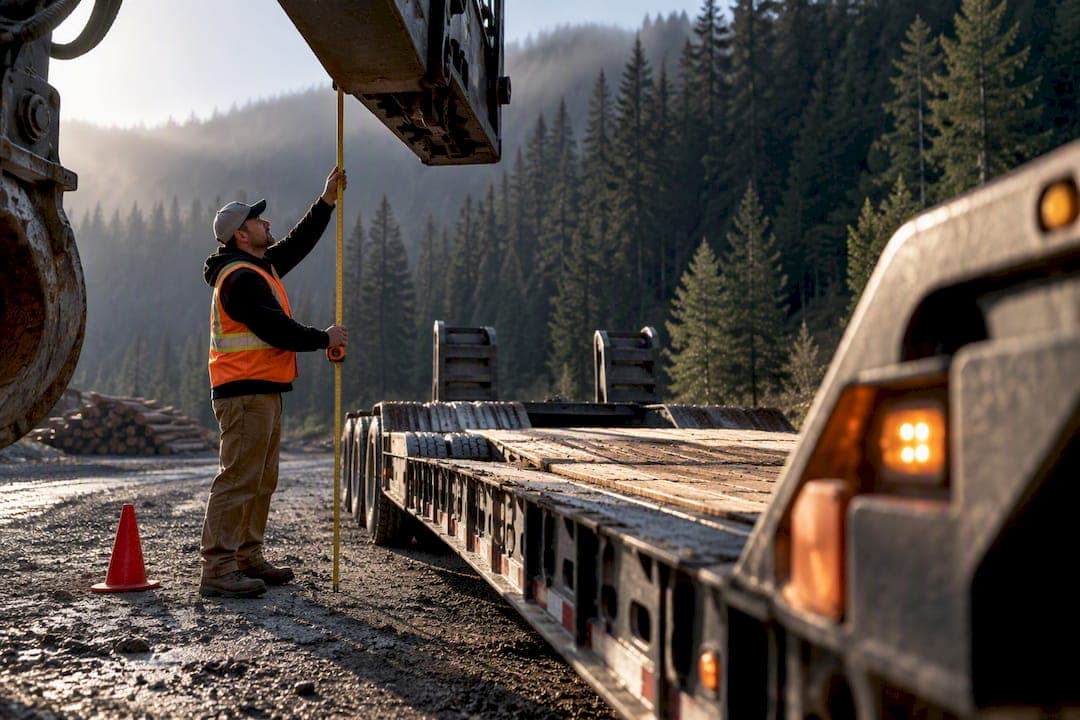
The fastest reliable way to sell forestry equipment online is listing it on a specialized heavy-equipment marketplace with a complete spec sheet and transport notes. Start by gathering the machine's make, model, serial number, hour meter reading, and 8 to 12 clear photos. A platform like SoStruckForSale.com gives you that structure without forcing you into a general classifieds format that buyers skip past.
TL;DR:
- Listings with detailed serial numbers, service records, and high-quality photos consistently attract serious buyers faster than incomplete ads.
- Specialized equipment marketplaces outperform general classifieds by grouping machines categorically, leading to more targeted buyer traffic.
- Machines with documented maintenance history tend to sell for higher prices than those relying solely on hour meter readings.
- Transport disclosure and clear logistics details significantly speed up sale timelines, especially for remote or heavy equipment with complex loading needs.
- Well-prepared, complete listings typically receive inquiries within one to two weeks, while sales through dealer networks may take up to 120 days.
Table of Contents
- Which Platform Type Fits Your Sale: Classifieds, Auction, Consignment, or Dealer Network?
- Preparing a Listing: Fields, Inspection Notes, and Photos Buyers Expect
- Auction, Fixed Price, or Consignment: How to Price Forestry Equipment
- Logistics: Transport, Site Access, and Pickup Planning
- Listing Optimization and Negotiation Tactics That Sell Faster
- Why This Guidance Comes From a Marketplace That Lives in Heavy Equipment
- What Protections Exist for Buyers and Sellers Across Platforms?
- Legal and Regulatory Requirements for Selling Forestry Equipment Online
- Payment and Transaction Security: What to Confirm Before You Ship
- How Long Does It Take to Sell Forestry Equipment Online?
- Tips for Negotiating Price and Terms Online
- What Actually Moves the Needle When Selling Forestry Equipment
- Ready to List? Here's What to Have on Hand First
- Sources
- FAQ
Which Platform Type Fits Your Sale: Classifieds, Auction, Consignment, or Dealer Network?
Every seller has a different priority: speed, top dollar, or minimal effort. The platform category you choose should match that priority, not the other way around.
General classifieds (broad marketplaces not built for heavy equipment) reach the widest audience but bury forestry machines next to cars and furniture. You control pricing and timing, but buyer quality varies and questions pile up fast.
Specialized equipment marketplaces filter by category, so a feller buncher shows up next to other feller bunchers instead of getting lost. This is where serious forestry buyers actually search, and it's the route most industry roundups point to as the primary channel for selling used forestry equipment.
Auction platforms work well when you need a fast, firm sale date and don't mind letting the market set the final number. Prices can run higher on rare or in-demand machines, but you give up control over the final figure.
Consignment and dealer networks hand off the selling work, inspections, and buyer calls to someone else. You trade a cut of the sale price for less hassle, and timelines run longer, sometimes 60 to 120 days before a deal closes.
Decision shortcut:
- Need cash in two weeks → auction or a marketplace listing with an aggressive asking price
- Want top dollar and can wait → specialized marketplace with patient pricing
- Want zero involvement → consignment or dealer network
- Have a strong local buyer network already → classifieds or direct outreach
Preparing a Listing: Fields, Inspection Notes, and Photos Buyers Expect
Buyers judge a listing in about ten seconds. If your ad is missing the basics, they move to the next one. Dealers pricing forestry equipment consistently rely on the same core inputs: make, model, serial number, year, hour meter, attachment condition, guarding package, and service history, according to Machinery Barn's forestry selling guide.
Required listing fields:
- Make, model, and year
- Base machine serial number
- Attachment or head serial number, if separate (financing and valuation often treat these separately)
- Current hour meter reading
- Whether the machine starts and operates under its own power
- Any missing parts, known leaks, or recent repairs
- Guarding package details (important for feller bunchers and mulchers)
Photo checklist, 8 to 12 shots: full machine from both sides, undercarriage or tires, boom and head fully extended, close-up of attachments, engine bay, hour meter display, serial plate, and any damage or wear spots. Attach service records or parts receipts if you have them. This kind of documentation, more than the raw hour count, is what buyers actually weigh most heavily when deciding what to offer.
Pro Tip: Photograph the serial plate and hour meter in the same frame if possible. Buyers who can't verify these two numbers quickly assume the seller is hiding something and move on.
For a ready-to-copy layout, the equipment listing template covers the same fields dealers use daily.
Auction, Fixed Price, or Consignment: How to Price Forestry Equipment
Auctions tend to deliver higher realized prices on machines with genuine scarcity, think specialty mulchers or low-hour skidders that draw competing bids. Fixed-price listings work better for common models where a targeted local buyer already knows what fair value looks like and just wants a straight deal.
Set your starting number using hour readings alongside maintenance history and attachment condition, not hours alone. Two machines with identical hour meters can be worth thousands apart if one has a documented service history and the other doesn't.
Fee structures usually break down into three types:
- Listing fees — flat cost to post, regardless of outcome
- Buyer's premiums — added to the winning bid on auction platforms
- Facilitation or transport fees — cover logistics coordination, not the sale itself
Quick pricing checklist: confirm hour meter accuracy, gather two to three comparable sold listings, factor in attachment condition separately from the base machine, and price 5 to 10% above your floor to leave negotiating room.
Logistics: Transport, Site Access, and Pickup Planning
Transport is often the single biggest reason a forestry equipment sale stalls after the buyer says yes; professional technical services can help prepare machinery and coordinate heavy-equipment transport efficiently. Machines sitting in remote timber sites frequently need specialized lowboy trailers, and legal height or width limits sometimes force sellers to remove heads or lower booms before the load can move, according to Heavy Equipment Magazine's logistics guide.
Disclosing access details early prevents wasted weeks. Early transport disclosure is consistently the factor that speeds buyer decisions on heavy forestry machines, since buyers won't commit until they know the load is actually movable.
Include in every listing:
- GPS coordinates or a precise address, not just a town name
- Road condition leading to the machine (gravel, seasonal mud, steep grade)
- Whether the head or boom needs to be removed or lowered for transport
- A flexible pickup window rather than a single fixed date
Offering flexible pickup days measurably reduces transport quotes and buyer dropouts, since carriers can slot your load into an existing route instead of running a dedicated trip. Decide upfront whether you'll arrange transport yourself or leave it to the buyer. Sellers who arrange it themselves close faster because there's one less unknown for the buyer to solve.
Listing Optimization and Negotiation Tactics That Sell Faster
Your headline and the first fifty words matter more than the rest of the listing combined. Lead with specs and condition, not adjectives. "2019 [Model] Feller Buncher, 3,200 Hours, New Head Bearings" outperforms "Great Machine, Must See" every time because it answers the buyer's first three questions before they even click.
Promoted listings earn their cost most reliably during seasonal demand windows, typically late winter into early spring when logging contractors gear up for the season, and again near fiscal year-end when dealers restock inventory.
Practical tactics that move buyers toward an offer:
- Answer inspection questions in writing, not just by phone, so the buyer has something to reference later
- Offer a short video walkthrough on request, especially for machines with hydraulic attachments
- Bundle spare parts, extra teeth, or spare hoses into the sale rather than selling them separately
- Respond to inquiries within a few hours; forestry buyers often have several machines shortlisted at once
Pro Tip: List small tools and accessories, axes, wedges, chains, separately from the heavy machine. Buyers shopping for a skidder aren't browsing for hand tools, and mixing categories buries both.
The heavy equipment selling guide walks through headline formatting in more detail if you want a side-by-side comparison.
Why This Guidance Comes From a Marketplace That Lives in Heavy Equipment
SoStruckForSale.com focuses specifically on commercial and industrial heavy equipment listings, including construction, trucking, and forestry categories, rather than treating machinery as one line item among household goods. That focus shapes the listing fields, photo checklists, and pricing guidance throughout this article, all pulled from patterns that show up repeatedly across dealer pricing practices and industry transport data.
Dave, who writes on heavy-equipment sales trends for this publication, draws on dealer pricing standards and logistics research from across the industry to build guidance sellers can actually use, not generic advice recycled from unrelated categories.
For sellers who want a template rather than a blank form, the tractor photo guide shows exactly how photo composition changes buyer confidence, a principle that transfers directly to skidders, feller bunchers, and log loaders.
What Protections Exist for Buyers and Sellers Across Platforms?
Protection levels vary sharply by platform type, and knowing the difference before you list saves you from disputes later.
General classifieds typically offer no built-in protection. Payment, inspection, and delivery terms are entirely between you and the buyer, which is fine for a local sale but risky for a long-distance one.
Specialized marketplaces usually require verified seller profiles and standardized listing fields, which filters out a lot of the fraud that plagues open classifieds. Some also hold buyer funds in escrow until the buyer confirms receipt and condition, protecting both sides from a payment that never clears or a machine that never ships.
Auction platforms often carry the strongest structural protection because bids are binding and buyer premiums fund dispute resolution staff. Consignment and dealer networks shift most of the risk onto the dealer, who typically inspects the machine, verifies title or bill-of-sale status, and only releases funds after the buyer signs off.
As a general rule: the more hands-off the platform, the more the seller needs to build in their own protections, written condition disclosures, payment terms confirmed before shipping, and a clear return policy if the machine doesn't match the listing.
Legal and Regulatory Requirements for Selling Forestry Equipment Online
Forestry equipment doesn't work like a car sale. Most forestry machines aren't titled in the United States, so ownership transfers through a bill of sale that references the serial numbers rather than a state title document. That bill of sale should list both the base machine serial and any attachment or head serial separately, since buyers and lenders often value and finance them as distinct items.
Sellers should also confirm there are no outstanding liens against the machine before listing it. A buyer's financing company will typically run a lien search, and an unresolved lien can kill a deal after weeks of back and forth.
Interstate sales carry their own wrinkle: sales tax responsibility usually falls on the buyer's home state, but the paperwork trail (bill of sale, serial documentation, transport receipts) needs to be clean enough that both parties can prove the transaction if a state tax authority asks. If you're selling regularly rather than as a one-off, check whether your state treats you as a dealer for tax purposes, since that changes your reporting obligations.
Payment and Transaction Security: What to Confirm Before You Ship
Payment risk is highest on forestry equipment because the price points run high and the buyer is often out of state or arranging third-party transport. Wire transfer confirmed by your bank, not just a screenshot from the buyer, is the safest standard method for anything over a few thousand dollars.
Never release a machine to a transport carrier until funds have actually cleared your account, not just shown as pending. Cashier's checks can be forged convincingly enough to fool a quick glance, so if a buyer insists on a check, wait for it to fully clear before scheduling pickup.
Marketplaces with built-in escrow or payment verification add a layer of protection that a private handshake deal can't match, since the platform confirms funds before releasing shipping instructions to the buyer. If you're selling through classifieds without that structure, consider requiring a deposit to hold the machine while the balance clears, and put that term in writing before the buyer travels or arranges transport.
How Long Does It Take to Sell Forestry Equipment Online?
Timelines depend heavily on platform choice and how complete your listing is on day one. A well-documented listing on a specialized marketplace, complete photos, service history, and transport notes, typically draws serious inquiries within the first one to two weeks.
Auction sales run on a fixed calendar, often two to four weeks from listing to the sale event itself, with funds and transport arrangements following within days of the winning bid. Fixed-price marketplace listings vary more: a common, well-priced model can sell in under a month, while a niche or high-hour machine might sit for two to three months waiting for the right buyer.
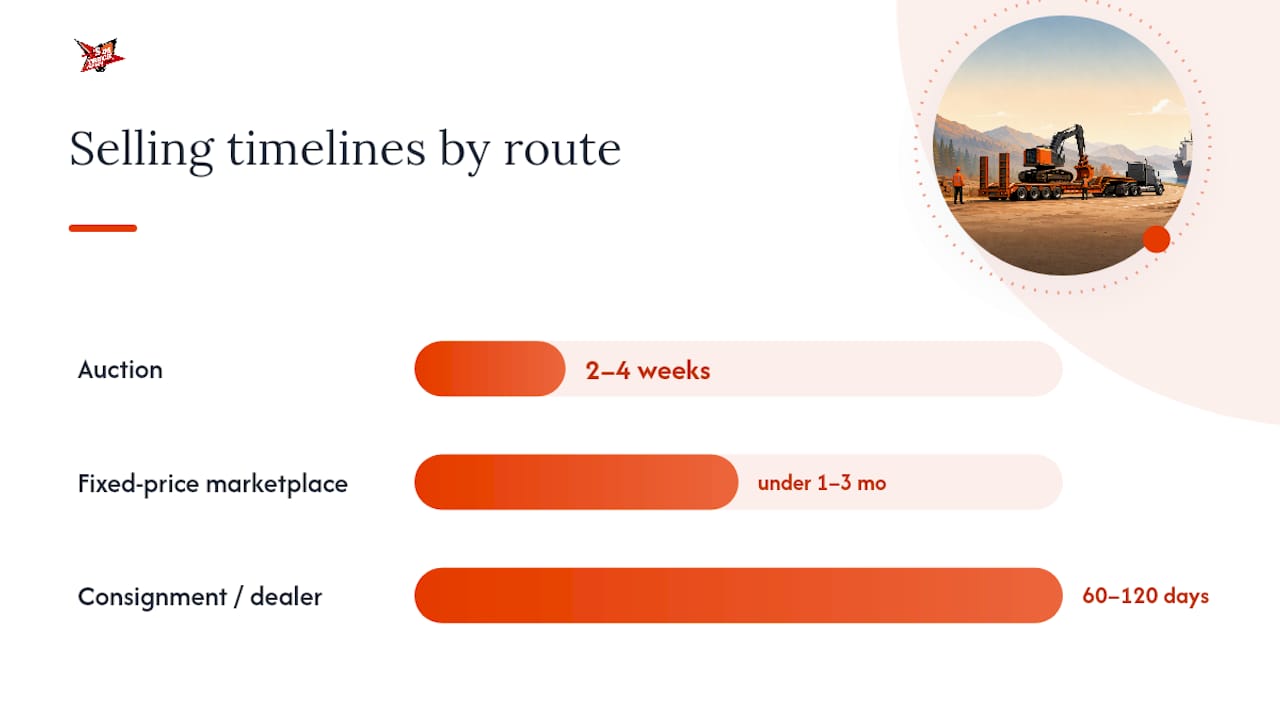
Consignment and dealer networks run the longest timeline, often 60 to 120 days from intake to final sale, since the dealer has to inspect, list, market, and often negotiate on your behalf. That extra time buys you less hands-on work, which is the tradeoff sellers accept when they choose that route.
The biggest lever you control is listing completeness. Machines with incomplete specs or missing photos generate more back-and-forth questions and slower decisions, stretching the timeline regardless of platform.
Tips for Negotiating Price and Terms Online
Buyers negotiating for forestry equipment online almost always open below asking, so build that room into your starting price rather than reacting defensively when the first offer comes in low.
Anchor the conversation with documentation, not opinion. A buyer pushing back on price is far easier to counter when you can point to service records, recent repairs, and comparable sold listings than when you're arguing hours alone.
Separate price negotiation from terms negotiation. A buyer might accept your asking price but push hard on who pays for transport, or want a longer payment window. Decide in advance which terms you'll flex on (pickup timing, minor parts inclusion) and which you won't (payment method, deposit requirement).
Respond quickly but don't cave immediately. A same-day counteroffer signals you're serious and organized, but accepting the first lowball offer trains buyers to expect it. If a buyer disappears after a counter, that's often a sign they were testing the market rather than seriously ready to buy, and it's fine to move on to the next inquiry rather than chase them.
What Actually Moves the Needle When Selling Forestry Equipment
The advice most sellers get is to "list it everywhere and see what happens." That's backwards. Spreading a single machine across five unrelated platforms usually means five half-finished listings instead of one strong one, and buyers can tell the difference immediately.
What the research on this topic actually supports is narrower and more useful: transport disclosure and documentation quality outperform platform choice almost every time. A mediocre listing on the right specialized marketplace, complete with serial numbers, service history, and honest photos of the undercarriage, will outsell a polished-looking ad missing those details, regardless of where it's posted.
The overrated piece of conventional wisdom is hour meter obsession. Buyers care more about whether the machine has a paper trail of maintenance than whether it shows 4,200 hours or 5,800. Sellers who lead with hours in their headline are often burying the information that would actually close the deal faster.
If you take one thing from this: gather your documentation before you write a single word of the listing. Everything else, pricing, platform, negotiation, gets easier once that foundation exists.
— Dave
Ready to List? Here's What to Have on Hand First
Specialized marketplaces serve as alternatives to general classifieds or consignment dealer listings, allowing sellers to post machines themselves, filtered into the right category, reaching buyers focused on forestry equipment.
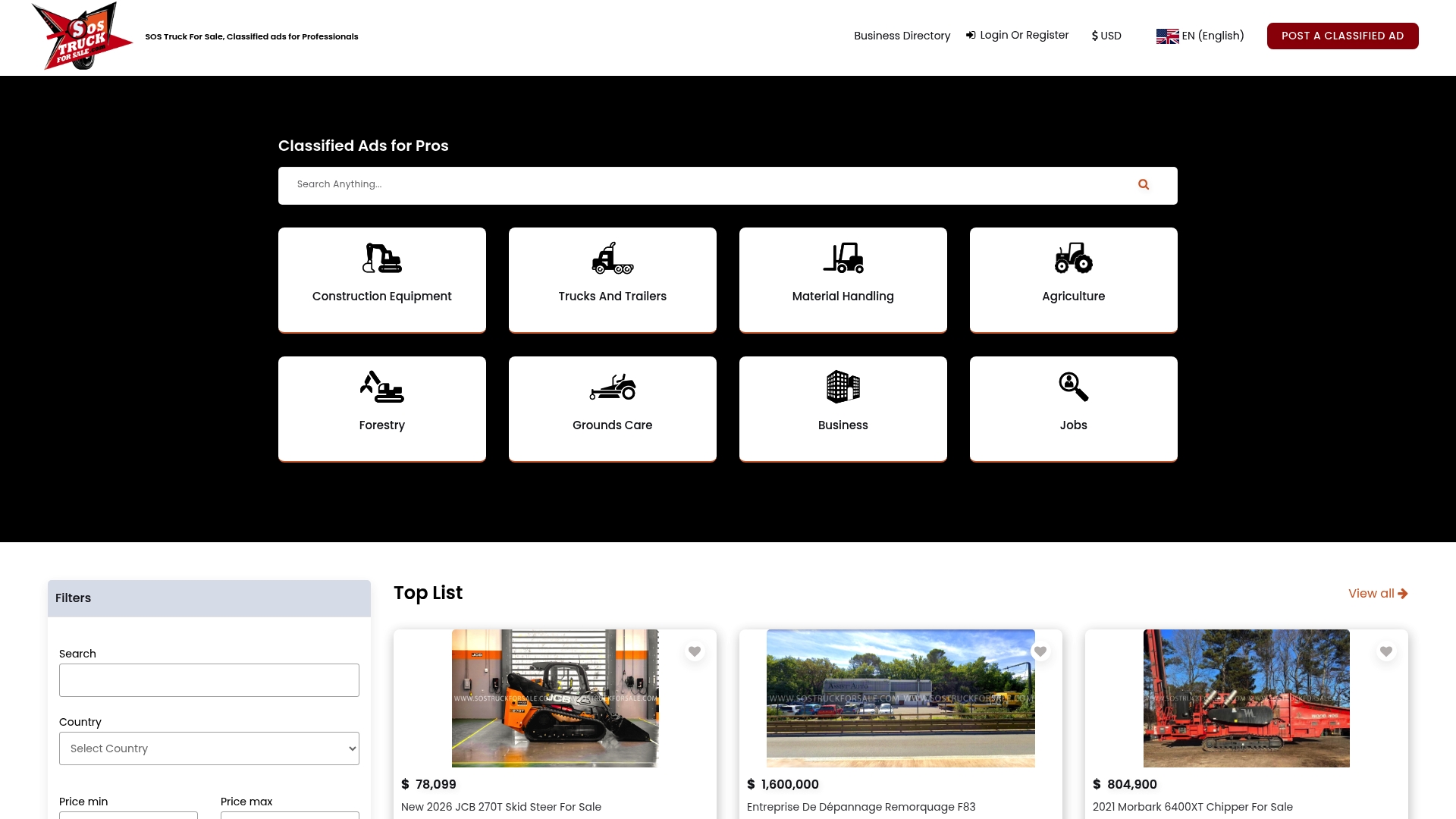
Listing flows in specialized marketplaces typically include category filters, guided fields for make, model, serial, and hour meter readings, plus photo checklists reflecting buyer expectations. Many sellers can complete listings efficiently once machine details and photos are gathered.
Before you commit, compare the fee structure and fulfillment options against whatever platform you're currently considering. Then gather your machine's make, model, serial number, hour meter reading, and photos, and start your listing at Sostruckforsale today.
Sources
- Transporting heavy equipment to remote sites: four logistics strategies that work
- Sell Your Forestry Equipment — What It's Worth & How to Sell It
FAQ
Where Is the Best Place to Sell Forestry Equipment Online?
A specialized heavy-equipment marketplace that filters by category, like forestry and grounds care, typically outperforms general classifieds because it puts your listing in front of buyers already searching for that exact type of machine. Sostruckforsale organizes listings this way, alongside construction, trucking, and agricultural equipment categories.
Where Can I Find Used Forestry Equipment for Sale?
Category-focused marketplaces and dealer sites are the most commonly recommended channels for both buying and selling used forestry and logging equipment, since they group machines like skidders, feller bunchers, and mulchers together instead of mixing them with unrelated inventory, as industry roundups point out.
Where Can I Sell Industrial Equipment for Cash?
Auction platforms and specialized marketplaces both support fast, cash-focused sales, though auctions generally close faster once the auction date is set. Fixed-price listings on a dedicated equipment marketplace can also move quickly if the machine is priced competitively and the listing includes complete documentation.
What Should I Have Ready Before Listing My Machine?
Gather the make, model, year, base machine serial number, attachment serial if separate, current hour meter reading, and 8 to 12 photos covering the whole machine, undercarriage, engine, and serial plate. Service records and parts receipts strengthen the listing further, since buyers weigh documented maintenance history heavily when deciding what to offer.
How Long Does Selling Forestry Equipment Online Usually Take?
A complete, well-priced listing on a specialized marketplace often draws serious inquiries within one to two weeks, while consignment or dealer-network sales can take 60 to 120 days from intake to final sale. Listing completeness, not just platform choice, is the biggest factor in how fast a machine actually sells.