
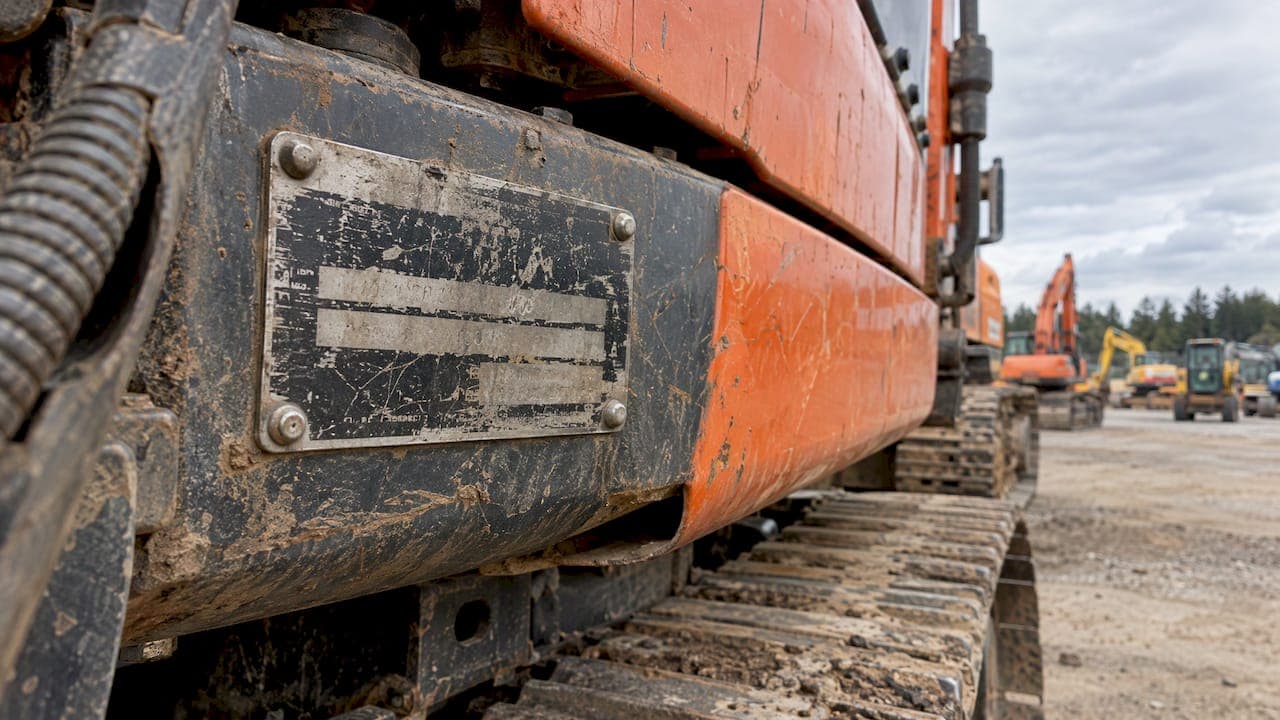
On-road trucks carry a VIN. Most off-road machines, such as excavators, loaders and dozers, carry a serial number, usually part of a Product Identification Number (PIN). People often call both a "VIN," but the two follow different standards, sit in different places and are checked through different databases. Know which one you are looking at before you pay a deposit, order parts or list a machine.
This guide explains the difference, shows where to find each number, walks through a verification routine and covers how to check ECM mileage on a used semi.
TL;DR
- A VIN identifies on-road vehicles (semi tractors, trailers, dump trucks). Off-road equipment such as excavators generally uses a PIN, and the serial number is part of it.
- The number stamped or plated on the frame is the one that governs parts and service lookups. A number inferred from the model name or year is not.
- Verify before you buy: check the length and characters, confirm the manufacturer code matches the brand, cross-check with the manufacturer's parts portal and run it against a stolen-equipment registry.
- ECM mileage and hours are one data point. Compare them with maintenance records and the wear you see on the machine.
- Ask the seller for photos of the ID plate and the frame stamping before you travel to inspect.
Table of Contents
- VIN, PIN and serial number: what each one is
- Do excavators have VIN numbers?
- Where to find the number on the machine
- How to verify a serial number or PIN before you buy
- How to check ECM mileage on a used truck
- Red flags that deserve a hard stop
- If you are a seller or dealer: list the number correctly
- Perspective: why we ask for the number up front
- Find verified-ready listings
- Before you commit: a short checklist
- FAQ
- Sources
VIN, PIN and serial number: what each one is
Three terms get mixed together, so define them first.
VIN (Vehicle Identification Number). The 17-character identifier for on-road vehicles, built to the ISO 3779 standard. Semi tractors, straight trucks and highway trailers fall here. Lookups for these go through NHTSA.
PIN (Product Identification Number). The 17-character identifier for off-road machinery, built to ISO 10261. Excavators generally use PINs under ISO 10261 rather than on-road VINs, and the two standards are not interchangeable.
Serial number. The manufacturer's own sequence number for a machine. On many modern off-road machines it is the tail end of the PIN. One field discussion of Caterpillar machines describes the serial number as the last 8 characters of the 17-character PIN, which is also the part dealers typically care about. Treat that as how one manufacturer does it, not a universal rule. Older machines may carry only a short serial number with no 17-character PIN at all.

So can you use a serial number as a VIN? No. People use "VIN" informally for any machine identifier, and a listing may say "VIN" when it means the PIN or serial. But the standards differ, and so do the databases you check. The Association of Equipment Manufacturers administers the World Manufacturer Code registry for off-road equipment. That code is structurally similar to the on-road manufacturer identifier but administratively separate.
Quick comparison
| On-road VIN | Off-road PIN / serial | |
|---|---|---|
| Typical machines | Semi tractors, trailers, dump trucks | Excavators, loaders, dozers, compact equipment |
| Standard | ISO 3779 | ISO 10261 |
| Typical length | 17 characters | 17 characters on newer machines; shorter serials on older ones |
| Lookup | NHTSA | SAE-ITC iBIS (manufacturer code), OEM parts portal |
| Used for | Titling, registration, recalls | Parts, service, warranty, theft recovery |
The lookup row follows the workflow described by Machinetrail's standards guide: check on-road VINs against NHTSA and off-road PINs through the SAE-ITC iBIS portal.
Do excavators have VIN numbers?
In the strict sense, usually not. An excavator typically has a PIN and serial number rather than an on-road VIN. Because it is not titled for highway use the way a truck is, the plate is mainly a parts, warranty and identification tool.
You will still see the word "VIN" attached to excavators in paperwork. Public procurement is one example: the 2025 NIFC excavator award list records identifiers in a single column labeled "VIN/Serial #/Unique ID." That is a practical catch-all for a form, not a statement that every excavator has a highway VIN.
For you as a buyer, the useful question is not what the field is called. It is whether the number on the listing matches the number on the machine and whether it checks out.
Where to find the number on the machine
Location varies by manufacturer and machine type, so check the operator's manual or the manufacturer's service pages first. Some patterns from published guidance:
- Excavators. The PIN plate is typically on the right side of the frame near the front. On Komatsu machines it is often on the right rear, per the same standards guide.
- Bobcat equipment. Bobcat excavator serial numbers are on the front of the cab beside the boom, and compact tractor serial numbers are on the front right corner of the frame.
- Engines. Engines carry their own serial number, separate from the machine's. Without the engine serial number or purchase records, you may not be able to identify the model year, so record both.
- On-road trucks. Check the VIN plate and the frame or title paperwork. Photograph each location you check.
A useful habit: look for two numbers on the machine itself, the plate and a frame stamping. If one has been ground, painted over or fitted with a plate that looks newer than the machine, stop and ask why.
How to verify a serial number or PIN before you buy
Verification takes under an hour once you have the number, and it protects a purchase that can run well into six figures. Follow this order.
- Check length and characters. A PIN is verified by checking its length and characters. Typos, missing characters or letters that do not belong are a first warning.
- Look up the manufacturer code. The first characters identify the maker. Look up that code in SAE-ITC iBIS. A code that does not match the machine's brand is a forgery flag.
- Cross-check with the manufacturer's parts and service portal. Dealers can often confirm the model and build from the serial number. After identifying a machine's serial number, you can contact the dealership or visit its website for equipment information.
- Run an independent check. Independent decoders can cross-reference identifiers against stolen-equipment registries and recall lists. For on-road trucks, use NHTSA's VIN decoder as well, which reports details such as the plant of manufacture.
- Match the paperwork. The bill of sale, any title or ownership record and the service records should all show the same number as the plate.
- Match the photos. Ask for sharp photos of the plate and stamping before you inspect. Compare them with the machine in person.
If any step fails, do not talk yourself past it. A mismatch between a plate, a listing and a record is the single most common reason to walk away.
What the number tells you, and what it does not
The number points to the make, model and approximate build. It does not tell you the condition, the hours, the repair history or whether a lien exists. The TractorGuide makes a useful point here: the number on the frame governs parts and service lookups, so do not rely on a model name or a year you were told. Always order parts and confirm configuration against the plate itself.
For condition, the paper trail matters more. Our piece on how maintenance records affect equipment resale value covers what a complete file looks like and why it moves price.

How to check ECM mileage on a used truck
A modern diesel truck stores usage data in its engine control module (ECM). The ECM reading is useful because it is harder to alter than a dash display, but it only means something when you compare it to other evidence. Here is a sensible routine for a used semi.
- Ask for the reading from a qualified source. Have a dealer service department or a diesel shop with the engine maker's diagnostic software pull the data. Ask for a printout that shows the engine serial number alongside the figures.
- Compare it to the dash. Odometer, ECM miles and engine hours should tell a consistent story. A large gap needs an explanation in writing.
- Compare it to maintenance records. Maintenance records are the primary recommended method for tracking equipment usage, whether that is annual mileage for trucks or operating hours for off-road equipment. Service stickers, oil change intervals and inspection reports should rise in step with the reading.
- Sanity-check with age. Where records are thin, the same EPA guide suggests dividing total miles or hours by the equipment's age to estimate average annual use. If a six-year-old tractor shows far fewer miles per year than similar trucks in the same service, ask why.
- Inspect for wear. Pedal pads, seat bolsters, steering play, clutch feel and fifth-wheel wear should fit the number. A low reading on a worn cab is a flag.
The same logic applies to hour meters on excavators and loaders: the reading is one piece of a file, not the file. Note that a shop reading the ECM will need the correct engine serial number, which is another reason to record it during your inspection.
When a truck passes these checks, you can price with more confidence. Our heavy equipment pricing checklist with auction comps shows how to turn the verified facts into an offer.
Red flags that deserve a hard stop
- The plate is missing, replaced, glued or riveted with mismatched hardware.
- The characters on the plate differ from the listing, the paperwork or the stamping.
- The manufacturer code does not match the machine's brand.
- The seller will not provide plate photos, or offers only a cropped image.
- ECM data, dash reading and service records disagree and no one can explain the gap.
- The seller pushes you to pay before inspection or before the identifier is confirmed.
One red flag can be a clerical error. Two or more together should end the conversation.
If you are a seller or dealer: list the number correctly
Buyers search by identifier, and sellers who give a clean one close faster. A good listing includes:
- The exact serial number or PIN, labeled as such, not a generic "VIN" for an off-road machine.
- The engine serial number.
- Clear photos of the plate and any frame stamping.
- Hours or miles, with the source stated (dash, ECM printout or both).
- A summary of the service history.
If you run a dealer inventory, consistent fields across machines save time. See our guide to inventory feed setup for heavy equipment dealers for how to map those fields cleanly.
Perspective: why we ask for the number up front
We built Sostruckforsale for people who buy and sell commercial and industrial equipment for a living. That shapes what we think a listing should do.
In our view, the identifier is the first piece of proof a buyer wants. A listing that names the machine class, the right identifier and the location of the plate gives a professional buyer something to check before a call. It saves the dealer a round of questions and saves the buyer a wasted trip.
That is why we focus on a dedicated classified environment for trucks, trailers, excavators, material handling, agriculture, forestry and grounds care equipment. Category, subcategory, price and country filters narrow the search. Dealer registration and a business directory let a buyer see who stands behind the machine.
Our advice to dealers: put the serial or PIN, the engine number, the hours or miles and the plate photos in every ad. Our advice to buyers: verify the number before you negotiate price.
Dave
Find verified-ready listings
If you are comparing semi trucks, excavators or other machines, browse the categories on Sostruckforsale: Construction Equipment, Trucks and Trailers, Material Handling, Agriculture, Forestry and Grounds Care. Filter by category, subcategory, price and country, then contact the seller and ask for the plate photos and service records.
Dealers and private sellers can post equipment for sale on the same site and reach buyers looking in their category. Include the identifier, the engine number and clear plate photos to make your listing easy to trust.
Before you commit: a short checklist
- Do I know whether this machine uses a VIN or a PIN?
- Does the number on the plate match the listing and paperwork?
- Does the manufacturer code match the brand?
- Have I checked the number with the manufacturer's dealer and a theft or recall registry?
- Do ECM or hour readings fit the service history and the visible wear?
- Have I priced the machine from verified facts? If it needs work, our look at reconditioning used equipment shows how to budget it.
FAQ
Can you use a serial number as a VIN?
No. A VIN follows ISO 3779 and belongs to on-road vehicles, while off-road machines use a PIN under ISO 10261. The serial number is often the final portion of that PIN. People use the terms loosely, but lookups go through different databases, so identify the machine class first.
Do excavators have VIN numbers?
Generally they carry a PIN and serial number rather than an on-road VIN. The plate is typically on the right side of the frame near the front, though some makers place it elsewhere, such as the right rear on Komatsu machines. Paperwork may still label the field "VIN," so match the characters on the plate instead of the label.
How do I verify an equipment serial number?
Check its length and characters, look up the manufacturer code in SAE-ITC iBIS, and confirm the build with the maker's dealer or parts portal. Then run it through an independent stolen-equipment or recall check. A manufacturer code that does not match the machine's brand is a forgery flag.
How do I check ECM mileage on a semi truck?
Have a dealer or diesel shop read the ECM and give you a printout with the engine serial number. Compare the figures with the dash and the maintenance records. Where records are missing, divide total miles by the truck's age to see if the average annual use looks realistic.
Sources
- Heavy Equipment VIN/PIN Standards: ISO 10261, ISO 3779, and more (Machinetrail)
- Construction Fleet Inventory Guide (U.S. EPA)
- Excavators Award List 2025 (NIFC)
- Find Bobcat Equipment Serial Numbers (Bobcat Company)
- Serial numbers and model decoding (TractorGuide)