
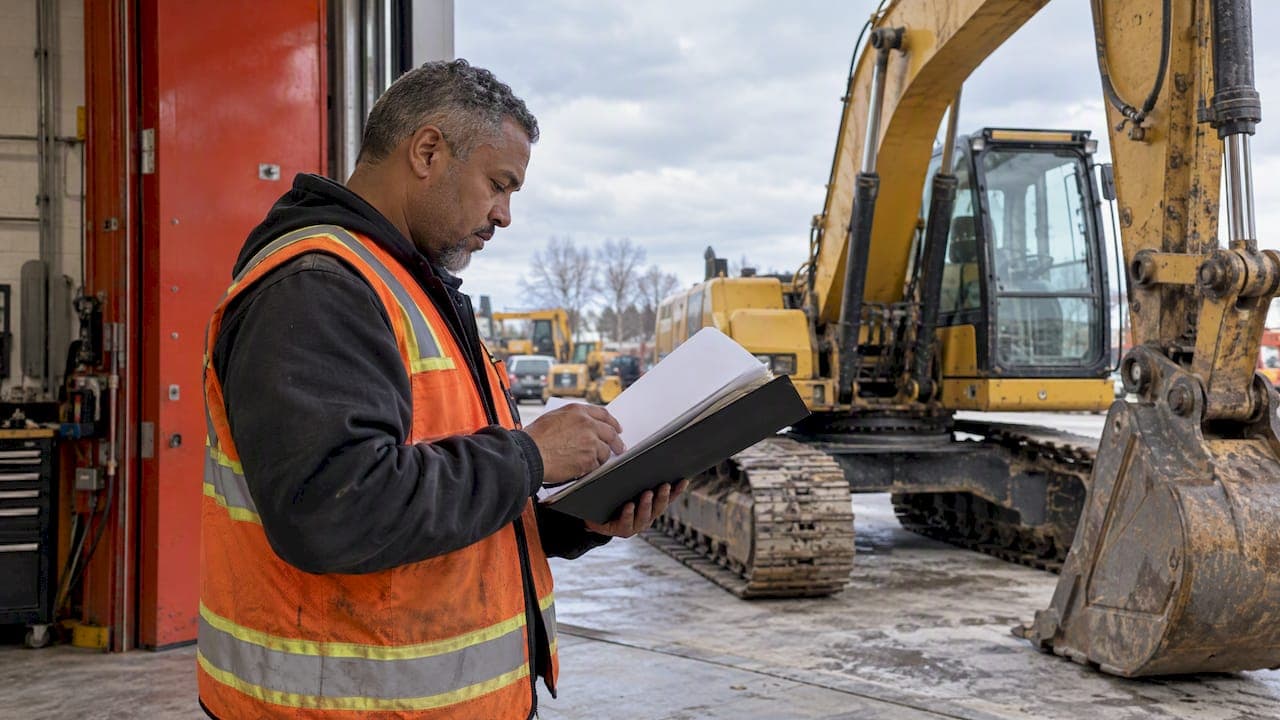
Maintenance records raise resale value because they replace a buyer's guesswork with evidence. A truck, excavator or lift with dated, itemized service history tied to its serial number gets stronger offers than an identical unit with nothing on paper, and reported premiums run from roughly 10% to 15% on fleet disposals. Below: what buyers and appraisers look for, how gaps and high hours change the picture, and how to package records before you list.
TL;DR
- Records work as risk pricing: buyers who can see the service history discount less for hidden repair costs.
- Documents must be specific, chronological and linked to the machine by serial number to carry weight.
- Appraisers can rate a machine on observed condition when records exist. Without them they fall back on generic age-based depreciation.
- Multi-year gaps hurt. Fill them with whatever evidence you can find, and be straightforward about what is missing.
- Organize the file before you post the ad, and mention the records in the listing itself.
Table of Contents
- Why records move the price
- What buyers and appraisers want to see
- Observed condition versus age-life depreciation
- Gaps, high hours and major repairs
- How to organize records before you list
- Dealer records versus in-house records
- Put the records to work in your listing
- Our perspective
- List your documented equipment where buyers are looking
- FAQ
- Sources
Why records move the price
A used machine is a bundle of unknowns. The buyer cannot see inside the engine, the final drives or the hydraulic system from the yard. Maintenance records shrink those unknowns. One industry write-up describes complete records as a risk pricing tool that helps buyers and appraisers reduce uncertainty about internal condition, which in turn supports higher offers. The same source notes that maintenance nobody can document is often treated by the market as maintenance that never happened, whatever the machine's real state.
The effect shows up in fleet disposals. In a 2025 Construction Equipment article, Ryan Inc. Central reported that using an Equipment Information Portfolio, which includes maintenance and fluid analysis history, improved residual values by an average of 10% to 15% compared with sales that lacked service records. Treat that as one contractor-side data point, not a promise for your unit. Condition, hours, brand and market timing still set the baseline. Records decide how much of that baseline you keep.
The logic holds more strongly as machines work harder. For Construction Pros reported that a full maintenance history has a heavy effect on residual value because it gives the next buyer confidence in current condition, and that records matter more as usage increases. A 3,000-hour skid steer and a 12,000-hour one may both be sound, but only the second one needs proof.
What buyers and appraisers want to see
Not every piece of paper counts equally. Buyers and appraisers look for service logs, oil analysis results, dealer inspection reports, overhaul records, hour meter readings and telematics reports. According to a U.S. equipment appraisal guide, they prioritize documents that are specific, chronological and clearly linked to the unit by serial number.
A useful checklist:
- Scheduled service logs: oil, fuel, hydraulic and air filter changes with dates and hours.
- Fluid analysis reports: oil, coolant and hydraulic samples that show internal wear trends.
- Dealer or shop invoices: serial number, hours, diagnostic findings, parts and labor listed separately.
- Major repair and overhaul records: engine, transmission, final drive, pump and undercarriage work, with what was replaced.
- Inspection reports: annual or pre-sale inspections, including undercarriage measurements on tracked machines.
- Electronic data: telematics summaries and ECM downloads.
Dealer invoices are especially useful. An agricultural equipment appraiser points out that they often identify the machine by serial number, list hours, describe diagnostic work and separate parts from labor. That is the level of detail an appraiser can put on a valuation sheet.
ECM downloads deserve a mention. Construction Equipment highlights them as a verification tool that confirms hour meter accuracy and shows the duty cycle the machine worked under. A buyer who can cross-check the hour meter against the engine's own data is more likely to trust the rest of your file.

Observed condition versus age-life depreciation
This is the mechanism behind the premium. When an appraiser has a complete, verified service history, the appraisal guide explains, they can use observed-condition depreciation: a rating based on what this specific unit has been through. Without records, they default to age-life depreciation, which applies industry-average assumptions to every machine of that year and model.

If your machine was better maintained than average, the generic method undervalues it. Records are how you prove it was better than average.
Buyers at dealerships and trade-in desks reason the same way. One 2026 industry article says appraisers and trade-in desks treat service records as line items on valuation checklists, and that complete, dated and itemized records for filter and fluid service can command a premium over otherwise identical units. Another report says that in business-to-business sales, missing records typically make buyers price in hidden repair risk, which also slows the sale.
That last point matters for sellers who are not chasing the top dollar. A machine with a clean file gets fewer lowball offers, fewer "I'll need to budget for an engine" negotiations and a shorter path to closing.
Gaps, high hours and major repairs
A gap of several years is the most common weakness in a file. The same 2026 article notes that appraisers treat multi-year documentation gaps as high-risk periods, so a machine with an excellent recent history and a long undocumented stretch can be appraised closer to one with no records at all.
What to do about it:
- Recover what exists. Ask the dealers, shops and mobile mechanics who touched the machine for invoice copies. Check old accounting entries, fuel and parts card statements, and email.
- Use secondary evidence. Warranty claims, ECM data, telematics history and a fresh oil analysis do not replace the missing years, but they show the machine's current state.
- Document the present. A recent inspection report from an independent technician or dealer service department gives a buyer something dated and signed.
- State the gap plainly. A sentence such as "service records available from 2021; earlier history not documented" reads better than silence, and buyers will find the hole anyway.
High hours and major repairs follow the same pattern. Since records matter more as usage increases, a high-hour machine is where a file earns its keep. A rebuilt engine or replaced transmission is not a mark against the machine if the invoice shows what was done, when, at what hours and by whom. An undocumented rebuild is only a claim. Photograph the work order, include the parts list and note the hours at which it happened.
How to organize records before you list
Organization is part of the value. A pile of receipts makes a buyer do the work, and many will not. A professional appraiser recommends organizing records chronologically and separating them into categories: routine maintenance, major repairs, inspection reports, fluid analysis and electronic updates. Every document should be tied to the machine by serial number and show dates, hour meter readings and a description of the work done.
A practical process:
- Create one folder per machine, labeled with make, model and serial number.
- Scan every paper record at readable resolution and name files by date and hours, for example
2024-03-12_6840h_hydraulic-service.pdf. - Sort into the five categories above, newest first within each.
- Write a one-page summary: current hours, last service, major repairs with dates, known issues, and what the file contains.
- Check each document for the serial number. Where an invoice lists only a unit number or a customer name, add a note linking it to the serial number and keep the original.
- Keep a version that can be sent as one PDF or shared link, so serious buyers can review it before they travel.
Going forward, the cheapest habit is logging each service when it happens: date, hours, work done, who did it. Owners who start this at purchase rarely face a reconstruction project at sale time. Teams comparing maintenance programs against the machine's lifecycle cost analysis will often find that consistent documentation costs far less than the discount an undocumented machine takes at disposal.
Dealer records versus in-house records
Buyers often ask whether a dealer stamp matters more than your own shop log. There is no figure to quote on how much more one is worth, but the logic is consistent with what appraisers say about specificity. A dealer invoice typically carries a serial number, hours, diagnostics and an itemized parts and labor split, and it comes from a third party with no stake in the sale.
That does not make in-house records weak. A fleet that logs its own work with dates, hours, part numbers and technician names, and backs it with oil analysis, can present a very credible file. The test is the same for both: is it specific, chronological and traceable to the serial number? One observation from appraisal writing is that detailed logs tend to go with a culture of care, and buyers read the quality of the logs as a sign of how the machine was treated.
If your work was done in-house, strengthen it with outside evidence: purchase receipts for filters and fluids, lab reports, and a recent inspection by a dealer or independent technician.
Put the records to work in your listing
Records only raise the price if buyers know they exist before they call. In the listing:
- Say "full service records available" in the first lines of the description, and state the date range.
- Give current hours and the hours at last major service.
- Mention fluid analysis, ECM download or inspection report if you have them.
- Add a photo of the organized binder or a screenshot of the summary page.
- Offer the file by email to serious inquiries.
Pair that with strong visuals. Our guide on photos and video for selling an excavator covers the shots that build trust, and our heavy equipment pricing guide shows how to set an asking price against auction comps once you know what your documentation is worth. For truck sellers, common semi truck resale mistakes includes the paperwork errors that cost sellers money. Buyers can use the used excavator inspection walkaround to compare what they see on the machine against what the records say.
When a sale closes, the paper trail continues: see the excavator ownership transfer checklist for title and bill of sale items.
Our perspective
Every day we see listings for machines that are mechanically sound and priced like mysteries. The description says "runs great," the photos are fine, and there is nothing a buyer can verify. The next listing for the same model says "service records from 2020, last oil analysis attached, hours confirmed by ECM download," and it draws the serious inquiries.
Our marketplace is built for industry professionals: dealers, fleets and private owners who sell trucks, trailers, excavators, cranes, material handling, forestry, grounds care and agricultural equipment. Buyers in those categories compare many units quickly. A listing that leads with documentation gives them a reason to call you first.
Our advice is simple. Treat the maintenance file as part of the machine. Prepare it before you post, say what it contains in the first lines of the ad, and keep it ready to send. Dealers with several units should do this for every unit in the yard, so the standard of the whole inventory is visible.
Dave
List your documented equipment where buyers are looking
If your machine has a clean file, show it to buyers who search by category, price and country. Sostruckforsale lets dealers and private sellers post classified ads for construction equipment, trucks and trailers, material handling, agriculture, forestry and grounds care, and register as a business dealer. Dealers moving many units can also review our guide to inventory feed setup so every listing carries the same documentation notes.
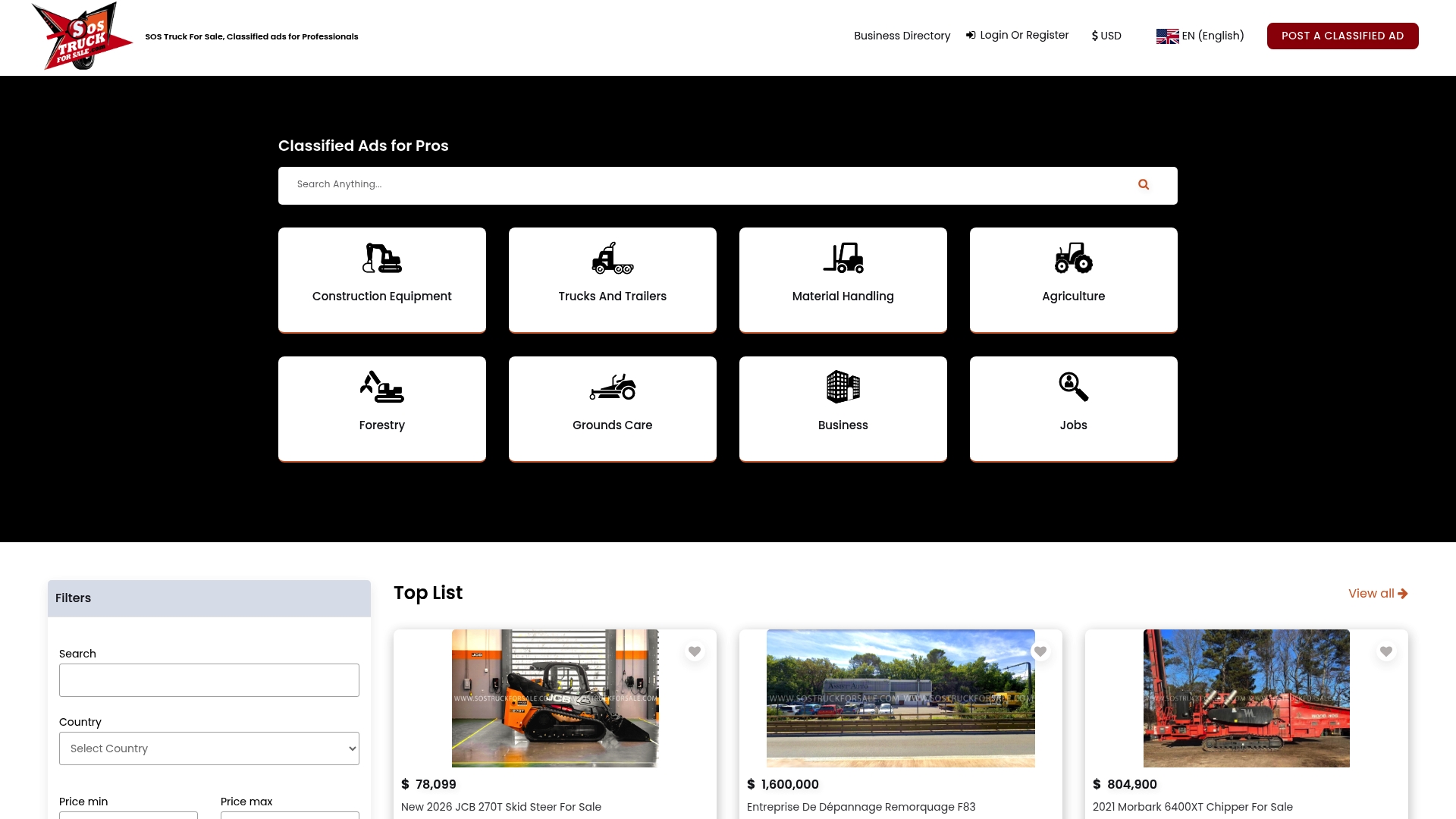
Browse categories and post your equipment with the service history front and center.
FAQ
Do I need to keep maintenance records for my equipment?
No single rule covers every machine, but keeping them is the practical choice if you plan to sell. Appraisers rely on dated, serial-number-linked records to rate a machine on observed condition. Regulated vehicles, such as commercial trucks, may carry additional recordkeeping duties, so check with the relevant agency for your fleet.
How much can records add to the sale price?
Reported figures vary. A 2025 trade-press article cites average residual improvements of 10% to 15% with a full equipment information portfolio. Another report says similar machines can differ by 10% to 25% depending on documentation. Your result depends on the machine and the market.
What if my records have gaps?
Recover invoices from shops and dealers, add a fresh inspection and oil analysis, and describe the gap honestly in the listing. A documented present condition helps offset an undocumented past, though long gaps can still pull the appraisal down.
Which records matter most?
Dealer invoices, oil analysis, overhaul records, hour meter readings and inspection reports carry the most weight, provided they show the serial number and date. Telematics or ECM data adds a way to verify hours.
Sources
- How Maintenance Records Affect Resale Value
- How to Increase Equipment Value at Disposal, Construction Equipment
- Telematics Data is Transforming Construction Equipment Recordkeeping, For Construction Pros
- Documents Needed for an Equipment Appraisal
- How Maintenance Records Impact Farm Equipment Value
- Heavy Machinery Resale Value: Key Price Drivers
- How to Accurately Appraise Used CNC Machines