
Seller financing on heavy equipment means the seller accepts payment over time instead of collecting the full price at closing. The buyer takes the machine, signs a promissory note, and the seller holds a security interest in the equipment until the note is paid. Done well, it opens a sale to buyers who cannot or do not want to go through a traditional lender. Done loosely, it leaves both sides exposed. This guide covers how the structure works, what to put in writing, how to protect the collateral, what happens on default, and which U.S. tax rules apply.
TL;DR
- Seller financing makes the seller a creditor: the buyer pays the price in installments under a written note, and the seller keeps a security interest in the machine until it is paid off.
- Two documents carry the deal: the sale agreement (or purchase-and-sale agreement) and the note with the amount, payment dates and the consequences of a missed payment.
- Protect the collateral with a clear title check, a UCC lien search, a filed financing statement and insurance that names the lienholder.
- If a bank also finances part of the purchase, expect a written subordination and intercreditor agreement.
- For U.S. federal taxes, a seller-financed sale is generally an installment sale reported on Form 6252, but regular dealers in the same type of equipment are treated differently.
Table of Contents
- What seller financing means for heavy equipment
- Seller financing compared with a loan, lease or rental
- Terms to settle before you sign
- Protecting the seller: title, liens and the UCC
- Protecting the buyer
- What happens if the buyer misses payments
- U.S. tax basics for seller-financed sales
- Our perspective
- List your equipment where buyers are looking
- A closing checklist for seller-financed deals
- FAQ
- Sources
What seller financing means for heavy equipment
In a standard cash sale, money and machine change hands on the same day. In a seller-financed sale, the seller accepts some or all of the price over time, and the IRS generally treats a sale as an installment sale when at least one payment arrives after the year of the sale. You will also hear the terms owner financing and seller carryback. They describe the same idea.
The seller becomes a creditor rather than receiving the full price immediately. A useful distinction, made in this seller-financing explainer, is between the sale agreement and the note: the sale agreement records the transaction, and the note states the deferred amount, the payment dates and what happens if a payment is missed.
That is why lenders and advisers say the arrangement needs a formal written agreement with the terms, interest rate and repayment schedule, and the same legal rigor you would expect from a bank loan. A handshake and a text message are not a financing structure.

A simple example
Say a contractor wants a used excavator listed at a given price. The seller and buyer agree on a down payment, a number of monthly payments and an interest rate. The buyer signs a note for the unpaid balance. The seller signs a bill of sale, files a financing statement against the machine, and releases the lien when the last payment clears. The numbers are the parties' to negotiate. What matters is that every term, from the payment date to the late-payment consequence, appears in writing before the machine leaves the yard.
Seller financing compared with a loan, lease or rental
Seller financing is one of several ways a buyer can pay over time. The differences come down to who owns the machine and who is the lender.
Caterpillar's U.S. financing comparison frames the main options this way: with an equipment loan the buyer is the owner and builds equity, a finance lease may make the buyer the owner subject to its terms, an operating lease leaves ownership with the provider, and a rental also leaves ownership with the provider. The same page notes that a loan can use cash, a trade-in or rental equity as the down payment, that leases can offer lower upfront costs with return, purchase or extension options at the end, and that rentals avoid a long-term financing commitment.
| Structure | Who finances | Who owns the machine | Typical fit |
|---|---|---|---|
| Seller financing | The seller | Buyer, with the seller holding a security interest | Direct deals between dealer or private seller and buyer |
| Equipment loan | A bank or finance company | Buyer, with the lender holding the lien | Buyers who want to build equity |
| Finance lease | A leasing company | May transfer to the buyer under the terms | Buyers who want lower upfront cost and an end-of-term purchase option |
| Operating lease or rental | The provider | Provider | Short-term or project-based use |
If you are a buyer comparing these routes, our guide to heavy equipment financing options for buyers walks through lenders and how to prepare a listing package. Seller financing sits alongside those routes, and many deals combine them.
Terms to settle before you sign
The terms below are the ones that cause the most disputes when they are left vague. Settle each in writing.
- Price, down payment and balance. State the full price, the cash down, and the financed amount. A meaningful down payment gives the buyer equity in the machine from day one.
- Interest rate and payment schedule. Name the rate, the number of payments, the due date and the amount. Construction and agricultural buyers often earn revenue seasonally, so a seasonal schedule is worth discussing up front.
- Term versus useful life. Equipment value changes with age, hours, condition, configuration and resale demand. The note should not outlast the useful life of the machine, or the collateral may be worth less than the balance owed.
- Late payments and default. Define what counts as default, how much time the buyer has to cure it, and what the seller may do next.
- Insurance. Require physical-damage insurance. Lender guidance on bulldozers says the policy should list the lienholder, and the same logic applies when the lienholder is the seller.
- Taxes and fees. Say who pays sales tax, registration, transportation and other governmental charges.
- Governing law and venue. Pick the state whose law governs and where disputes will be heard.
Documents that carry the deal
For larger or more complicated transactions, a purchase-and-sale agreement is the better choice. A construction-industry legal overview says it should address extended payment terms, loan payoffs or lien releases, representations and warranties, limits on liability, insurance and delivery, and that a bill of sale should evidence the closing and the transfer of title.
The same source recommends covering these items:
- equipment condition and warranty disclaimers
- hour-meter claims
- inspection and return rights
- indemnity
- default and cure
- governing law, venue and dispute resolution
- specific performance and attorneys' fees
The hour meter is worth special attention. A written statement of hours, backed by service records, protects the seller from later claims and gives the buyer a clear basis for the price.
Protecting the seller: title, liens and the UCC
A seller who finances a machine is relying on the machine as collateral. Collateral only protects you if you have a claim on it that other creditors respect.
Verify before you finance
Before extending credit, lender guidance for private-party equipment says to verify current market value through an appraisal or third-party valuation, examine age and condition, confirm clear title, run a UCC lien search and review the purchase agreement. With no dealership intermediary, each of those checks falls to you.
For used units, lenders also look at serial or plate data, hour meters, undercarriage wear and service records. Clean service records and recent undercarriage measurements help, and third-party inspections or reconditioning invoices can lower collateral risk. Our guides on serial numbers versus VINs and on pricing with auction comps show how to document identity and value.
Perfect your security interest
Under the Uniform Commercial Code, Article 9 on secured transactions covers attachment, perfection and priority of security interests. In plain terms: the security agreement makes your claim enforceable against the buyer, filing a financing statement is the usual way to make it effective against other creditors, and priority decides who gets paid first from the machine if there are competing claims. State rules vary on details such as where and how to file, so have a lawyer in the buyer's state confirm the steps.

If the machine you are selling still has a lender's lien on it, clear that first. Our guide on selling equipment with a lien covers payoff and release, and the ownership transfer checklist lists the paperwork for the title side.
When a bank is also involved
Some buyers pair a bank loan with a seller note for part of the price. In that case, the seller note normally needs a written subordination and intercreditor agreement that sets lien priority, a payment standstill and limits on what the seller may do to collect or take the collateral if the buyer defaults on the senior loan. Agree to these terms before closing, not after the first missed payment.
Consider escrow for the closing
When buyer and seller have not worked together before, a neutral party holding funds and documents until conditions are met reduces risk on both sides. See how heavy equipment escrow works and when it fits.
Protecting the buyer
Buyers take on risk too. The legal overview cited above notes that equipment sales can carry title, defect, warranty, return, indemnity, default and remedy risks, and the right bill of sale or purchase-and-sale agreement should address inspection, warranties, indemnity and remedies.
Practical steps for a buyer:
- Inspect the machine before signing. Our walkaround guides for used excavators and used wheel loaders list what to check.
- Confirm the seller has clear title or a documented payoff plan.
- Get the payment schedule, payoff amount and lien-release process in writing.
- Ask for the lien release or a title free of the seller's interest as soon as the note is paid.
- Keep proof of insurance and of every payment.
What happens if the buyer misses payments
Default terms belong in the agreement, and they are worth reading carefully on both sides. The general rule in a secured transaction is that the creditor has a right to take the collateral if the debtor does not pay the obligation. How the creditor does it is regulated.
Typical default triggers and remedies
A dealer's published sale terms illustrate what a thorough clause covers. Default events can include nonpayment, ceasing business, insolvency or bankruptcy, a seller's good-faith belief that payment is at risk, breach of another obligation, and false or misleading statements. Remedies can include taking possession, ending the agreement, seeking damages or specific performance, selling the equipment as a secured party under the UCC, recovering expenses and attorneys' fees, and pursuing a deficiency. Your own agreement should list exactly which of these apply.
Repossession has rules
An Article 9 summary from a law firm explains that after default, a secured party may take possession without court process only if it can do so without a breach of the peace, and otherwise needs judicial process. Entering a locked facility or proceeding over the buyer's objection generally calls for the court route.
The same summary says every aspect of a collateral disposition must be commercially reasonable, and reasonable authenticated notice must go to the debtor and other obligors. In a commercial transaction, notice sent ten days or more before disposition is deemed reasonable. Because state law fills in the details, talk to a business attorney in your state before you repossess or sell a machine.
U.S. tax basics for seller-financed sales
This is general information, not tax advice. A CPA should review your specific sale.
- Installment sale treatment. The IRS describes a sale with at least one payment after the sale year as generally an installment sale.
- Form 6252. The IRS says Form 6252 is generally used in the year of the sale and in later years until the final payment or disposition of the obligation.
- Interest is separate. Interest received on the note is not reported as installment-sale principal. Per the IRS's small business tax guide, interest is reported on the appropriate form or schedule, not on Form 6252.
- Dealers are different. The Form 6252 instructions state that an installment sale ordinarily does not include the disposition of personal property by a person who regularly sells personal property of the same type. A dealer financing its own inventory should therefore ask a CPA how the sale is reported.
Sales tax, titling and registration rules differ by state, and the buyer usually bears taxes and governmental charges tied to the equipment. Put that allocation in the agreement.
Our perspective
We see seller financing from the point where deals begin: the listing. A machine that sells quickly is one where the buyer can see the specs, the hours, the location and the seller's terms before the first call. A financed sale adds one more layer of information, and the more of it you put in front of the buyer early, the less friction later.
Our view is that listing quality and financing clarity go together. A seller who posts clear photos, accurate hours, serial data and a plain statement of how they can accept payment will attract serious inquiries from industry professionals rather than casual browsers. Sostruckforsale was designed for those professionals, with a dedicated classified environment for commercial and industrial equipment, multi-category coverage and dealer registration options.
If you are a dealer or private seller, treat any financing offer as a deliberate part of your sale: document it, secure it and have it reviewed. If you are a buyer, ask for the terms in writing and read the note as carefully as you read the machine's service records.
Dave
List your equipment where buyers are looking
A financing option only helps if buyers find the machine. Sostruckforsale is a listing marketplace for commercial vehicles and industrial heavy equipment, with categories for construction equipment, trucks and trailers, material handling, agriculture, forestry and grounds care. Dealers and private sellers can post ads, and buyers can filter by category, subcategory, price and country.
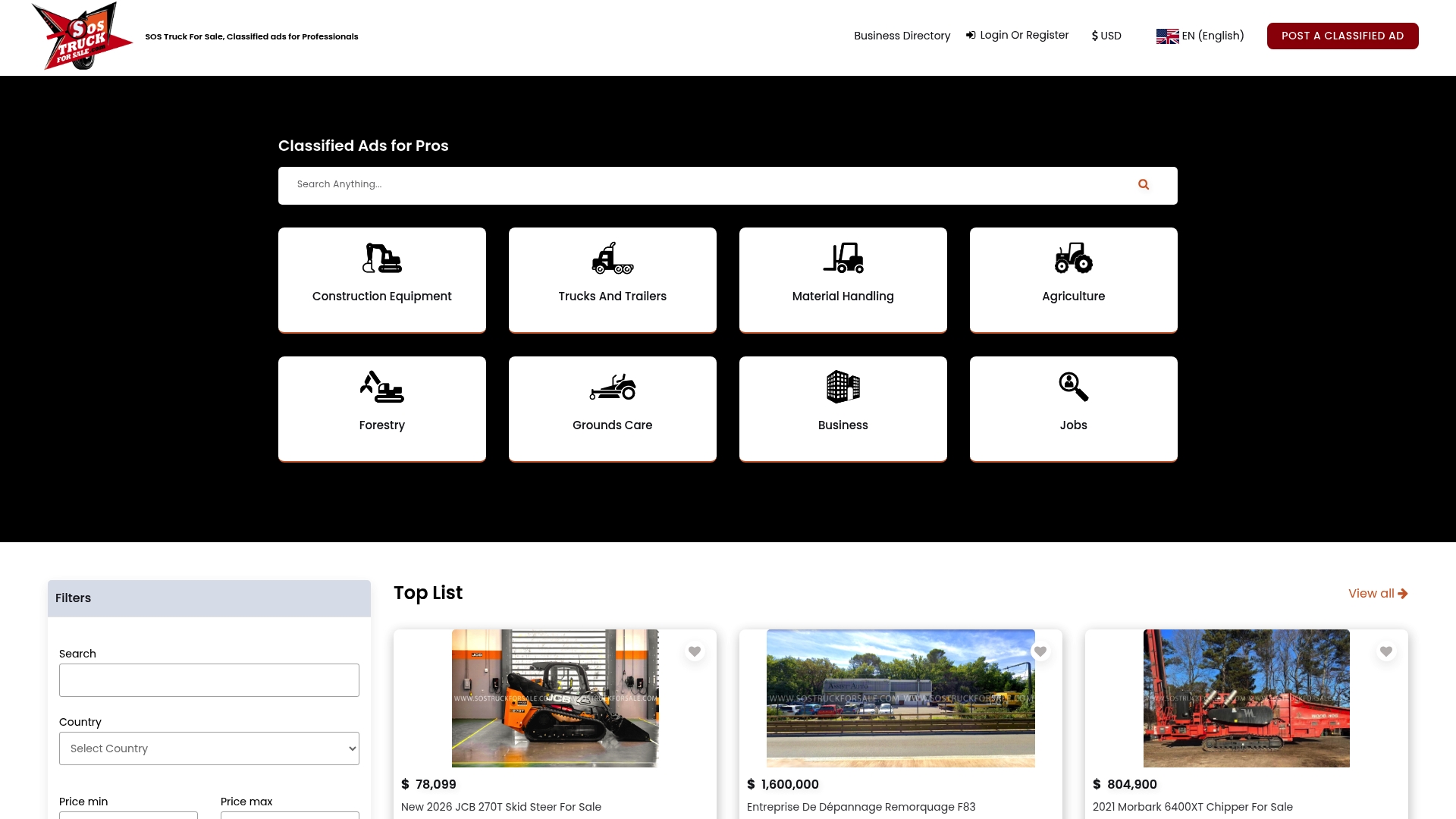
If you plan to offer flexible payment terms, state them in the listing description so buyers know before they call. For dealers working out which payment methods to accept, our guide on payment methods up to $250K is a good place to continue.
A closing checklist for seller-financed deals
Use this list before the machine leaves the yard.
- Machine identified by serial number, with hours and condition documented.
- Value supported by an appraisal, valuation or recent comparable sales.
- Clear title confirmed and a UCC lien search completed.
- Purchase-and-sale agreement and bill of sale signed.
- Promissory note signed with amount, rate, schedule and default terms.
- Security agreement signed and financing statement filed.
- Insurance in place with the lienholder listed.
- Subordination and intercreditor agreement signed if a bank is involved.
- Tax treatment reviewed by a CPA.
- Plan for lien release and title transfer once the note is paid.
FAQ
Is seller financing the same as owner financing?
Yes. Owner financing, seller carryback and seller financing all describe a sale where the seller accepts payment over time. The buyer signs a note, and the seller usually holds a security interest in the machine until the balance is paid.
What documents do I need for seller-financed equipment?
At minimum you need a sale agreement or purchase-and-sale agreement, a bill of sale, a promissory note and a security agreement. The seller also files a financing statement to perfect the lien. Have an attorney in your state review them.
Can a buyer who has a bank loan also use seller financing?
Yes, in some deals the seller carries part of the price alongside a bank loan. The seller note then normally needs a written subordination and intercreditor agreement that sets lien priority and what the seller may do if the senior loan defaults.
How is seller financing taxed in the U.S.?
For federal purposes, a sale with a payment received after the sale year is generally an installment sale reported on Form 6252, and interest is reported separately. Rules differ for people who regularly sell the same type of equipment, so confirm treatment with a CPA.
Sources
- IRS Publication 334 (2025), Tax Guide for Small Business
- IRS 2026 Form 6252
- Seller and Vendor Financing Explained
- How to Finance Private Party Ag Equipment Purchases (FBN)
- Loan, Lease, or Rental? Compare Heavy Equipment Financing
- Heavy Equipment Financing: Loans, Leases & Qualifications
- Bulldozer Financing & Leasing Guide (U.S.)
- Navigating the Legal Maze of Rental Purchase Options
- U.C.C. Article 9, Secured Transactions
- Seller Carryback Notes in Dump Truck and Semi Truck Financing
- Debtor, Wex Legal Dictionary
- Secured Transactions Under UCC Article 9