
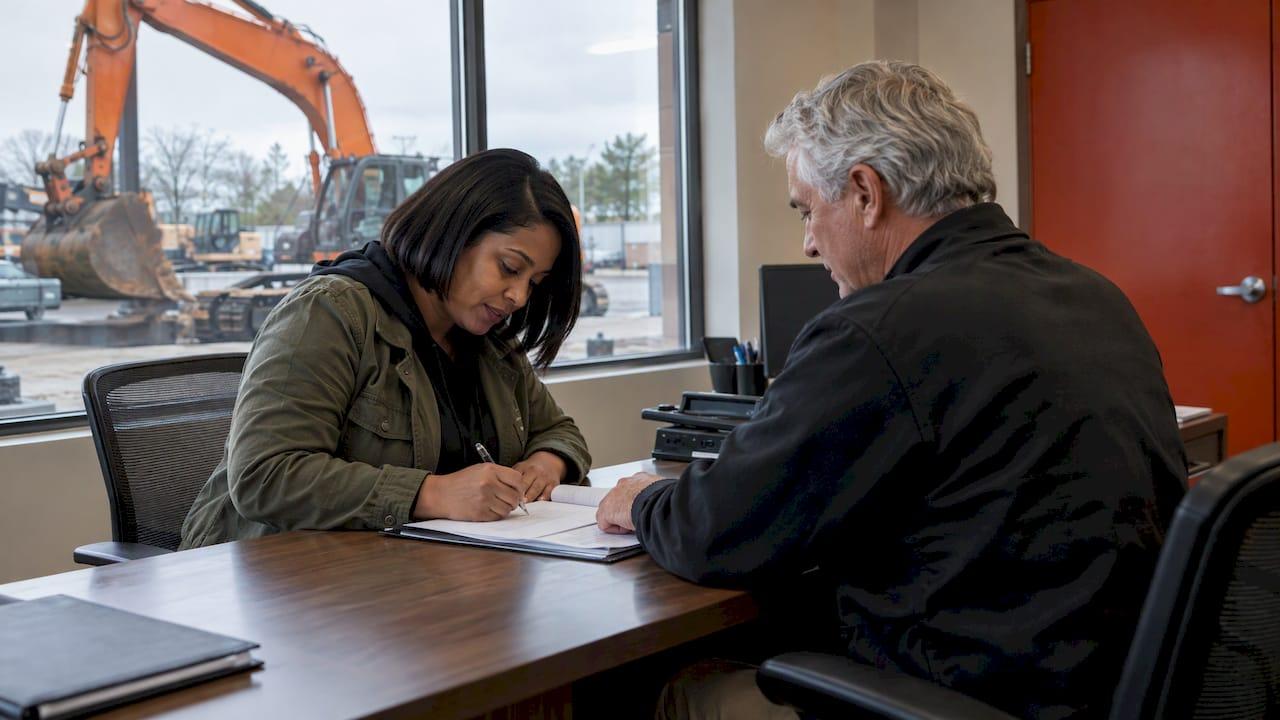
Heavy equipment escrow is a neutral third party holding the buyer's money while the seller delivers the machine and the buyer inspects it. The funds go to the seller only after the agreed conditions are met. For an excavator, a semi truck or a crane that costs tens or hundreds of thousands of dollars, and that often sits in another state, escrow removes the two biggest risks: paying for a machine that never ships, and shipping a machine that never gets paid for.
This guide covers how an escrow transaction runs from agreement to release, what the agreement should say, who pays the fees, how to verify a provider, and what happens when something goes wrong.
TL;DR
- Escrow holds the buyer's funds with a neutral party until inspection and delivery conditions in a written agreement are met.
- It is most useful when buyer and seller have not met, the machine is far away, or the price is large.
- Write the title transfer, inspection window, shipping responsibility and release conditions into the agreement before any money moves.
- Fake escrow sites are a common scam tool. Find the provider yourself and never use a link the other party sends you.
- Escrow pairs with a clean title and lien check, not a replacement for them.
Table of Contents
- What heavy equipment escrow is
- When escrow is worth using
- How an escrow transaction runs, step by step
- What the escrow agreement should cover
- Who pays escrow fees, and when
- How to verify an escrow provider and avoid fake escrow scams
- Laws and rules that apply in the U.S.
- When something goes wrong
- Perspective
- Find and list equipment with complete details
- FAQ
- Sources
What heavy equipment escrow is
An escrow is a short-lived arrangement in which a holder acts as an agent, carrying out instructions from the principals. The California Department of Real Estate describes it as essentially a small, short-lived trust arrangement in which the holder faithfully executes the parties' instructions. That description is written about real estate, but the logic carries over to equipment: the escrow agent does not decide who is right. It follows the instructions both sides signed.
In an equipment sale, those instructions usually say:
- The buyer deposits the full price (or an agreed portion) with the escrow agent.
- The agent confirms the funds are secured and tells the seller to ship or make the machine available.
- The buyer inspects the machine within an agreed window.
- If the buyer accepts, or the window expires without a rejection, the agent pays the seller.
- If the buyer rejects the machine for a reason the agreement recognizes, the machine goes back and the funds return to the buyer.
When escrow is worth using
Not every deal needs it. A buyer who walks a yard, runs the machine, writes a check at a dealer's counter and drives away with a signed bill of sale has little use for a third party. Escrow earns its fee in these situations:
- Long-distance purchases. The buyer cannot inspect in person before paying, and the seller cannot ship without knowing the money is real.
- First-time counterparties. Neither side has a track record with the other.
- High-value units. Late-model excavators, cranes, tractors and trailers can run well into six figures, where a wire to the wrong party is a business-level loss.
- International sales. Payment risk and shipping time both grow. Our three steps for closing with international equipment buyers covers the sequence on the seller side.
- Sales with conditions. Examples are a repair by the seller before delivery, a clear title that depends on a lien payoff, or an inspection by a third-party mechanic.
For a repeat buyer with a dealer they know, direct payment by wire or financing may be simpler. Our post on payment methods dealers can offer, up to $250K lays out those alternatives.
How an escrow transaction runs, step by step

1. Agree on the machine and the price
Before opening an escrow, buyer and seller settle the basics: make, model, year, serial number or VIN, hours or mileage, attachments included, and the price. Put the serial number in writing. It is the single detail that ties the paperwork, the title and the machine in the yard together.
Buyers who want a price check before they agree can use our heavy equipment pricing guide with auction comps.
2. Open the escrow and sign the terms
One party starts the transaction with the provider, and the other accepts the terms. The terms name the parties, the equipment, the amount, who pays the fee, the inspection period, and what triggers release. Read them in full. They are the contract the escrow agent will follow.
3. Buyer pays the escrow agent
The buyer sends funds to the escrow agent, never to the seller. Providers normally accept bank wire or ACH for large amounts. Payment methods and clearing times vary by provider, so confirm them on the provider's own site before you promise the seller a date. The agent tells the seller when the funds are secured.
4. Seller delivers or releases the machine
Only after confirmation of funds does the seller ship or hand over the equipment. Freight is a project of its own on heavy iron: permits, trailers, loading, securing and insurance. Our seller's checklist for shipping sold heavy equipment walks through it.
5. Buyer inspects and accepts or rejects
The inspection period is a set number of days agreed by all parties. Escrow.com, for example, states that its inspection period excludes shipping time and that it releases funds once the buyer accepts or the period expires. Two things follow from that rule:
- Count the inspection days from the day the buyer actually receives or can access the machine.
- A buyer who says nothing is treated as accepting once the window closes. Calendar the deadline.
6. Funds are released
On acceptance, the agent pays the seller. The seller then signs over the title and the buyer registers the machine. If the buyer rejects, the agreement's return terms apply.
What the escrow agreement should cover
The escrow provider's form handles the money. The sale terms underneath it are the buyer's and seller's job. A sound equipment sale agreement states the equipment and its condition, the payment terms, when title and risk of loss pass, how inspection and acceptance work, and who arranges and pays for removal. Turn that into a checklist:
| Term | What to write down |
|---|---|
| Equipment | Make, model, year, serial number or VIN, hours, attachments |
| Condition | "As is" or stated condition, with known defects listed |
| Price and currency | Total, deposit if any, who bears wire and escrow fees |
| Inspection | Who inspects, where, how many days, what counts as a valid rejection |
| Delivery | Who books freight, who pays, who carries transit insurance |
| Title and risk | When ownership and risk of loss move to the buyer |
| Release | The exact event that triggers payment |
| Failure | Return shipping, restocking, who pays, deadlines |
Title and risk of loss
In U.S. sales of goods, the Uniform Commercial Code leaves this largely to the parties. Under UCC § 2-401, title passes as the parties explicitly agree. If they say nothing, a shipment contract generally passes title at shipment and a destination contract at tender at the destination. A silent agreement means the default rules decide, which is rarely what either side planned. State your own rule.
Self-propelled trucks and many trailers are also titled vehicles, so the state motor vehicle agency's rules apply when ownership moves. Our excavator ownership transfer checklist covers the paperwork for both sides.
Liens
A machine with a loan against it can be sold, but the lender's interest has to be cleared. Escrow is a natural tool here: the agent pays the lender from the buyer's funds and the remainder goes to the seller. Sellers in that position should read how to sell equipment with a lien first.
Who pays escrow fees, and when
There is no single rule. The buyer, the seller, or both split the fee, depending on what they agree in the terms. Many providers display the fee before the transaction is funded. EscrowPay, for instance, shows its fees before anything is charged. Most providers price by a percentage of the transaction value, often with a minimum, though rates differ and change, so get the quote from the provider's current fee page.
Practical points on fees:
- Decide who pays in the written terms, not by assumption.
- On large deals, ask whether the fee is capped or tiered.
- Check wire and international transfer charges separately from the escrow fee.
- Ask whether a rejected sale still incurs the fee and who bears it.
For a seller, a fee the buyer pays can be a sales argument: it gives the buyer protection at no cost to the seller's margin. For the wider picture of what a seller spends to market a machine, see what sellers really pay for an equipment listing.
How to verify an escrow provider and avoid fake escrow scams
Fake escrow is a classic fraud. The scammer, posing as a seller, proposes an escrow site that looks professional, but the site is theirs. The buyer pays, the site shows "funds secured," the seller vanishes. The Federal Trade Commission has warned about related fake-dealer websites, and a trade association contact quoted in news coverage advised walking away when a seller insists on upfront payment by wire only.
A verification routine that works:
- Choose the provider yourself. Never accept an escrow site named only by the other party.
- Find the provider's real contact details independently. Search for the company, and check any required authorization yourself. Then contact the operator through channels you sourced and confirm that your transaction exists.
- Check the web address letter by letter. Look-alike domains are routine.
- Confirm licensing. Some states regulate escrow agents and money transmitters. Ask the provider which license applies and check the state regulator's public lookup.
- Be suspicious of pressure. Urgency, "another buyer is waiting" and refusal of a phone call are warning signs.
- Match the listing to a real seller. Check the dealer's business address and phone, and ask for a live video walk-around of the machine showing the serial plate.
Our seller checklist for avoiding scams when selling an excavator online covers the same ground from the seller's chair, including overpayment tricks.
Laws and rules that apply in the U.S.
There is no single federal escrow statute for equipment. Several layers apply instead:
- The UCC. Article 2 governs sales of goods in every state but Louisiana in its own form, and covers title, risk of loss, inspection and rejection.
- State escrow and licensing rules. These differ by state and by what the agent does. Real estate escrow is heavily regulated in places like California, as the DRE reference shows. Equipment escrow often falls under general contract and money transmission rules instead. Ask any provider which rules cover it.
- State titling and tax rules. Registration, sales tax and use tax depend on where the machine is titled or used.
- Lien law. Lenders' security interests are perfected under UCC Article 9 and must be released at payoff.
For a deal worth six figures, an hour with a business attorney in the buyer's or seller's state is cheap insurance on the agreement and the title language.
When something goes wrong
The machine fails inspection
The agreement should say what counts as a valid rejection: a defect not disclosed, a mismatch with the serial number, hours well off the listing, or a failed third-party inspection report. A buyer who rejects sends written notice inside the inspection window, with evidence such as photos, the inspector's report and hour-meter readings. The machine then returns under the agreed shipping terms, and the funds go back to the buyer.
Buyers should book a qualified inspector before delivery wherever possible, not after. Sellers protect themselves by documenting condition on handover: dated photos, a short video, and a signed condition sheet. Our guide to listing photos and video shows what thorough documentation looks like.
The machine never arrives or arrives damaged
If the seller never ships, the funds stay with the agent and return to the buyer under the terms. For damage in transit, the agreement's risk-of-loss clause decides who claims against the carrier. Freight insurance, a signed bill of lading with damage noted at delivery, and photos at the dock are what make a claim stick.

The parties disagree
The agent normally will not rule on a dispute. It holds the funds until both sides sign a joint instruction, or until a court order or arbitration award says where they go. Build a dispute path into the agreement up front: a short negotiation period, then mediation or arbitration, and the state whose law governs.
Perspective
Most escrow trouble we see begins before the escrow opens. A listing with a vague description, no serial number and two blurry photos gives both parties room to argue later.
At Sostruckforsale we built the marketplace for industry professionals buying and selling commercial vehicles and heavy equipment. We encourage sellers to post complete listings: category, subcategory, price, country, clear specifications and a way to contact the seller. A complete listing is the first document in any deal, and it feeds directly into the escrow terms.
Our advice to dealers and private sellers is simple. Write the serial number, hours and attachments into the ad. Agree on inspection and delivery terms in writing. Offer a protected payment route to buyers you have not met. Buyers who see that discipline in a listing have more reason to proceed.
Dave
Find and list equipment with complete details
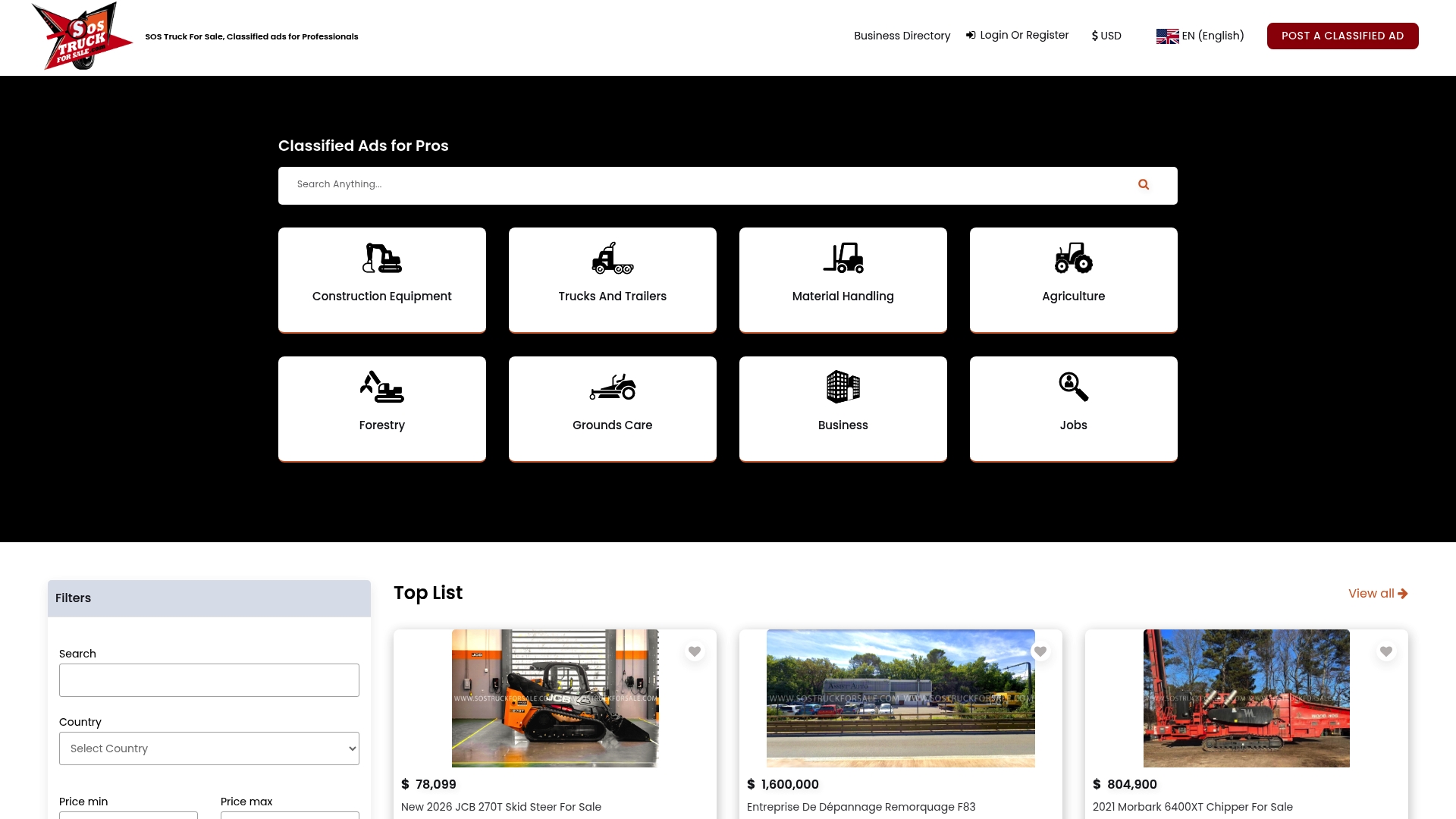
Whether you are buying or selling, a clear listing makes the escrow terms easy to write. Sostruckforsale is an online marketplace for commercial vehicles and industrial equipment, with classified ads and a business dealer directory. Browse construction equipment, trucks and trailers, material handling, agriculture, forestry and grounds care by category, subcategory, price and country, or post your own machine. Visit Sostruckforsale to start.
Buyers who plan to finance part of the price should compare options first. Our guide to heavy equipment financing options helps you line up lender requirements with the escrow timeline.
FAQ
Is escrow required to buy heavy equipment?
No. Escrow is a choice the parties make, not a legal requirement for most equipment sales. It is most useful when you cannot inspect in person, have not dealt with the other party before, or the price is high. For a local cash deal with a bill of sale and a title in hand, many buyers skip it.
How long does heavy equipment escrow take?
The time depends on how fast funds clear, how long freight takes, and the length of the inspection period you agreed. Shipping time usually sits outside the inspection window, so a cross-country deal can take weeks from funding to release. Set each deadline in the written terms.
Can escrow protect me from a title or lien problem?
Escrow controls when money moves, so it can hold payment until the title is delivered or a lien is paid off, if the terms say so. It does not check the title by itself. Run a lien search and confirm the serial number against the title before you fund.
How do I know an escrow website is real?
Select the provider yourself, find its contact details through your own search, and phone it to confirm your transaction. Be wary of any site the other party sends you, a domain that differs by a letter, and pressure to pay fast by wire.
Sources
- Escrow reference, California Department of Real Estate
- UCC § 2-401, Passing of Title, Cornell Legal Information Institute
- Equipment Sale Agreement, Serials and Inspection
- Inspection Period, Escrow.com
- Equipment & Machinery Escrow, EscrowPay
- Fake escrow scams: verify the service before sending money
- You could lose thousands to this online car-buying scam